
Last updated November 18, 2026
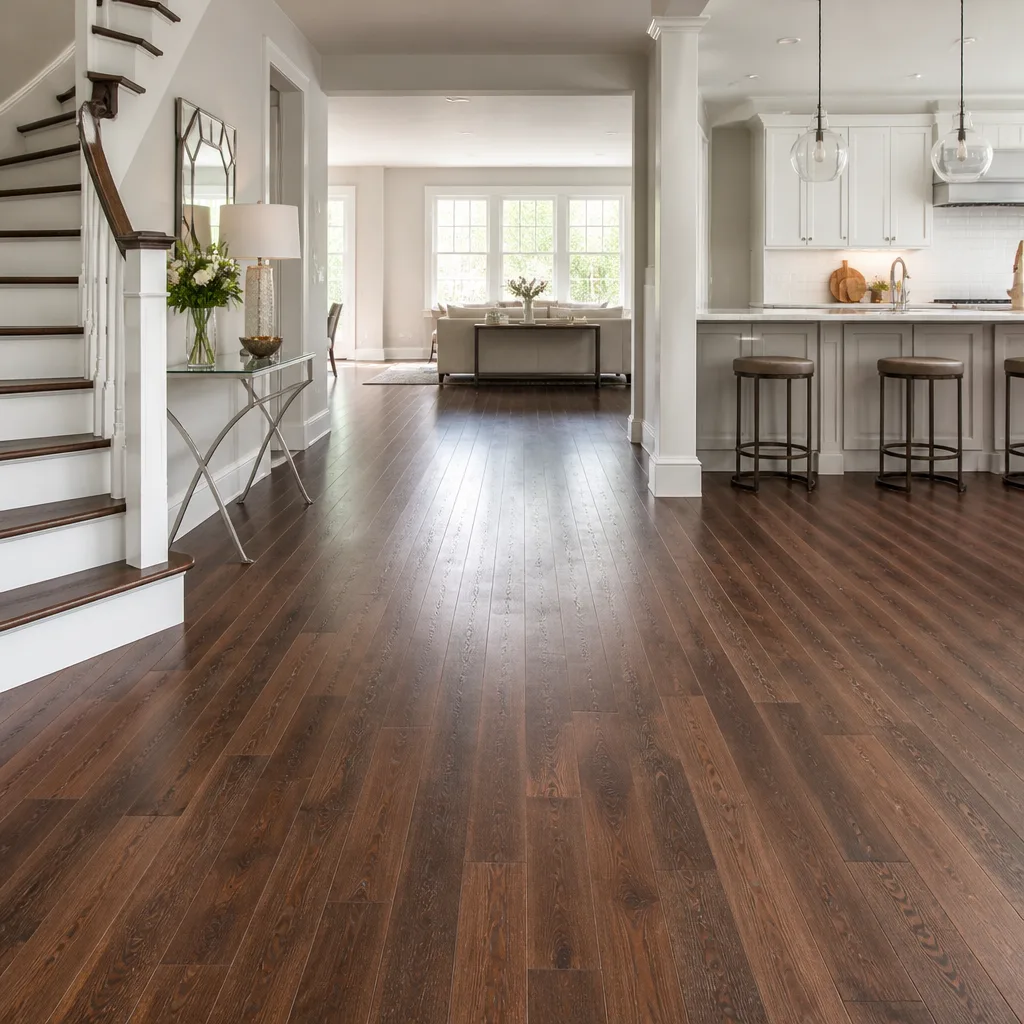 Hardwood
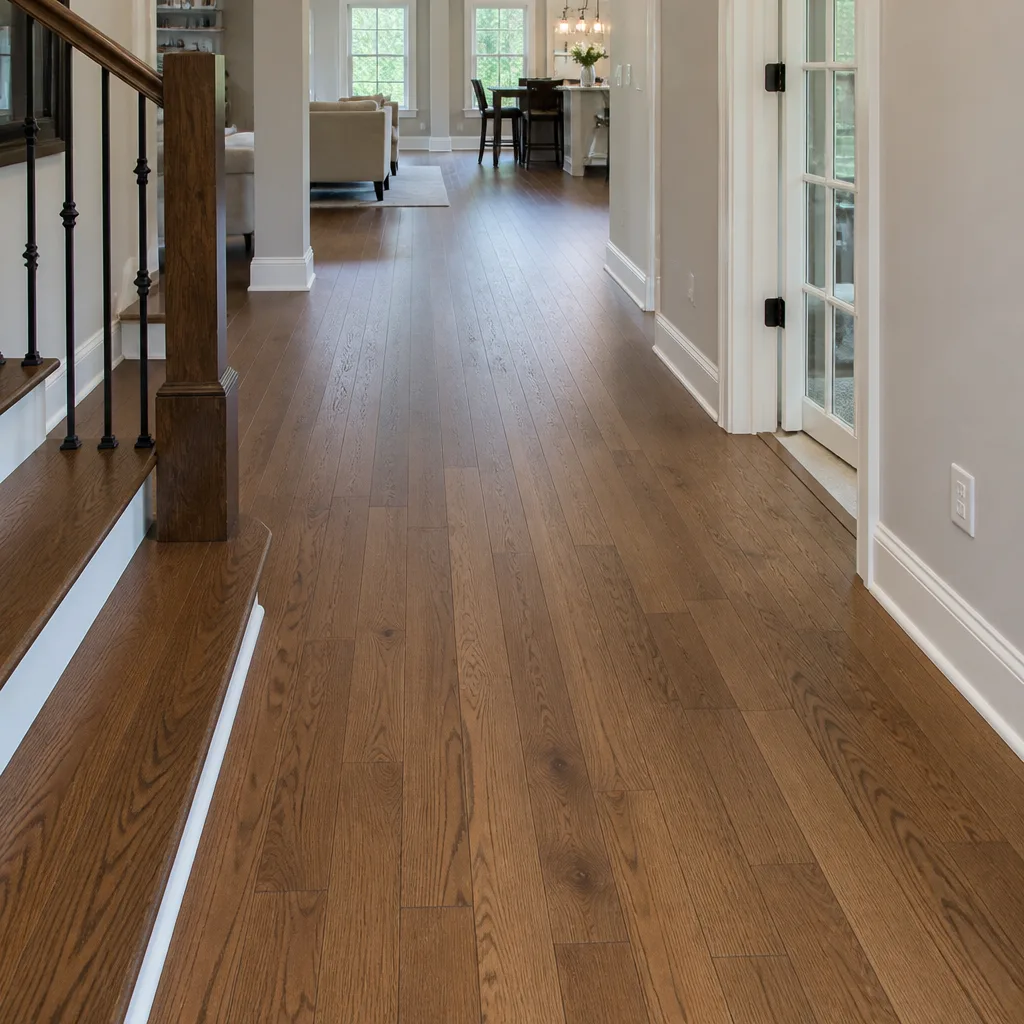 Engineered hardwood
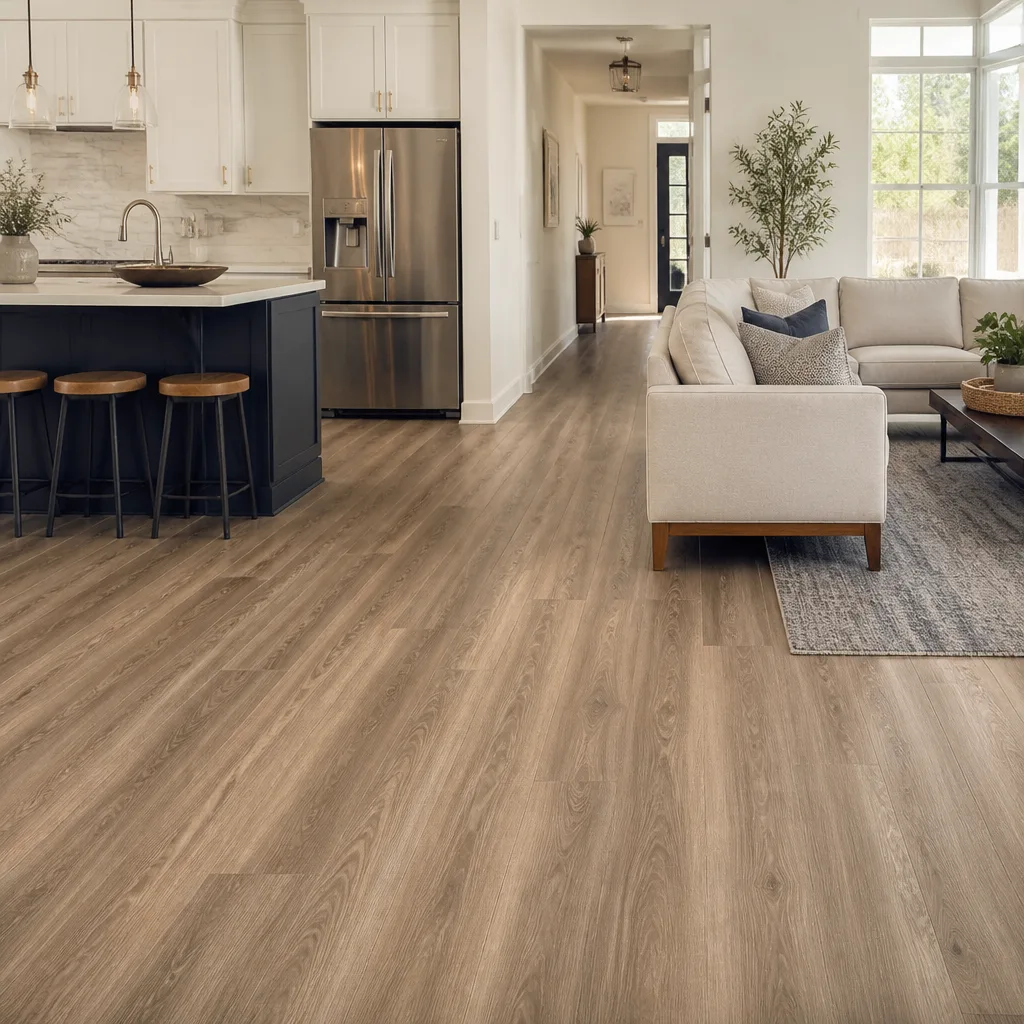 Luxury vinyl plank
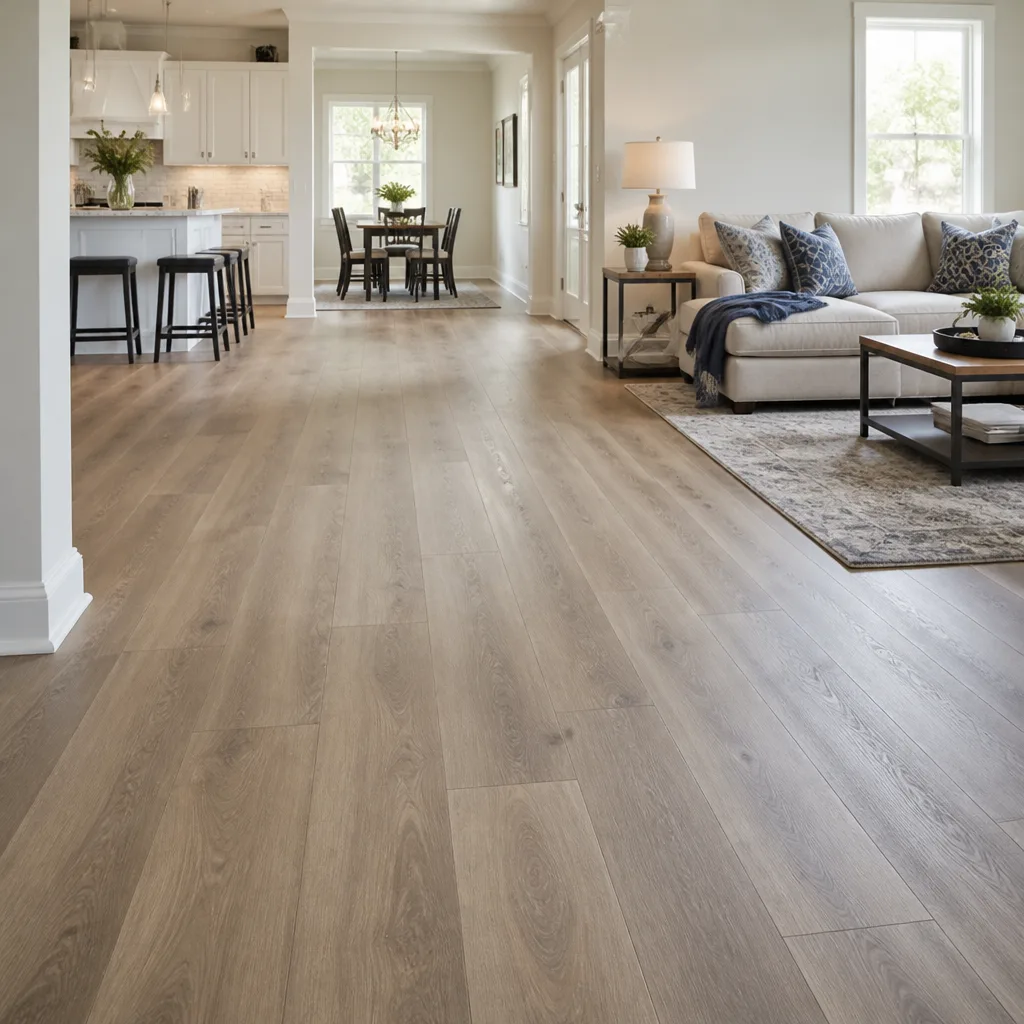 Laminate
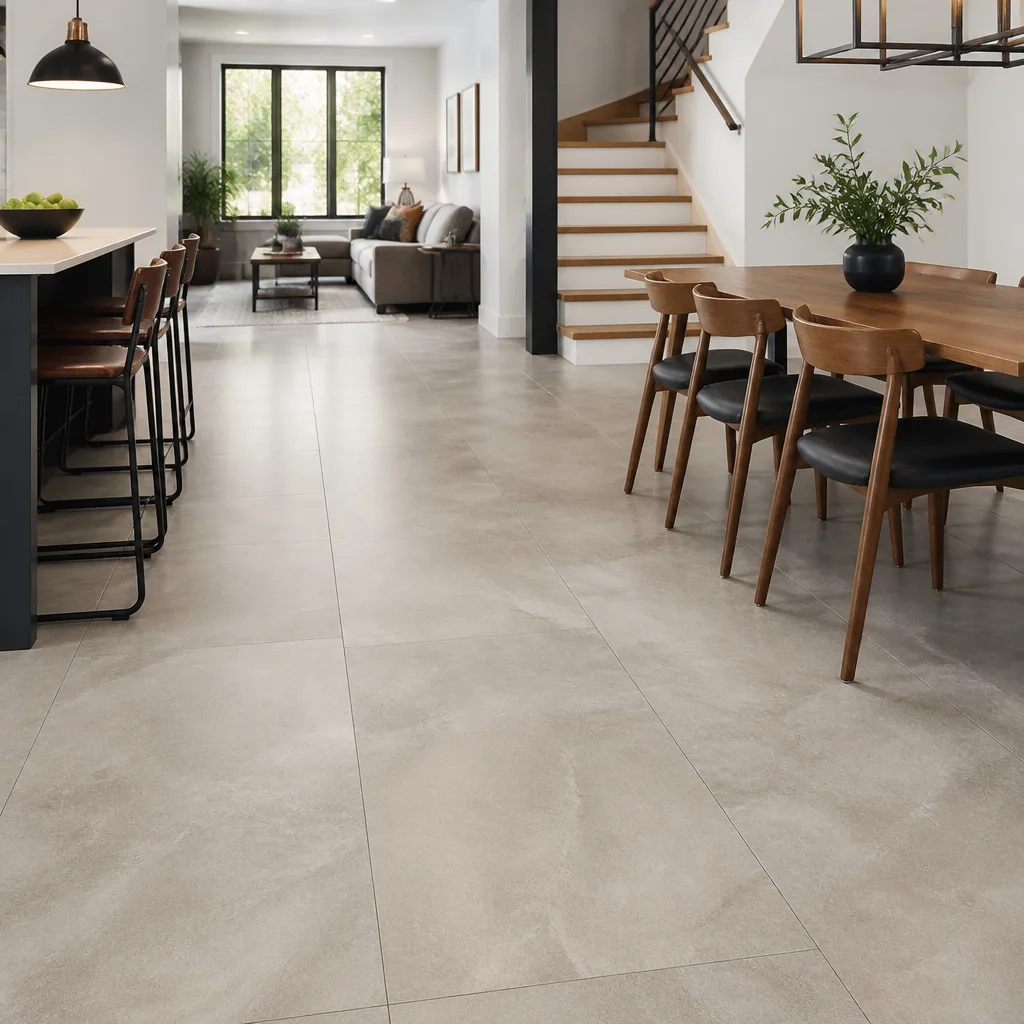 Porcelain tile
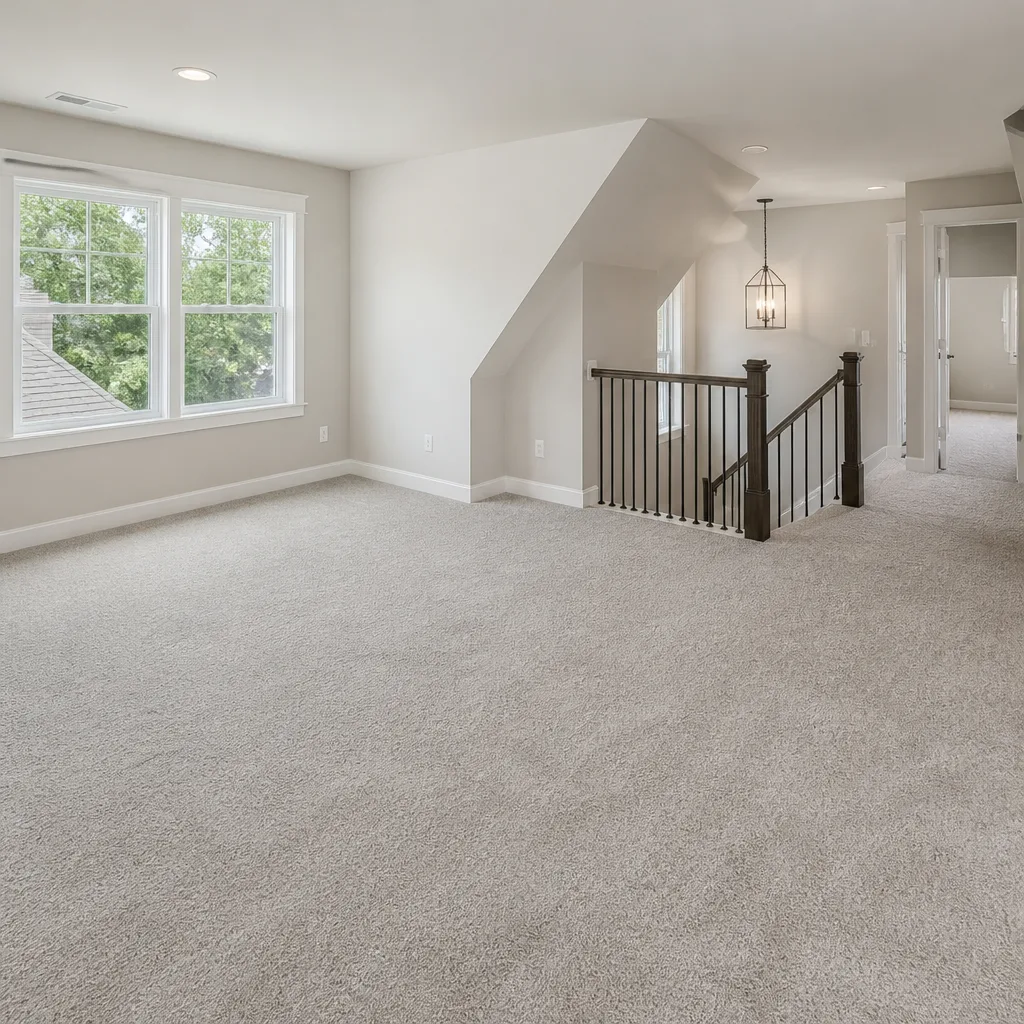 Carpet
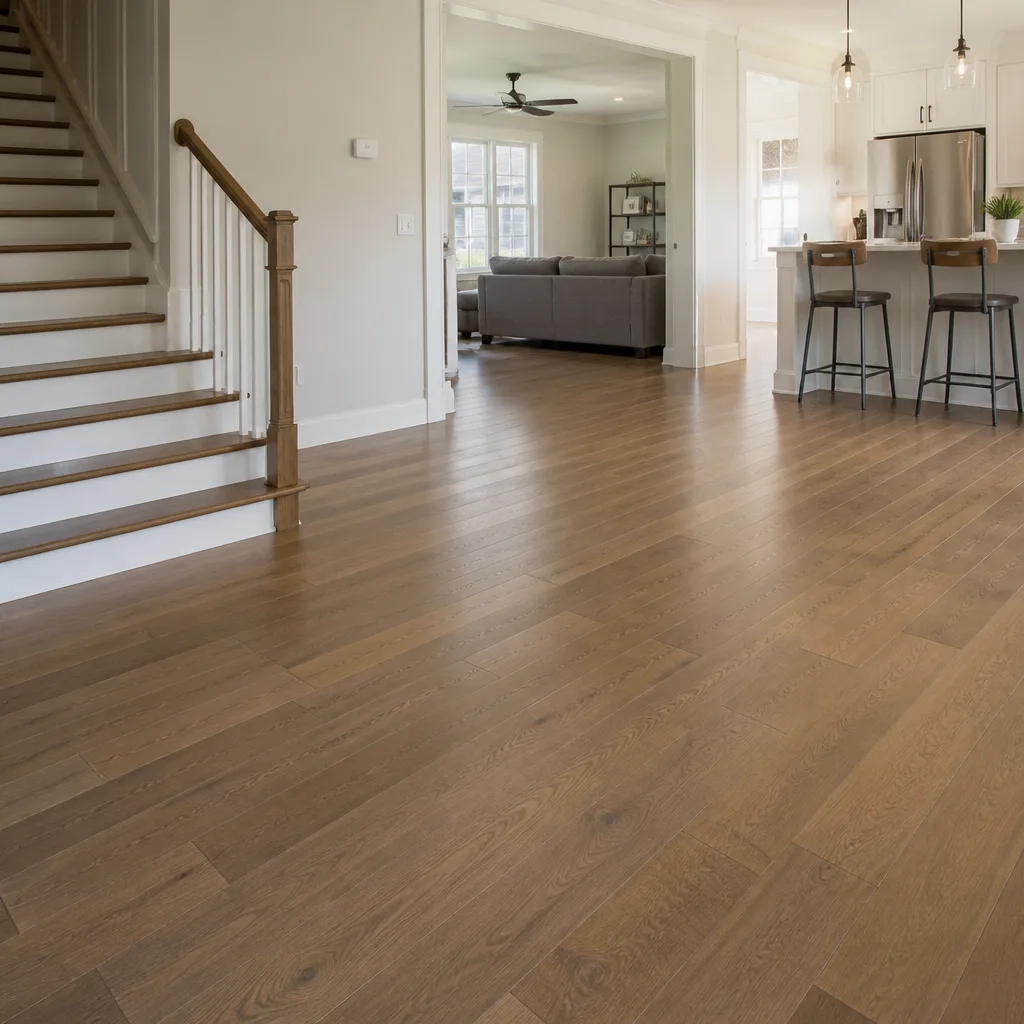 Shaw
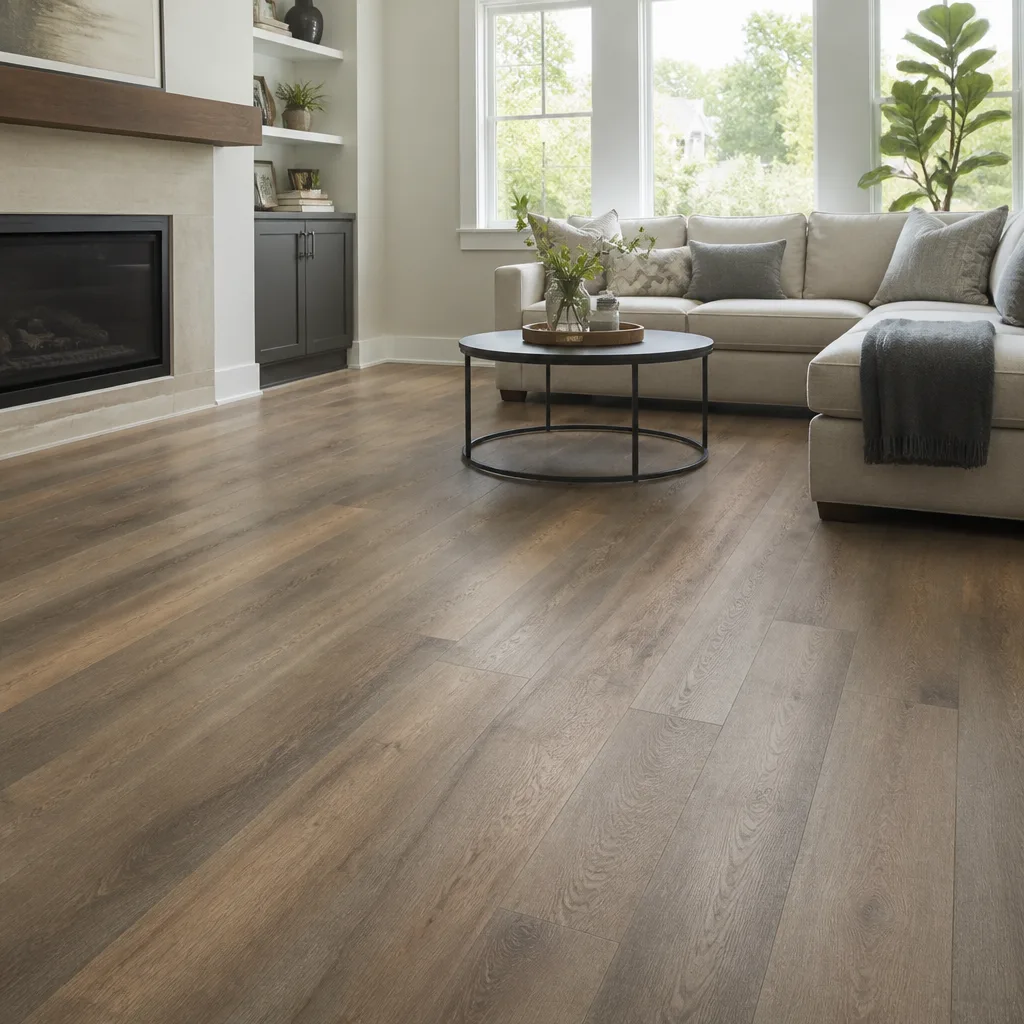 Mohawk
 COREtec
 Pergo
Free in-home measure and written estimate: Shaw, Mohawk, COREtec and Pergo lines compared on your own rooms, with carpet, tile, vinyl plank, laminate and hardwood laid out side by side
Get your free estimateSubfloors Explained: What Sits Under Your New Floor
Most flooring decisions start at the surface. The color, the plank width, the pile, the grout line. That’s the part you see and the part you’ll live with. But in Las Vegas, the floor you choose sits on something that moves, and that movement is the single most under-discussed variable in any flooring project. The dominant subfloor here is a concrete slab poured on desert soil, and desert soil reacts to seasonal temperature swings. A slab that looks perfectly solid in July can telegraph through rigid flooring by the following spring if it was covered without addressing flatness, moisture, or both. This guide walks through what’s actually under your floor, which subfloors dominate which parts of Las Vegas, and how to read the repair line on an estimate so you know whether it’s proportionate or padded.
Quick Answer
A subfloor is the structural layer beneath your finished floor. In most Las Vegas homes it’s a concrete slab on grade, though older neighborhoods and some elevated construction use wood subfloor over a crawl space or a framed second story. Subfloor condition – flatness, moisture, and structural integrity – decides which flooring materials can be installed, influences your final cost more than almost any other line item, and accounts for the majority of installation failures. Get it right before the surface goes down, and the surface lasts.
Styles & brands we work with
- Hardwood
- Engineered hardwood
- Luxury vinyl plank
- Laminate
- Porcelain tile
- Carpet
- Shaw
- Mohawk
- COREtec
- Pergo
Table of Contents
- The Three Subfloor Types You’ll Find in Las Vegas
- Which Subfloor Is Most Common in Your Las Vegas Neighborhood?
- How to Test a Las Vegas Slab for Moisture Vapor Emission
- What Flatness Tolerance Means and Why It Matters
- Why Subfloor Repair Shows Up on Your Estimate
- Overlay Options When a Slab Can’t Be Corrected
- Matching Flooring Materials to Subfloor Conditions
- Common Mistakes to Avoid
The Three Subfloor Types You’ll Find in Las Vegas
There are three subfloor structures you’ll run into in Las Vegas homes, and each behaves differently under a finished floor. Knowing which one you have is the first step in any flooring project.
Concrete slab on grade. This is the standard for the vast majority of Las Vegas residential construction. The slab is poured directly on graded desert soil and serves as both the foundation and the subfloor. It’s durable and it doesn’t rot, but it does two things that matter: it expands and contracts with seasonal temperature swings, and it transmits moisture vapor from the soil below. A slab is never truly “dry” in the way wood is dry – it’s always passing some amount of vapor upward, and the question is whether the rate is low enough for your chosen flooring.
Wood subfloor over a crawl space. Less common in Las Vegas than in wetter climates, but you’ll find it in some older neighborhoods and in certain custom construction. A wood subfloor is a plywood or oriented strand board (OSB) deck laid over joists. It’s naturally flatter than poured concrete and easier to correct, but it’s vulnerable to moisture from below and to deflection underfoot. A wood subfloor needs to be checked for soft spots, squeaks, and sag between joists.
Elevated wood subfloor. This is what you’ll find on second floors and in some elevated construction. It’s structurally a framed floor with joists and a plywood deck. The concerns here are deflection (how much the floor flexes under load) and levelness, not moisture from a slab.
In our experience across Las Vegas projects, the slab is the one homeowners understand least, because a slab looks and feels perfectly solid. There’s nothing to lift up and inspect. That’s exactly why it gets skipped, and why it deserves the most attention.
Which Subfloor Is Most Common in Your Las Vegas Neighborhood?
Las Vegas neighborhoods were built across many decades, and construction practices shifted along the way. The subfloor you have depends largely on when your home was framed.
- Mid-century and 1970s-era neighborhoods – areas like Huntridge, Paradise Palms, and much of the older east side – are predominantly slab on grade, often with thinner pours and less attention to flatness than modern work. These slabs frequently show out-of-flat conditions and are where corrective overlays earn their keep.
- 1980s through 1990s subdivisions – the broad swath of neighborhoods across the valley built during the population boom – are also slab on grade, but generally poured with better grading and finishing. They still move, but they tend to start flatter.
- 2000s and newer construction – master-planned communities in the northwest, southwest, and Henderson – is almost universally slab on grade with tighter initial tolerances. Moisture vapor is still a real variable, especially on slabs poured over soil that holds more moisture.
- Crawl space and elevated wood turns up in a smaller set of older and custom homes. If your home has a crawl space access hatch or you live on a second floor, your subfloor is wood and gets inspected differently.
One Las Vegas-specific wrinkle: our climate is dry, and dry conditions make some people assume moisture is a non-issue. It isn’t. A slab can test dry at the surface and still emit vapor at a rate that fails a formal test, because the moisture is coming from the soil beneath the slab, not from the air. That’s the core reason a quick touch test is not a substitute for a real measurement.
If you’re planning new carpet installation over a slab, this matters too – carpet and pad trap vapor against the slab and can harbor odors and mildew if the slab isn’t addressed first. Carpet is more forgiving of flatness than tile, but it is not forgiving of trapped moisture.
How to Test a Las Vegas Slab for Moisture Vapor Emission
A slab that feels dry to the touch can still fail a formal moisture test, because the moisture you’re worried about comes up through the concrete from the soil below, not from the surface. Feel is not a measurement. Here’s how a proper test works.
- Understand what’s being measured. Water vapor emission rate is how much moisture passes through the slab per unit area over time. It’s measured on the raw concrete, after any existing flooring and adhesive has been removed.
- Calcium chloride test. This is the classic method: a small dish of calcium chloride is sealed under a plastic dome on the slab for a set period, and the dish is weighed before and after. The weight gain tells you the vapor emission rate. It’s a reliable field test and it’s why a slab that “felt dry” can still fail – the dish doesn’t care how it feels.
- In-situ relative humidity probe. A hole is drilled into the slab, a probe is inserted, and the humidity inside the concrete is measured directly. This method gives you the moisture condition inside the slab rather than at the surface, which some flooring products require before installation.
- Compare the result to the product’s requirement. Every flooring product and adhesive has a maximum vapor emission rate it can tolerate. The test result only means something in comparison to that number. This is why the product instructions and the written estimate set the standard – they name the limit for your specific floor.
The key takeaway: a moisture test is not optional due diligence on a Las Vegas slab. It’s a baseline measurement that tells you whether your flooring can go down as-is, whether you need a vapor barrier or a moisture-mitigating coating, or whether a different material is the smarter choice. We don’t quote an install on a slab without knowing that number.
What Flatness Tolerance Means and Why It Matters
Flatness tolerance is the amount a subfloor is allowed to vary from a perfectly flat plane over a given distance. It’s not the same as level – a floor can slope gently and still be flat, which is fine for most flooring. What causes problems is local variance: high spots, dips, and ridges that show up over a short distance.
Different materials tolerate different amounts of variance. Rigid materials – tile, luxury vinyl plank like COREtec or Karndean, and hardwood – are the least forgiving. They don’t flex to follow a dip. Lay a rigid plank over a high spot and you get a hollow sound and a rocking edge; lay tile over a dip and the mortar bed has to make up the difference, and if it can’t, the tile cracks or the bond fails. Carpet is more tolerant of minor variance because it drapes, but even carpet can telegraph a hard ridge.
Out-of-flat slabs are common in older Las Vegas construction, where pours were sometimes finished with less attention and where decades of settling have shifted things. The visible symptoms of an uncorrected out-of-flat slab show up after installation:
- Hollow spots and soft clicks under rigid plank flooring
- Tile lippage – one tile edge sitting higher than the next
- Gaps opening at plank seams as the flooring flexes over a dip
- Rocking furniture and doors that won’t stay put
- Premature wear at high spots where the surface flooring is stressed
Correcting flatness is done with a self-leveling compound, a patching compound, or a backer board, depending on the material going down and the severity of the variance. The right approach is determined at the estimate visit, where the subfloor is actually measured. A written estimate that includes a flatness correction isn’t padding – it’s the difference between a floor that lasts and one you’re calling someone about in a year.
For tile flooring installation, flatness is non-negotiable. Tile and its setting bed have almost no tolerance for variance, and a slab that’s out of flat will telegraph through the finished surface. That’s why tile estimates in older Las Vegas homes often include a prep line, and why a tile quote that doesn’t mention prep at all deserves a second look.
Why Subfloor Repair Shows Up on Your Estimate
A subfloor repair line on an estimate is not a red flag. It’s a sign the installer actually looked at the subfloor rather than quoting the surface and hoping. What matters is whether the quoted repair is proportionate to what was actually found, and whether the estimate explains it.
Here’s what a legitimate subfloor repair line looks like, and how to evaluate it:
- The estimate names the issue. “Flatness correction over 400 sq ft” or “moisture mitigation under plank flooring” tells you what was found. A vague line that just says “subfloor prep” is a yellow flag – ask what specifically was found and where.
- The repair matches the product. A minor dip under carpet might need a patch; the same dip under rigid LVT might need self-leveling. If the repair line is identical regardless of the material, ask why.
- The scope is bounded. A repair quoted for a specific square footage or specific rooms is easier to evaluate than an open-ended “as needed” line. A written estimate should name what’s included and what happens if more is found once the old floor is up.
- The price is per job, set by the written estimate. We don’t publish per-square-foot repair prices because the scope varies too much from home to home. The written estimate is the number, and it should be in your hands before any work begins.
The most common way homeowners get surprised is by not asking about subfloor condition until after the old floor is removed and the installer finds a problem. At that point, the repair is necessary and the decision is reactive. The better path is to have the subfloor inspected at the estimate visit, so the repair line is on the quote before you commit, not sprung on you mid-job. If you already know you want a specific product – say COREtec or Karndean – mention it when you book the estimate, because the material determines how much subfloor correction is required.
If you’re planning around an existing floor and want to understand the options, our Las Vegas service overview covers the full range of what we install and what prep each material typically needs.
Overlay Options When a Slab Can’t Be Corrected
Not every slab problem can be corrected at the source. Sometimes the slab is too out of flat to level economically, or the moisture profile is too high for the chosen flooring to tolerate. In those cases, an overlay is the answer. There are three main overlay approaches, and each suits different conditions.
Self-leveling compound. A poured, cement-based compound that flows out to a flat plane and hardens. It’s the standard fix for out-of-flat slabs and works well under tile, rigid plank, and engineered wood. It adds height – typically a small fraction of an inch to more depending on the dip – and it requires the slab to be clean and properly primed. This is the overlay you’ll see most often on older Las Vegas slabs with local high and low spots.
Backer board (cement board). A rigid panel installed over the slab and fastened down, providing a stable, flat surface for tile and some other materials. Backer board doesn’t fix a wildly out-of-flat slab on its own – it bridges minor variance and provides a proper substrate. It’s common under tile where the slab is flat enough overall but needs a clean bonding surface.
Moisture-mitigating coating or vapor barrier. When the issue is vapor emission rather than flatness, a coating applied to the slab can bring the emission rate down to what the flooring requires. The right product depends on the flooring system going down – product instructions and the written estimate set which one.
Which overlay is appropriate depends on what the slab is actually doing. Self-leveling compound for flatness, backer board for substrate stability under tile, and a moisture coating for vapor. A slab can need more than one at the same time, and the estimate should reflect that. There’s no one overlay that solves every condition, and any quote that promises a single fix for every slab problem isn’t looking closely enough.
Matching Flooring Materials to Subfloor Conditions
The flooring you choose and the subfloor you have need to agree. When they don’t, the failure shows up in the surface within the first year or two – cracks, hollow spots, lifted seams, or a floor that just feels wrong. Here’s how the main material families line up against subfloor conditions.
- Rigid luxury vinyl plank – products like COREtec and Karndean – demands a flat, dry slab. It’s water-resistant, but that doesn’t make it immune to moisture from below; standing water and vapor from the slab still have to be dealt with. Flatness is the bigger variable: a high spot causes a hollow click and rocking edges. Karndean in particular rewards a careful install because it’s a design-led product where seams and joints are visible – installers of premium LVT hold exacting tolerances, and the subfloor has to meet them.
- Tile – Daltile and other professional-grade tile – tolerates moisture but not flatness variance. The slab has to be flat and stable, and backer board or self-leveling is often part of the prep. Tile is the material that benefits most from a properly inspected slab.
- Carpet – forgiving of flatness but not of trapped moisture. A slab that emits vapor freely will cause problems under carpet and pad if it isn’t mitigated. Carpet is the right choice for many Las Vegas homes as long as the slab is addressed first.
- Hardwood and engineered wood – products like Mannington and Armstrong engineered lines – need a flat, dry subfloor and, for solid wood, specific moisture conditions. Whether a hardwood floor can be refinished or laid over a given subfloor depends on the thickness of the wood and its condition, checked at the estimate visit. Hardwood refinishing is restoration work that lives or dies on the subfloor beneath it.
The practical rule: name the material you want at the estimate, and let the subfloor inspection tell you what prep it needs. The material doesn’t get to skip the subfloor check just because it’s the one you had in mind. If you already know you want a specific brand, that’s useful information – it lets us quote the right prep the first time. Nine trusted brands, one installation team, and the subfloor is what ties them together.
Whether you’re working with a Las Vegas Flooring Installation team or planning the project yourself, the sequence is the same: inspect the subfloor, measure it, then choose the surface.
Common Mistakes to Avoid
- Skipping the subfloor inspection because the slab “looks fine.” A slab that’s visually solid can still be out of flat or emitting too much vapor. The inspection is the whole point – if it’s not in the estimate process, ask for it.
- Trusting the touch test for moisture. A slab that feels dry can still fail a calcium chloride or in-situ humidity test. Feel is not a measurement, and the number is the only thing that tells you whether your flooring can go down.
- Choosing the surface flooring before the subfloor is measured. Pick the product you love, but let the subfloor inspection determine what prep it needs. Choosing the floor and buying it before the inspection often means paying for prep you didn’t budget for.
- Assuming a new build is automatically flat. Newer Las Vegas slabs are generally poured to tighter tolerances, but moisture vapor is still a variable, especially on slabs over soil that holds moisture. New construction isn’t a pass.
- Accepting a “subfloor prep” line with no explanation. A written estimate should name the issue found and the repair planned. If it doesn’t, ask before you sign, and don’t let the old floor come up until you have the full quote in hand.
- Forgetting that carpet needs a dry slab too. Carpet hides flatness problems but traps moisture against the slab. A carpet install over an unaddressed slab can harbor odors and mildew that show up long after the job.
- Choosing an overlay without matching it to the material. Self-leveling compound under carpet is often money spent on a problem carpet doesn’t have. Backer board doesn’t fix an out-of-flat slab on its own. The overlay has to fit the floor going down.
When to Call a Professional
Subfloor work is the part of a flooring project that is easy to underestimate and hard to fix after the fact. Call a professional when you’re planning any rigid flooring – tile, luxury vinyl plank, or hardwood – over a slab, because the flatness and moisture profile determine whether that floor will last. Call when you’re in an older Las Vegas home and aren’t sure what your slab is doing. Call when an existing floor is showing hollow spots, rocking edges, cracked tile, or lifted seams, because those are surface symptoms of a subfloor problem. Call when you’re choosing between materials and want the subfloor inspection to inform the choice. Las Vegas Flooring Installation offers free estimates in Las Vegas – call (888) 268-1308 to schedule one, and we’ll measure the slab before we quote the surface.
See the difference
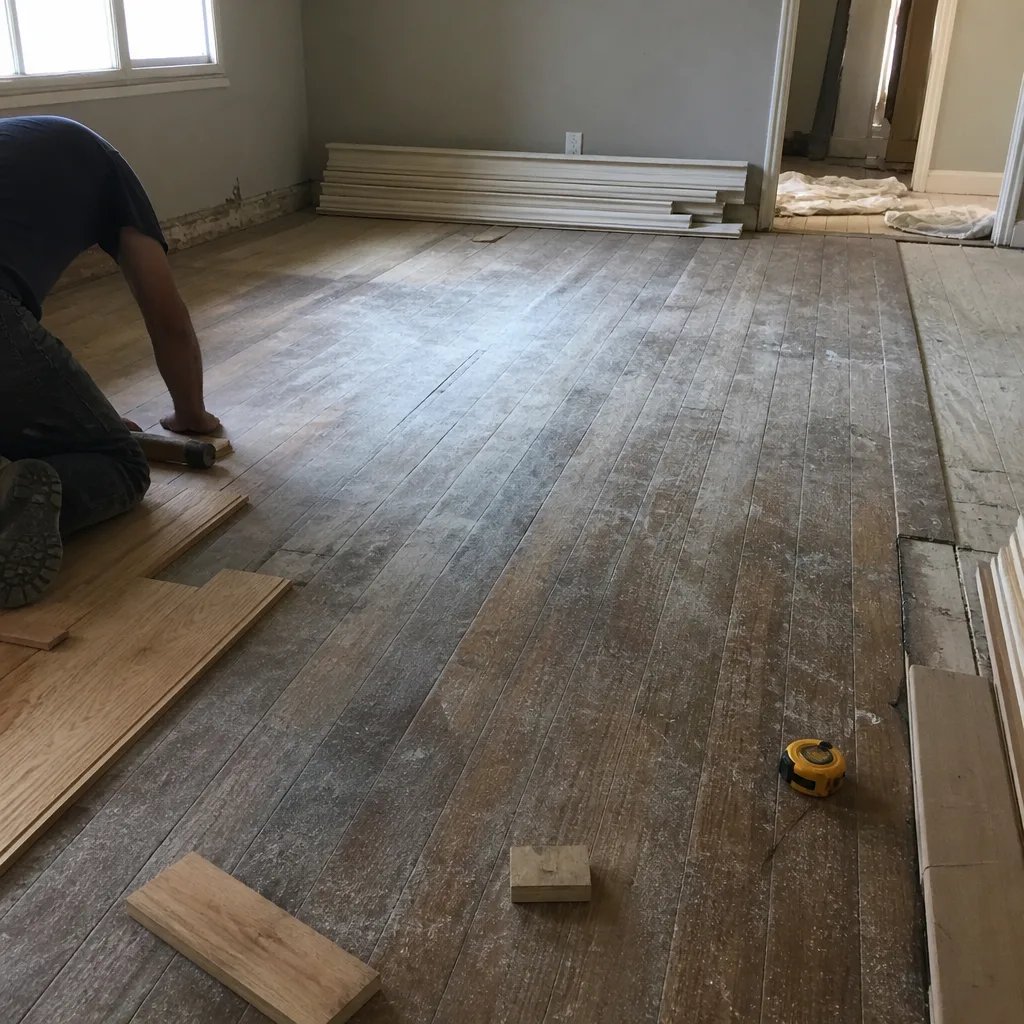 Before
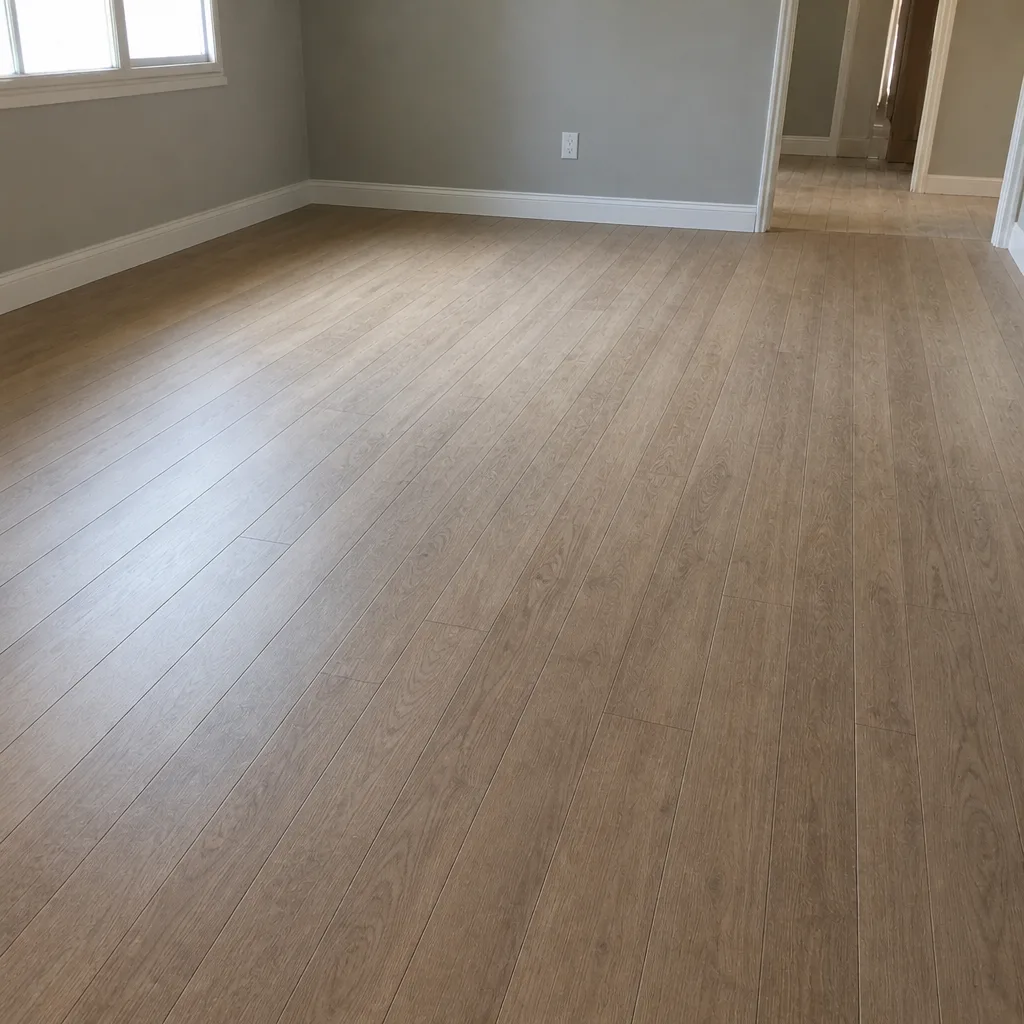 After
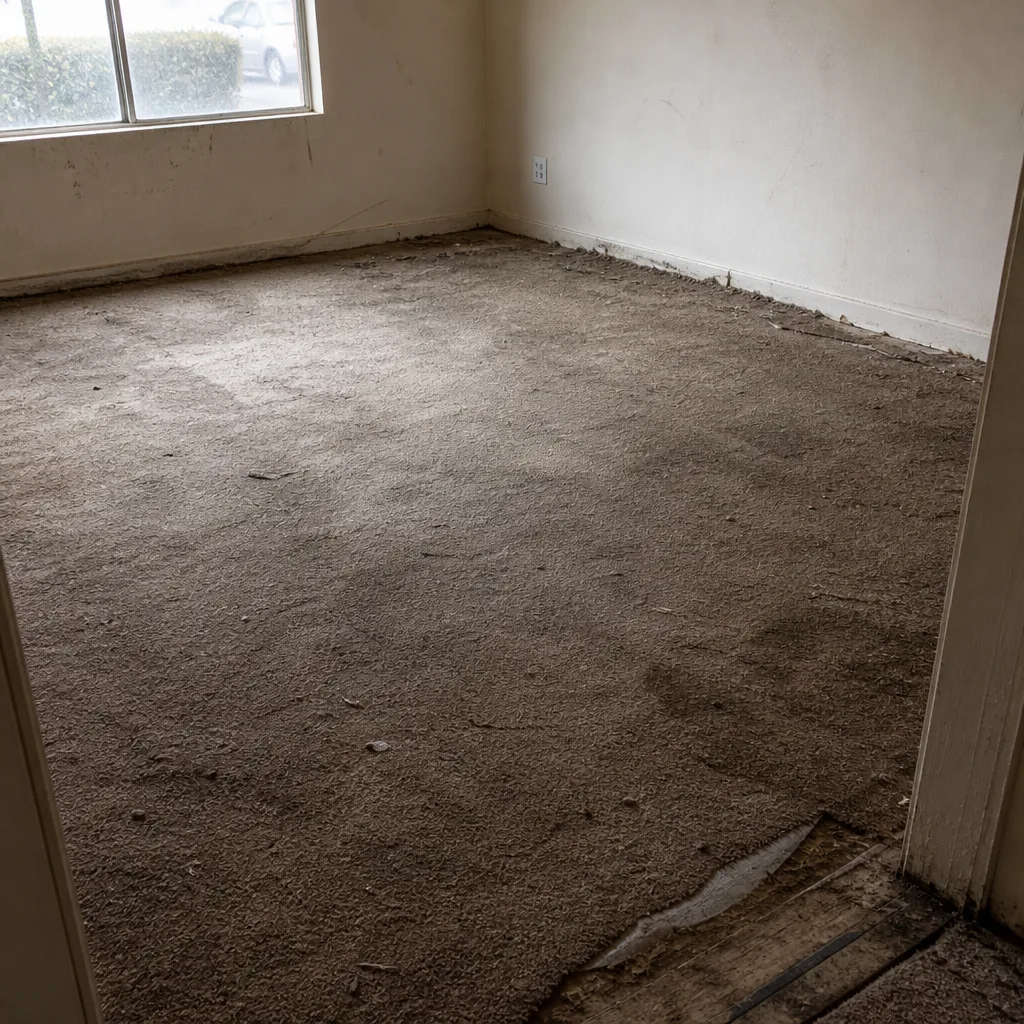 Before
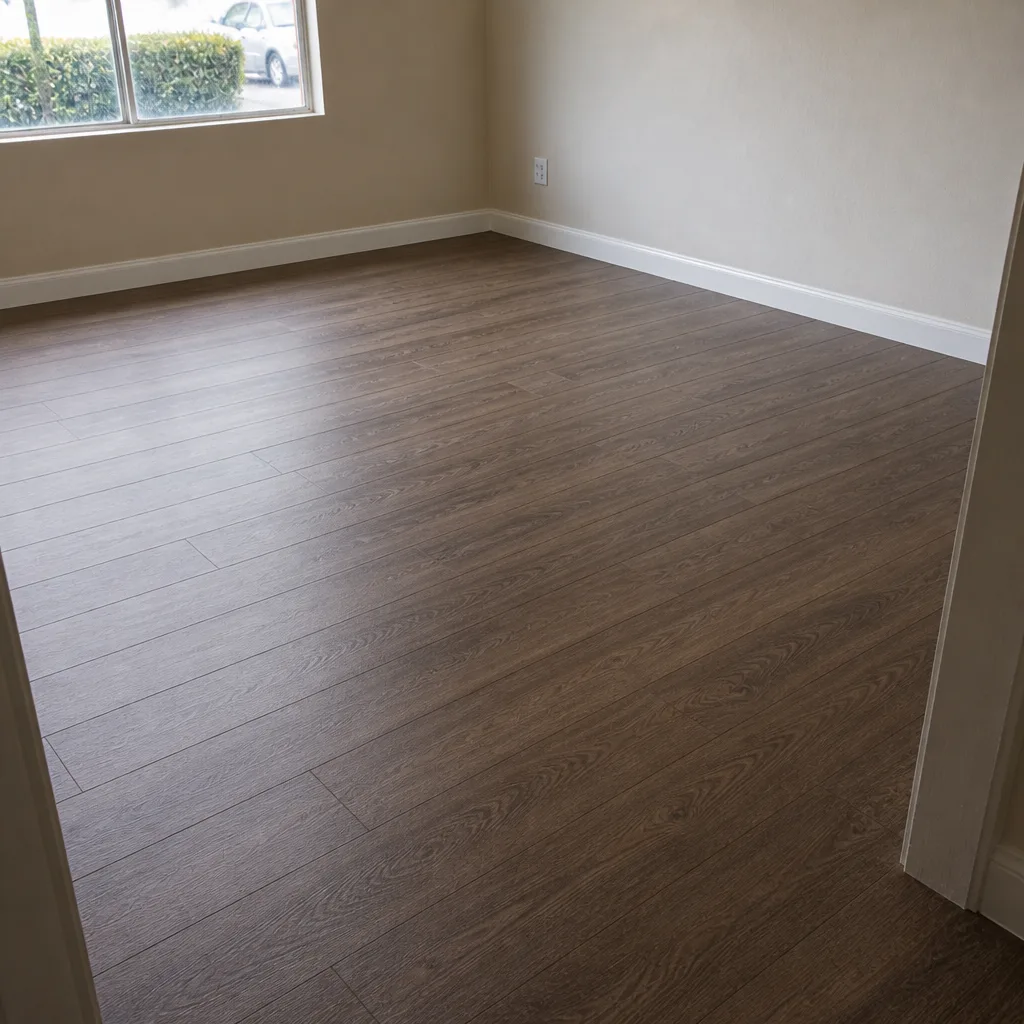 After
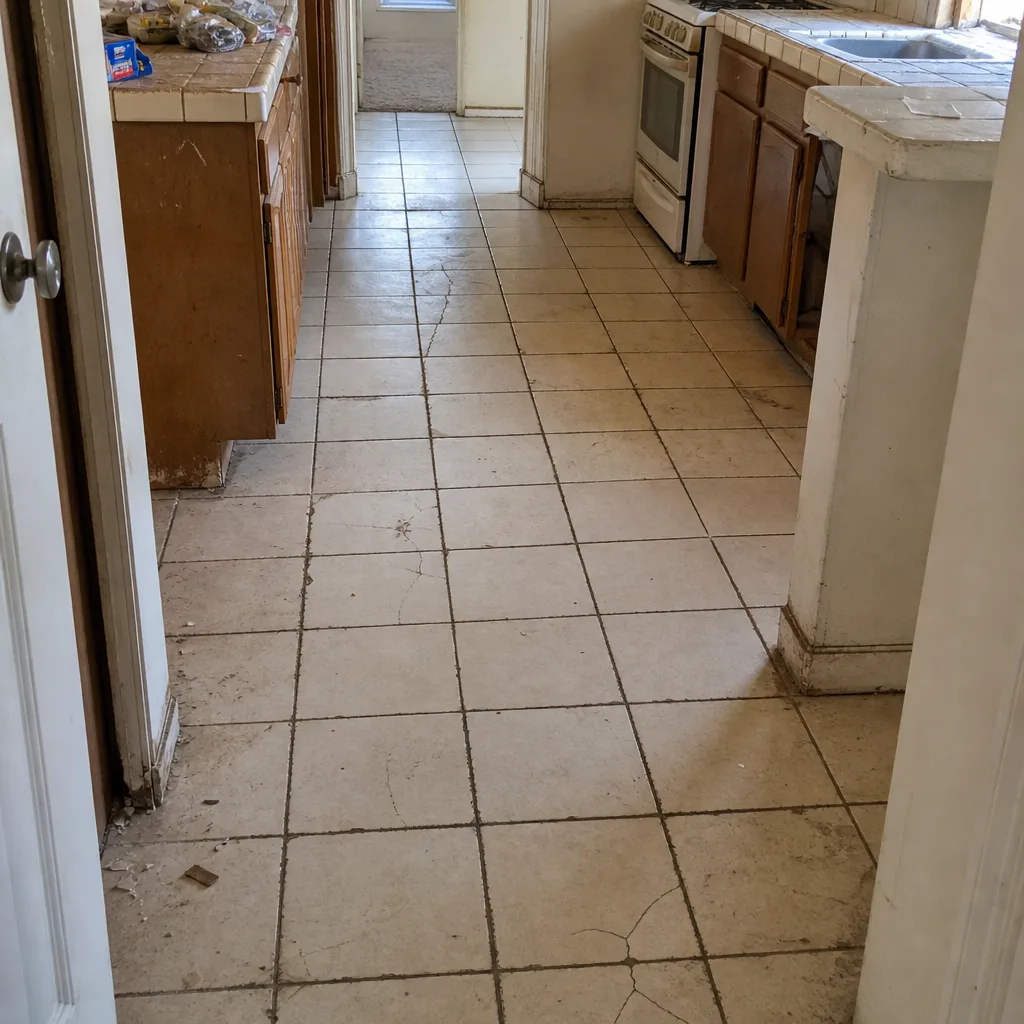 Before
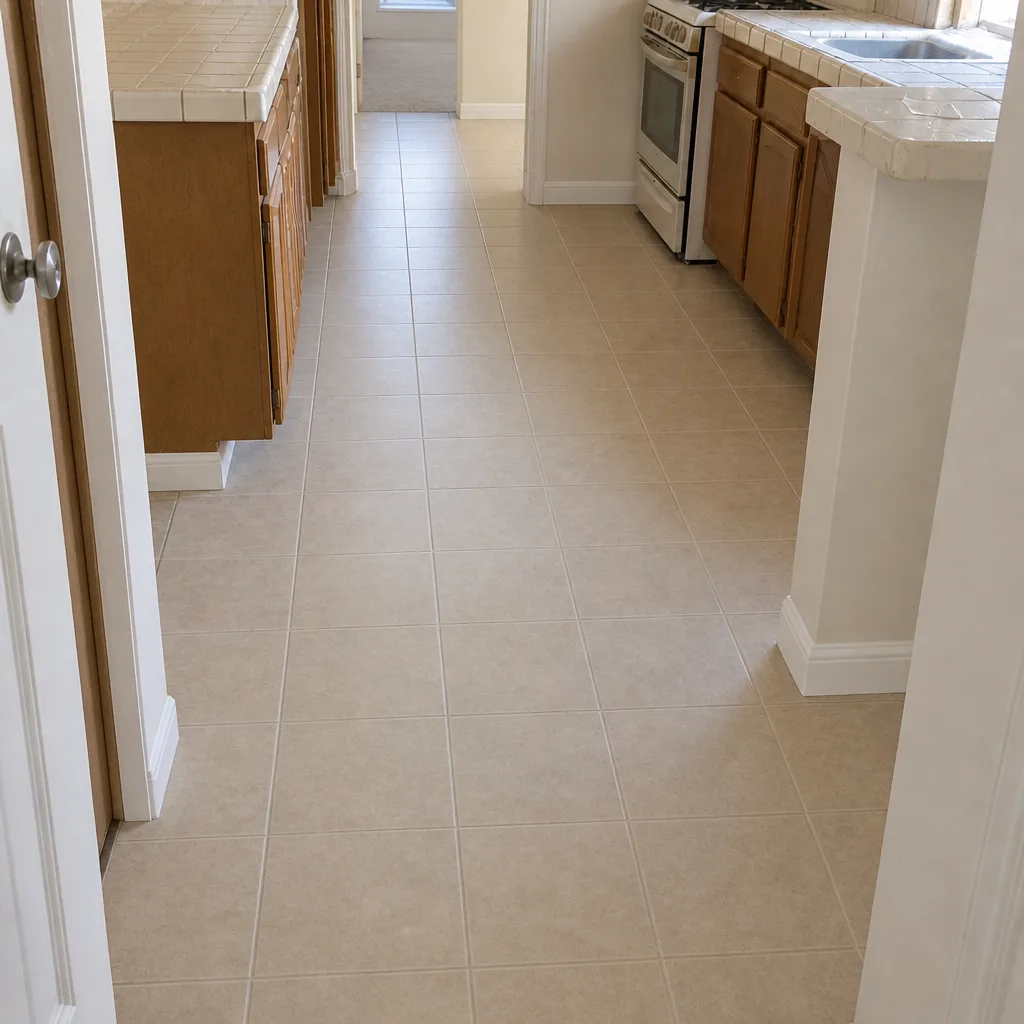 After
Frequently Asked Questions
Most Las Vegas homes have a concrete slab on grade, which you can usually confirm by looking at your foundation and whether the home has a crawl space. If you have a crawl space access hatch or live on a second floor, you have a wood subfloor over joists. When in doubt, the estimate visit includes a subfloor inspection that identifies the type and its condition.
Yes. A slab can feel perfectly dry at the surface and still emit moisture vapor upward from the soil below at a rate that fails a calcium chloride or in-situ humidity test. That’s why the touch test isn’t a substitute for a real measurement, and why we require a moisture reading before quoting an install over a slab. Call (888) 268-1308 to schedule a free estimate – estimates are free.
Flatness tolerance is how much a subfloor is allowed to vary from a flat plane over a given distance, and older Las Vegas slabs were often poured with less attention to it than modern ones. The result is local high spots and dips that cause hollow clicks under rigid plank, lippage under tile, and gaps at seams. A self-leveling compound or backer board corrects it, determined by the material going down.
A subfloor repair line means the installer inspected the subfloor and found something that needs correcting before your flooring goes down – flatness variance or a moisture condition. It’s a sign of a real inspection, not padding. A good estimate names the issue and bounds the scope. The repair price is per job and set by the written estimate, so ask for the specifics before you commit.
Not safely. Rigid LVT – COREtec and Karndean, for example – needs a flat, dry slab because it doesn’t flex to follow dips. Over a high spot you get a hollow click and rocking edges; over a dip you get seam gaps as the plank flexes. Water-resistant doesn’t mean it handles moisture from below either. The slab gets corrected or mitigated first.
Yes, the estimate is free, and it includes a subfloor inspection so you know what prep your floor needs before you commit. The written estimate is the final number, and it sets the price for the job. Call (888) 268-1308 for an exact quote – estimates are free.
The Bottom Line
The floor you see is the last layer of a stack, and the subfloor underneath is the layer that decides whether the surface lasts. In Las Vegas, that’s usually a concrete slab on desert soil that moves with the seasons, and its flatness and moisture profile determine what you can install and what it will cost. A real moisture test, a flatness measurement, and an estimate that explains its repair lines are the three things every flooring project deserves. Skip them, and the surface tells you about it within a year. Get them right, and the floor does what you paid for.
Ready for a Free Estimate?
If you’re planning a flooring project over a Las Vegas slab and want to know what the subfloor needs before you choose the surface, we’ll inspect it and give you a written estimate. Call (888) 268-1308. We answer 24/7. Fast dispatch from 7am to 7pm, Sunday through Friday. Your floor, your brand – nine trusted brands, one installation team.
Written by the team at Las Vegas Flooring Installation.