
Last updated November 18, 2026
 Hardwood
 Engineered hardwood
 Luxury vinyl plank
 Laminate
 Porcelain tile
 Carpet
 Shaw
 Mohawk
 COREtec
 Pergo
Free in-home measure and written estimate: Shaw, Mohawk, COREtec and Pergo lines compared on your own rooms, with carpet, tile, vinyl plank, laminate and hardwood laid out side by side
Get your free estimateHow to Hire a Flooring Contractor in Las Vegas: A Step-by-Step Guide
Most homeowners hire a flooring contractor backwards. They start with a price, then try to work out afterward whether the person who quoted it was qualified, insured, or allowed to be installing floors in the first place. Nevada has a licensing system for flooring work, and the state database that shows who holds a license is public, free, and takes about two minutes to search. Almost nobody uses it before signing. This guide walks through the order that actually protects you: verify first, compare second, negotiate last. You’ll learn how to read a Nevada license record, how to tell a flooring specialist from a handyman with a nail gun, what an honest in-home estimate looks like, and which contract language should make you walk away. Every step applies whether you’re replacing carpet in a Henderson rental or refinishing original oak in a 1970s ranch house near Las Vegas.
Quick Answer
To hire a flooring contractor in Las Vegas, verify the contractor’s Nevada state license and its flooring classification on the state contractor database before anything else, then get a written in-home estimate that names the exact product, addresses subfloor prep, and spells out what the installation warranty covers. Skip anyone who quotes a firm price over the phone without seeing the floor, and confirm which manufacturer brands the installer is set up to work with so warranty claims stay enforceable.
Styles & brands we work with
- Hardwood
- Engineered hardwood
- Luxury vinyl plank
- Laminate
- Porcelain tile
- Carpet
- Shaw
- Mohawk
- COREtec
- Pergo
Table of Contents
- Step 1: How Do You Verify a Nevada Flooring Contractor’s License?
- Step 2: Is a Flooring Specialist Different From a Handyman Who Does Floors?
- Step 3: What Does a Legitimate In-Home Estimate Look Like?
- Step 4: Why Do Brand Relationships Matter When You Hire?
- Step 5: What Should a Flooring Contract Say?
- Step 6: What Las Vegas Conditions Should Your Contractor Account For?
- Step 7: How Should the Install Be Scheduled and Staged?
- Step 8: How Do You Inspect the Finished Floor?
Step 1: How Do You Verify a Nevada Flooring Contractor’s License?
You verify a Nevada flooring contractor by searching the contractor’s license number on the Nevada State Contractors Board database, checking that the license is active, that the classification listed covers flooring work, and that the business name on the license matches the name on your quote. Nevada issues licenses by classification, and flooring installation falls under a specific residential and commercial classification rather than a general building one. A contractor who hands you a license number that pulls up a different company name, an expired status, or a classification for landscaping is telling you something important before the work even starts.
Run the check yourself rather than accepting a screenshot. The database is the source; a photo of a license card is not. Here’s the order we suggest:
- Ask for the license number in writing on the estimate or by text, not just spoken over the phone. Numbers get transposed verbally.
- Search the state contractor database and confirm the status reads active, not expired, suspended, or revoked.
- Confirm the classification matches flooring work. A license that covers general building doesn’t automatically cover a flooring scope.
- Match the business name on the license to the name on your contract and the name on the insurance certificate.
- Ask for a certificate of insurance naming liability coverage, and confirm the dates are current. Nevada requires licensed contractors to carry it, but the certificate is what proves the coverage exists today.
This step matters more in a market like Las Vegas than most homeowners realize. The valley has a large pool of one-person installers who do good work and a smaller pool who don’t carry a license at all, and the difference only shows up when something goes wrong. If an unlicensed installer damages a subfloor or walks off a half-finished job, you have no licensing board to complain to and no bond to claim against. The state database is the cheapest insurance you’ll ever buy, because it costs nothing.
One more check worth doing: ask whether the person quoting you is the license holder, an employee, or a subcontractor. Some operations sell the job and hand it to whoever’s available. That’s legal in many cases, but you want to know, because the license and insurance chain should follow the people who actually set foot in your house.
Step 2: Is a Flooring Specialist Different From a Handyman Who Does Floors?
A flooring specialist is a contractor whose business is built around flooring, which means their licensing, insurance, supplier relationships, and installation warranties are all structured for floor work. A handyman who “does floors too” is usually licensed for general repairs, buys materials retail or from whatever supplier will sell to them, and has no manufacturer relationship behind the installation. The floor may look fine on day one. The difference appears two years later, when a plank lifts or a tile cracks and you discover the installation warranty is a verbal promise from someone whose phone number no longer works.
Warranty enforcement is the practical heart of this. Most flooring manufacturers require installation by a qualified or authorized installer for their product warranty to stay valid. If the material fails because of how it was installed, and the installer had no relationship with the manufacturer, the claim goes nowhere and the cost lands on you. A specialist who installs Shaw, Mohawk, or Daltile products through established supplier channels is in a position to file and support a warranty claim on your behalf. A generalist operator typically isn’t.
There’s a skills argument too. Flooring is several trades wearing one name. Carpet needs stretching equipment and seam work. Tile needs layout planning, substrate flatness, and grout discipline. Hardwood refinishing is its own craft with sanding sequences and finish control. Someone who does all three weekly develops judgment that someone who installs a floor twice a month doesn’t. Our own team concentrates on three disciplines, carpet installation, tile, and hardwood refinishing, because those are the scopes where the detail work decides the outcome.
When you talk to a prospective contractor, ask a specific technical question and listen for a specific answer. Ask how they handle a concrete slab that’s out of flat. Ask what they do about a squeaking subfloor under carpet. Vague answers from a specialist are rare; vague answers from a generalist are the norm. You’re not testing trivia, you’re testing whether floors are the thing they think about all week.
Step 3: What Does a Legitimate In-Home Estimate Look Like?
A legitimate in-home estimate involves a scheduled visit where the estimator measures each room, checks the subfloor, looks at transitions and door clearances, asks about moisture sources, and then sends a written quote itemizing material, labor, prep, and disposal. A firm price quoted over the phone, before anyone has seen the floor, is a guess dressed up as a number. It’s the single most common shortcut in the Las Vegas flooring market, and it’s also the reason so many jobs end with a “surprise” change order once the old floor comes up.
Here’s what a real estimate visit should include:
- Actual measurements taken room by room, not square footage copied from a listing or estimated from a floor plan photo.
- A subfloor check, including a look at what’s under the existing floor. Slab-on-grade is common across the valley, and older floors can hide cracks, patching, or adhesive residue that changes the prep scope.
- Transition and trim review, covering door undercuts, thresholds, and how the new floor meets adjacent surfaces.
- A written, itemized quote separating material, labor, subfloor preparation, old floor removal, and haul-away. A single lump-sum figure hides too much.
- Named products, with brand and product line written out, not “LVT” or “carpet” as a category.
- A clear statement of what’s excluded, such as furniture moving or baseboard replacement, so nothing is ambiguous later.
Expect the conversation to include a decision about material. If you already know you want COREtec or LifeProof, say so up front and ask whether the contractor installs and sources it. That converts the visit from a sales presentation into a scope discussion, which is where you want it. The estimator should also tell you what subfloor preparation is likely to cost as a range, because prep is the line item that moves most between the quote and the invoice.
Get two or three written estimates and compare them line by line, not by the bottom number. The low quote is often low because it omits prep, disposal, or trim, all of which reappear later. An estimate you can read and compare is worth more than one that’s simply cheaper on paper.
Step 4: Why Do Brand Relationships Matter When You Hire?
Brand relationships matter because they determine what a contractor can source, how consistently they can source it, and whether the manufacturer will stand behind the installation if something fails. A contractor who regularly installs a given brand knows its quirks: how a particular plank handles a tight layout, how a tile line cuts and sets, what the material needs from the subfloor. That knowledge isn’t marketing. It’s the difference between a floor that’s still flat and quiet in five years and one that telegraphs every imperfection underneath.
Ask two questions during the hiring process. First: which manufacturers does the contractor install regularly? Second: can they get the specific product you want, or will they suggest whatever their supplier is pushing? The second question is the useful one. A contractor who installs floors across the brands a homeowner already researched is oriented toward your choice. A contractor who steers every conversation toward one product they happen to have access to is oriented toward volume.
Our position is that the homeowner should pick the brand and the installer should be equipped to work with it. We install and work with nine brands: Shaw, Mohawk, COREtec, Pergo, LifeProof, Mannington, Armstrong, Daltile, and Karndean. That spread covers the common residential scopes. Carpet shoppers tend to arrive knowing they want Shaw or Mohawk. Tile projects involve tile flooring installation with Daltile products in professional grade. Design-focused buyers often want Karndean, which is a premium LVT line that fewer generalist installers are set up to handle. Performance-driven buyers ask for COREtec or LifeProof.
Brand depth also matters for repair and replacement later. If you install a floor and need a plank replaced after a move or a spill, a contractor who installs that brand routinely is more likely to get matching material than one who bought it once at a big-box store. That’s a real advantage in a city where people move, rent out, and renovate frequently.
One caution: brand authorizations aren’t a substitute for the license and insurance check. Do both. A contractor can carry a manufacturer relationship and still be the wrong choice for other reasons. The checks stack; none of them replaces another.
Step 5: What Should a Flooring Contract Say?
A flooring contract should name the exact products being installed down to brand and product line, describe the subfloor preparation included and its cost, state the total price and payment schedule, and define what the installation warranty covers and for how long. If any of those four elements is missing or vague, ask for it in writing before you sign. The contract is the document you’ll rely on if there’s a dispute, and generality favors the contractor, not you.
Here are the specific gaps we see most often in contracts homeowners bring to us after a bad experience elsewhere:
- Missing brand names. A contract that says “luxury vinyl plank” without a brand or product line lets the installer substitute something cheaper after you’ve signed. Get the brand and line written in.
- Vague subfloor language. Phrases like “minor prep as needed” or “subfloor repairs extra as required” hand the contractor unlimited change-order authority. Ask for a defined scope and a per-square-foot or per-area price if additional prep turns out to be necessary.
- An installation warranty that covers nothing specific. “We guarantee our work” is not a warranty. It should state what’s covered (lifting, gapping, seam failure, tile cracking from installation causes), what isn’t (damage from water, abuse, furniture), how long the coverage runs, and how a claim is made.
- No mention of the manufacturer warranty. The contract should state that the material warranty is separate and that the installer will provide the documentation needed to register or claim under it.
- Payment terms weighted to the front. A large deposit before materials are even ordered is a red flag. Material costs are real and a deposit toward them is normal, but the schedule should track the work.
- Missing cleanup and disposal terms. Old flooring removal and haul-away should be stated, not assumed.
Read the entire document, including the back page and any attachments. If something in the contract contradicts what the estimator told you in the kitchen, the contract wins. Ask for the correction in writing rather than accepting a verbal assurance that it’ll be fine.
Step 6: What Las Vegas Conditions Should Your Contractor Account For?
Las Vegas conditions should push your contractor toward specific questions about moisture and temperature, because the valley’s climate stresses flooring in ways that a contractor from a milder market may not anticipate. The air here is dry most of the year, which affects how wood and wood-based products behave, and the intense summer heat means interior conditions swing between air-conditioned rooms and much hotter spaces. Ask how the contractor accounts for both. The answer tells you whether they’ve installed floors in Las Vegas or are applying habits from somewhere else.
Concrete slab construction is the norm across much of the valley, including in newer builds and in neighborhoods like Summerlin and the southwest corridor. Slab-on-grade floors can transmit moisture from below, and that moisture doesn’t care how dry the air is. A contractor who skips a slab moisture check before installing a wood or wood-core product is skipping the single most important prep step on that floor. Ask directly: how do you check the slab, and what do you do if the reading is high?
The dry air cuts the other way with carpet and wood. Ask whether the material needs to sit in your home before installation to adjust to indoor conditions, and follow whatever the product instructions and the written estimate specify, since those set the actual requirements. In summer, ask how the material will be stored and staged so it isn’t sitting in a hot garage or on a sun-baked driveway before it goes down.
Tile in Las Vegas has its own considerations. Large-format tile over a slab needs a flat substrate and correct movement accommodation, and the dry heat amplifies any substrate problem. A contractor who talks about substrate flatness and layout without being prompted is talking like someone who installs tile here regularly. If they don’t mention it, ask. For a broader look at how we approach projects across the valley, see our Las Vegas page.
Step 7: How Should the Install Be Scheduled and Staged?
The install should be scheduled only after the estimate visit, the product selection, and the written quote are settled, and the schedule should be set at the estimate rather than promised over the phone. A contractor who commits to a specific install date before seeing the floor, or before the material is confirmed available, is setting up a delay. Flooring is a sequenced job: measure, product order, subfloor prep, installation, trim and transitions, cleanup. Compressing that sequence is where problems start.
Ask these questions when the schedule is discussed:
- When will the material be ordered, and who confirms it’s in stock? Product availability drives the calendar, so the order should be placed early and confirmed in writing.
- How will the rooms be staged? A whole-home install needs a plan for furniture and for keeping a usable path through the house. The plan should be in the written scope.
- What’s the sequence room by room? Even a simple two-room job benefits from a stated order.
- Who handles the haul-away and the final cleanup? Get it in writing.
- What happens if the subfloor prep turns out bigger than expected? The contract should already answer this from the discussion in Step 5.
Don’t schedule an install around a hard deadline you can’t move, like a move-in date or a family event, without telling the contractor up front. That’s information the estimator needs, and it may change what’s realistic. And keep the estimate visit separate from the install decision: the estimate is free, and you should feel no pressure to book on the spot. If a contractor pushes you to sign at the kitchen table, that’s a signal about how they handle the rest of the job.
Step 8: How Do You Inspect the Finished Floor?
You inspect a finished floor by walking it in daylight, checking the specific things installation errors show up as, and comparing the result to the written scope before the final payment changes hands. Do the walkthrough with the person responsible, and note anything that needs correction in writing rather than relying on a verbal promise to come back. Most installation issues are visible immediately if you know where to look.
What to check, by floor type:
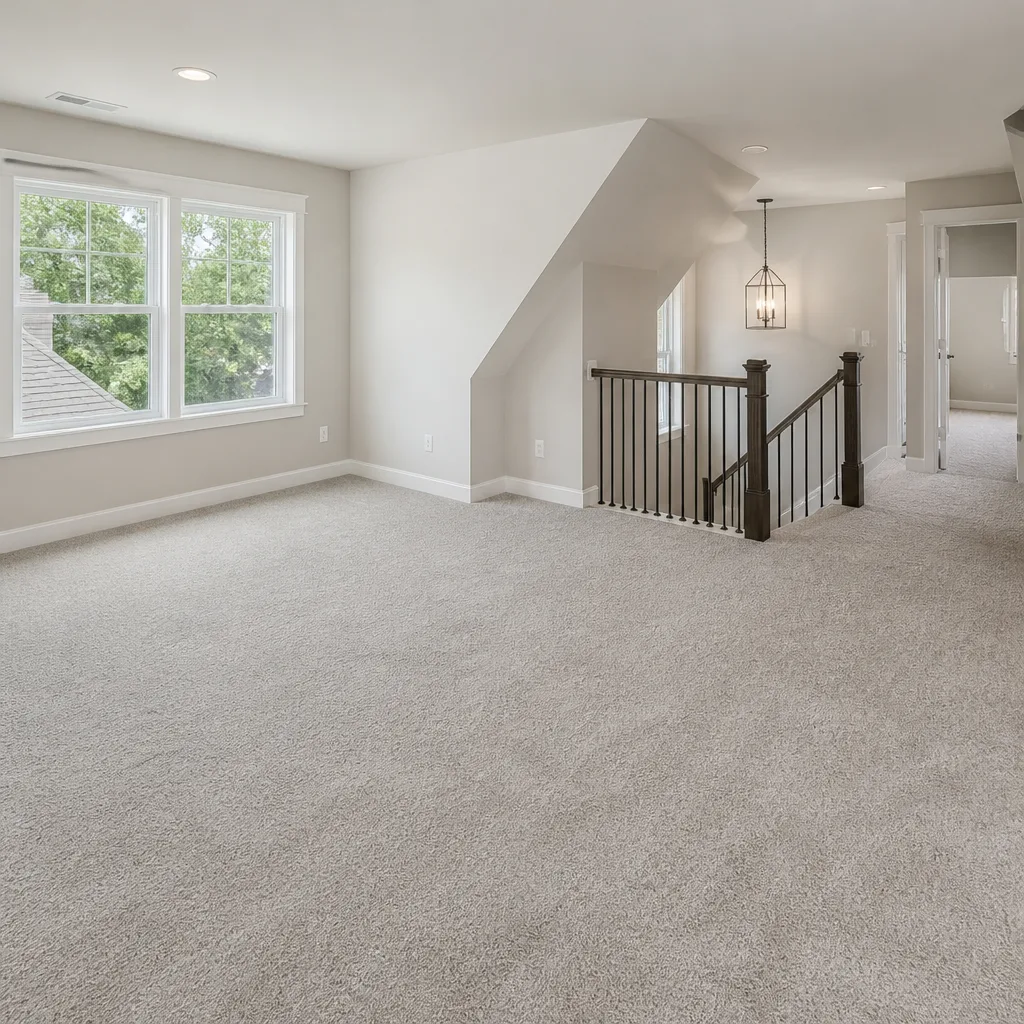
- Carpet: seams that don’t show as a ridge or a color line, no ripples or loose edges along walls, and a consistent stretch across the room. Look at the seams in raking light.
- Tile: lippage between tiles, consistent grout lines, no hollow-sounding tiles when tapped, and clean transitions where tile meets other floors.
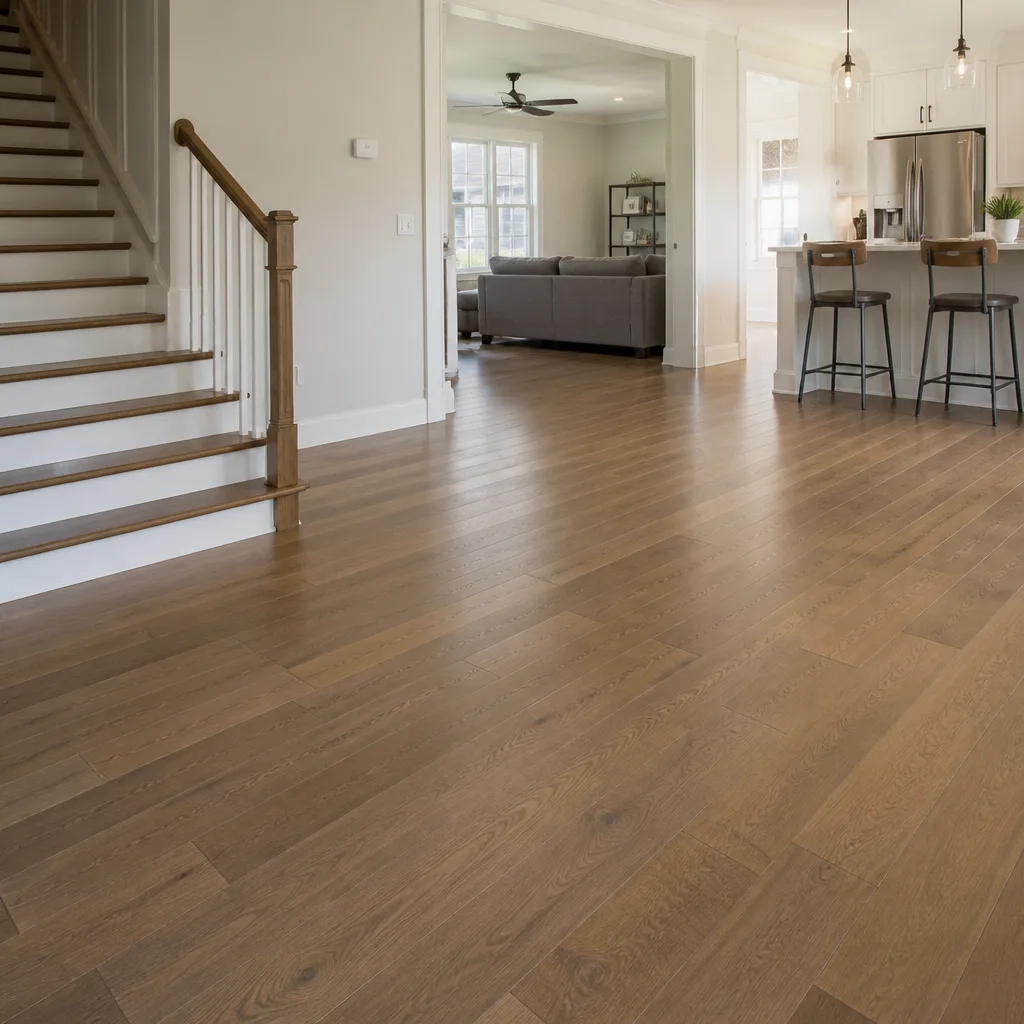
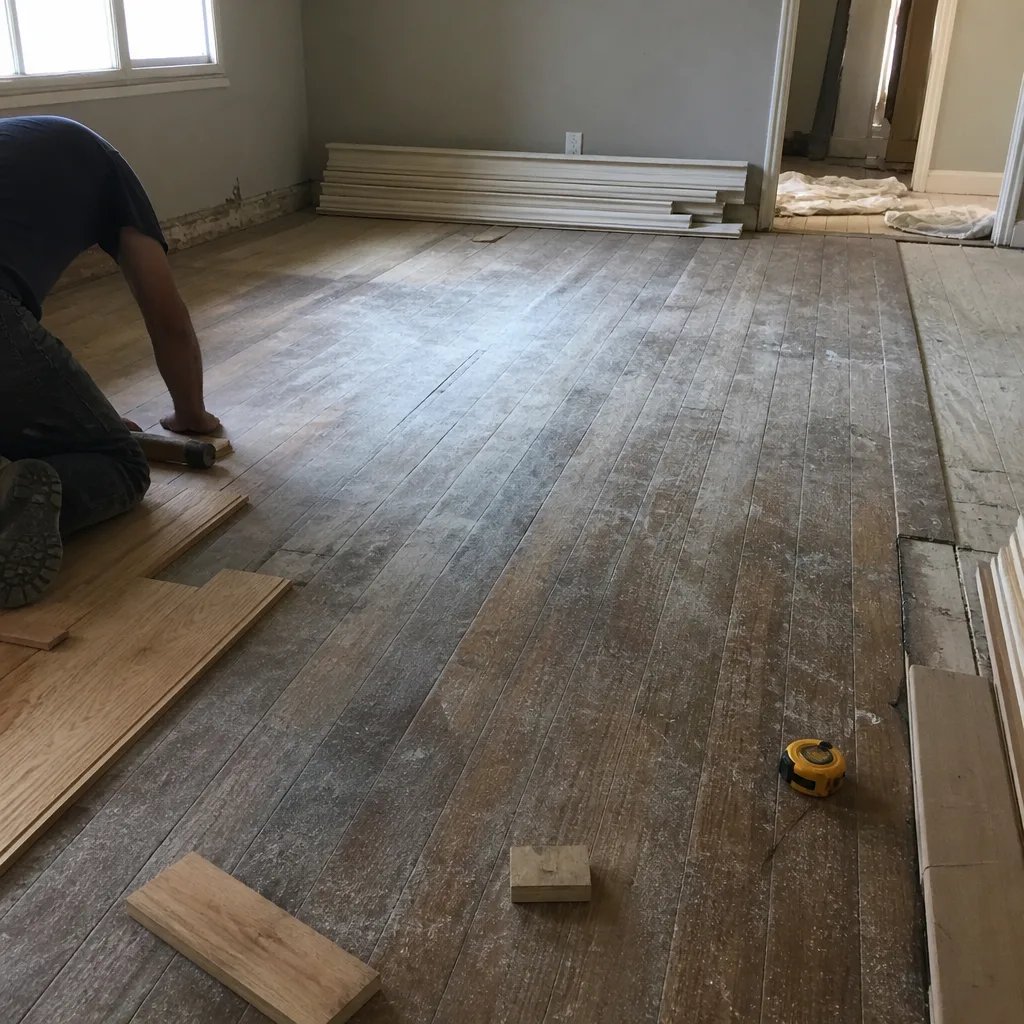
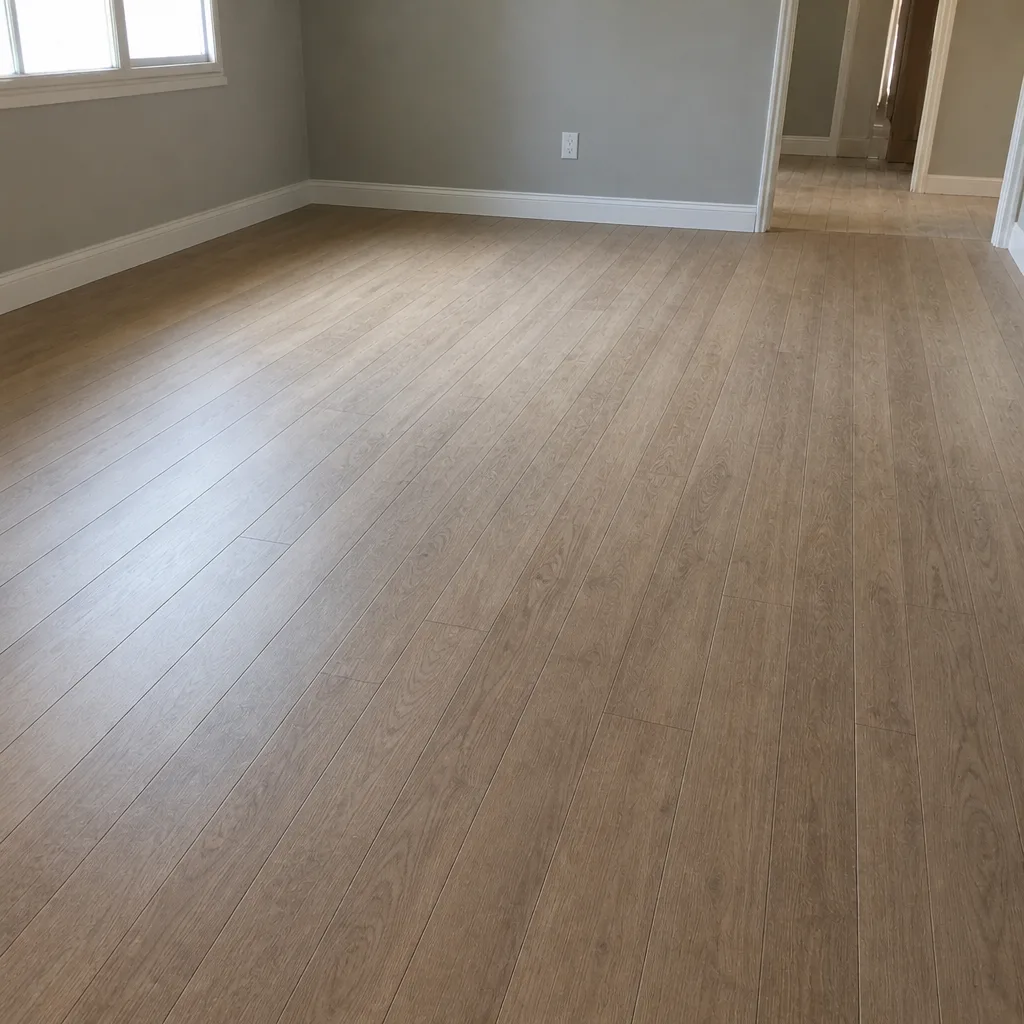
- Hardwood and refinishing: an even finish with no sanding swirls, consistent color across the room, and no gaps at the wall or at transitions. If the job was a refinish, check the areas that were hardest to reach, since shortcuts show up there first.
- Luxury vinyl and laminate: tight seams, no lifting at the edges, correct expansion gaps hidden under trim, and no hollow spots underfoot.
- Every floor: door swings clearing the new surface, baseboards and trim reinstalled cleanly, and the old material and debris gone.
Also confirm you received the material documentation. Product warranty paperwork, care instructions, and any leftover material for future repairs should all come to you at the end of the job. If the contractor installed Shaw or Daltile products, ask for whatever documentation supports the warranty in your hands, not just in theirs.
Hold the final payment until the punch list is done. A contractor with a legitimate process expects this. One who objects to it is telling you what the warranty conversation will feel like later.
Common Mistakes to Avoid
- Hiring without checking the Nevada license. A verbal assurance that a contractor is “licensed and insured” is not verification. Search the state database yourself, and confirm the classification and business name match. An unlicensed installer leaves you without recourse if the job fails.
- Comparing quotes by the bottom line only. The cheapest quote often omits subfloor prep, haul-away, or trim. Compare line by line, and be suspicious of any quote that’s dramatically lower than the others.
- Accepting a phone quote as a firm price. Nobody can price a floor they haven’t measured and inspected. A phone quote is a placeholder, and the change order will arrive once the floor is open.
- Signing a contract with no brand names. “LVT” or “carpet” as a category lets the installer substitute a cheaper product after signing. Demand the brand and product line in writing.
- Skipping the slab moisture question on a Las Vegas install. The dry air hides the problem. Slab-on-grade floors can pass moisture from below, and a wood or wood-core product over a wet slab will fail no matter how well it was installed.
- Assuming “installation warranty” means something. Ask what’s covered, what isn’t, how long, and how a claim is made. If the answer is vague now, it’ll be vaguer later.
- Choosing a generalist for a specialist job. Carpet, tile, and hardwood refinishing each require different skills. A contractor whose business is built around one of them is usually the better fit than a handyman who does all three occasionally.
See the difference
 Before
 After
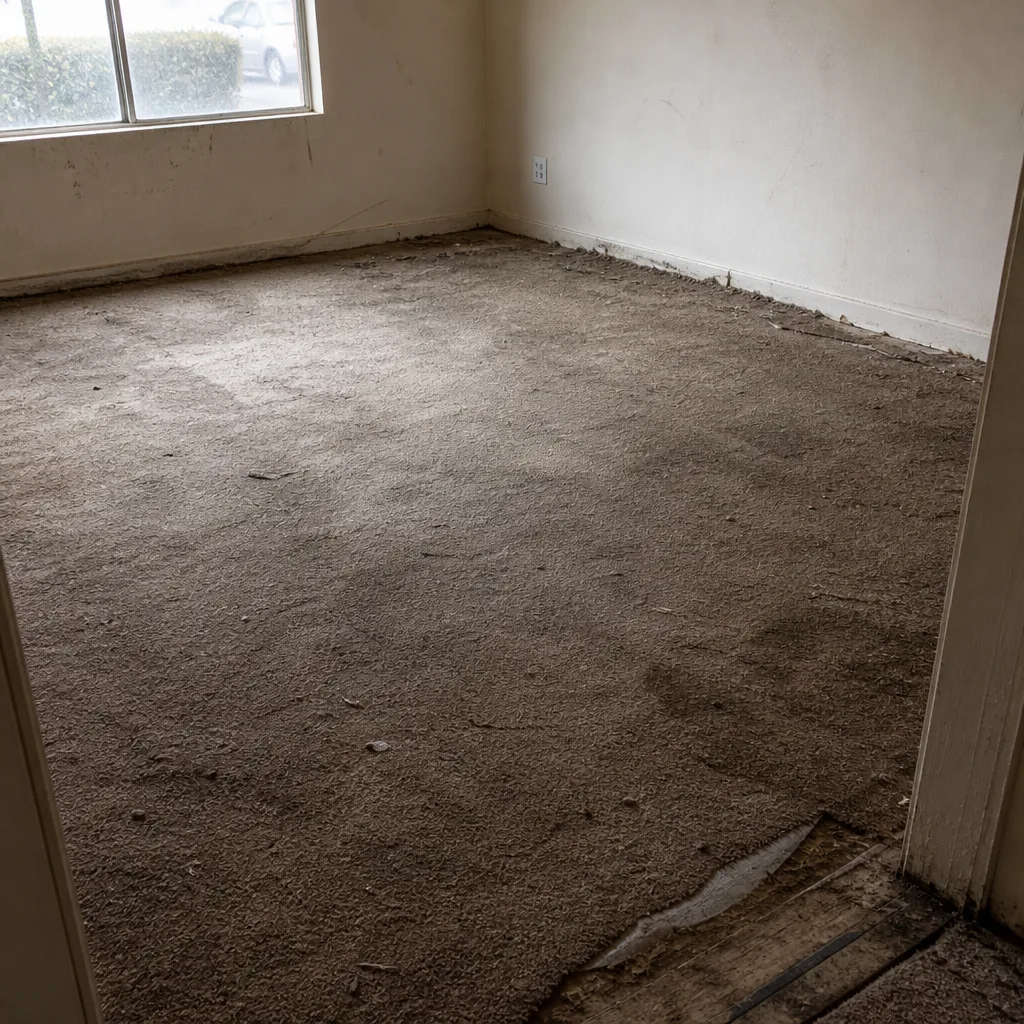 Before
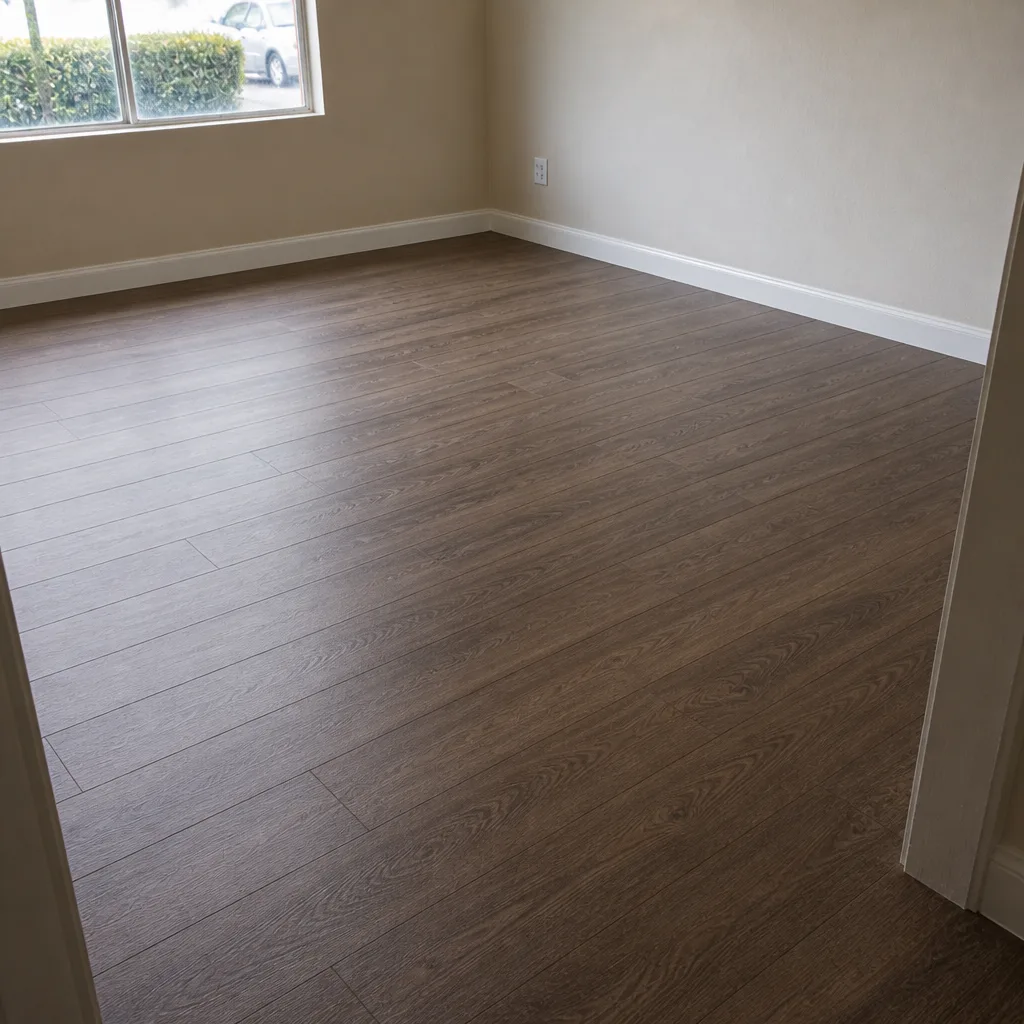 After
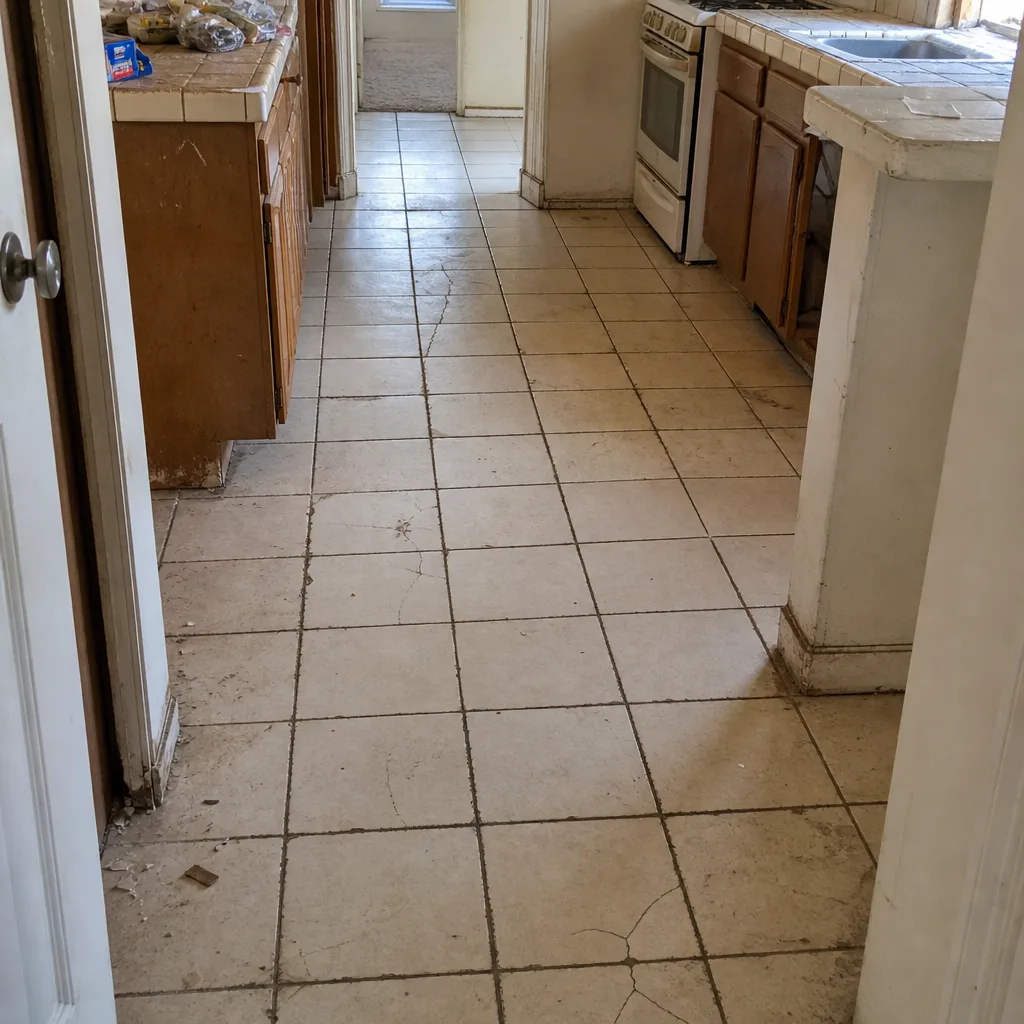 Before
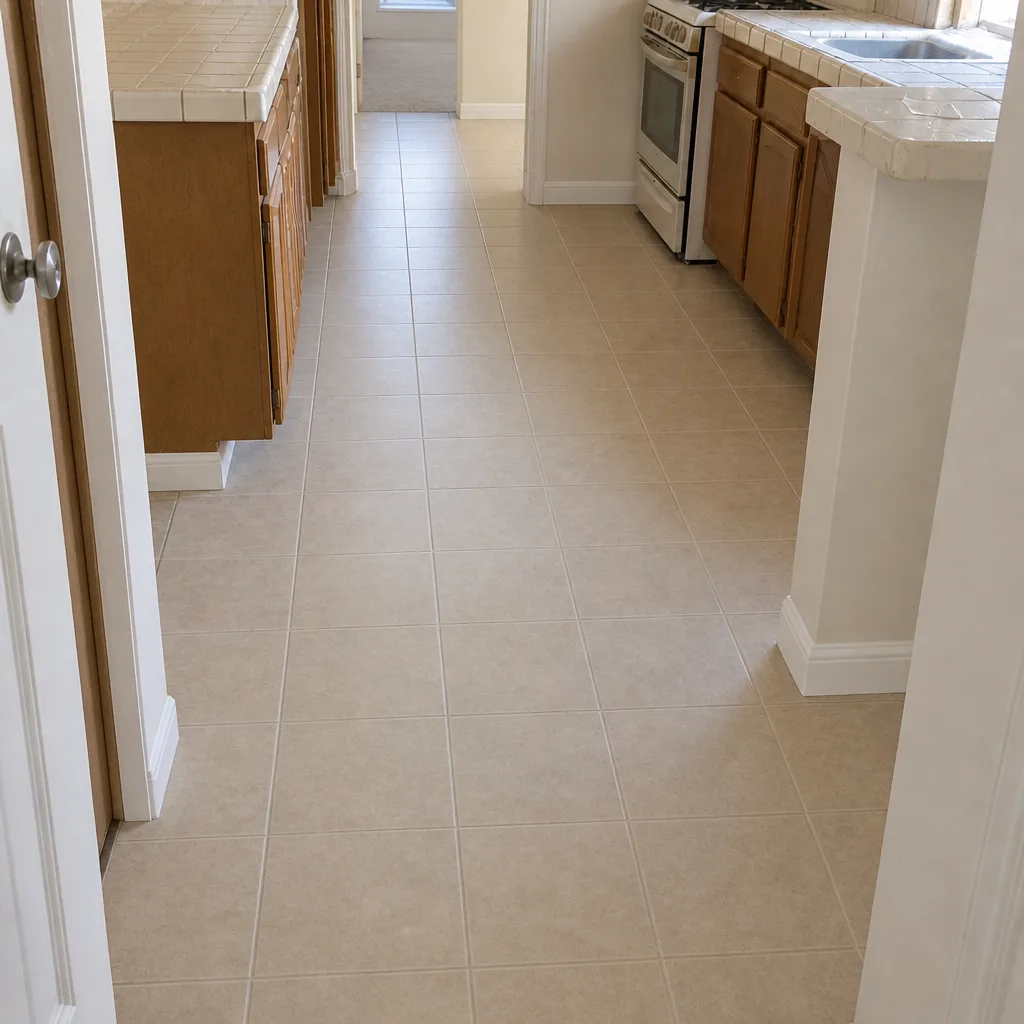 After
When to Call a Professional
Call a professional when the floor involves anything you can’t verify from the surface. That includes moisture coming through a slab, a subfloor that’s visibly uneven or soft, tile that’s cracked across multiple pieces (a sign of substrate movement rather than impact), wall-to-wall carpet that needs stretching and re-seaming, or hardwood that needs refinishing. Refinishing is a job where a homeowner with a rental sander usually does more harm than good, and the damage from an uneven pass shows up permanently in the finish. Water damage is another case where a professional inspection matters, since the flooring is often the visible symptom and the actual problem is underneath it.
Las Vegas Flooring Installation offers free estimates in Las Vegas. We install and work with nine brands, covering carpet, tile, and hardwood refinishing, and our technicians have up to 15 years of experience. Call (888) 268-1308 to schedule your free estimate.
Frequently Asked Questions
Flooring installation in Las Vegas is priced per job by a written estimate, not by a single flat rate, so the total depends on the square footage, the product you choose, and the subfloor prep required. Prep is the line item that moves most between the quote and the invoice, which is why the in-home visit matters. Call (888) 268-1308 to schedule a free estimate.
Yes. Search the Nevada State Contractors Board database yourself, confirm the license is active, confirm the classification covers flooring work, and confirm the business name on the license matches the name on your contract. Any licensed contractor will give you the number without hesitation. One who won’t, or whose number pulls up a different company, should come off your list.
Yes. The in-home measure and written estimate are free, and you’re under no obligation to book the install. You should expect the estimator to measure each room, check the subfloor, and send a written, itemized quote afterward. Call (888) 268-1308 to schedule your free estimate.
A flooring specialist is licensed and structured for floor work, has supplier relationships with the brands they install, and can support a manufacturer warranty claim. A general handyman typically has neither. When a plank lifts or a tile cracks from installation causes, the specialist has a path to remedy it and the generalist generally doesn’t.
Yes. We install and work with nine brands, including Shaw, Mohawk, Daltile, Karndean, COREtec, LifeProof, Pergo, Mannington, and Armstrong, so the conversation starts with the product you’ve already researched. Our technicians have up to 15 years of experience across carpet, tile, and hardwood refinishing. Call (888) 268-1308 for a free estimate on the brand you’ve chosen.
An installation warranty should state, in writing, what’s covered (for example lifting, gapping, seam failure, or tile cracking from installation causes), what’s excluded (water damage, abuse, furniture damage), how long the coverage lasts, and how to file a claim. “We guarantee our work” without that detail isn’t a warranty you can enforce. Read the warranty language before you sign, not after.
The schedule for your install is set at the estimate, because it depends on the product, the room count, and the subfloor prep. Material availability drives the calendar too, which is why the order should be confirmed in writing before a date is locked. Discuss timing at the estimate visit rather than expecting a firm date over the phone.
The Bottom Line
Hiring a flooring contractor in Las Vegas comes down to a sequence. Verify the Nevada license and classification first. Distinguish a flooring specialist from a handyman before you talk price. Require an in-home estimate with a written, itemized quote that names the brand and product line. Read the contract for the four elements that matter: product specificity, subfloor scope, warranty terms, and payment schedule. Then inspect the finished floor in daylight before the final payment and collect your documentation. Do those in order and the market’s shortcuts lose their grip on you. The contractors who follow the same sequence will make the process easy; the ones who resist it will reveal themselves early, which is exactly what you want.
For a brand-rich install across carpet, tile, or hardwood refinishing, we install and work with Las Vegas Flooring Installation products from nine name-brand lines. Call (888) 268-1308 to schedule your free estimate. We answer 24/7. Fast dispatch from 7am to 7pm, Sunday through Friday.
Written by the team at Las Vegas Flooring Installation.