
Last updated November 18, 2026
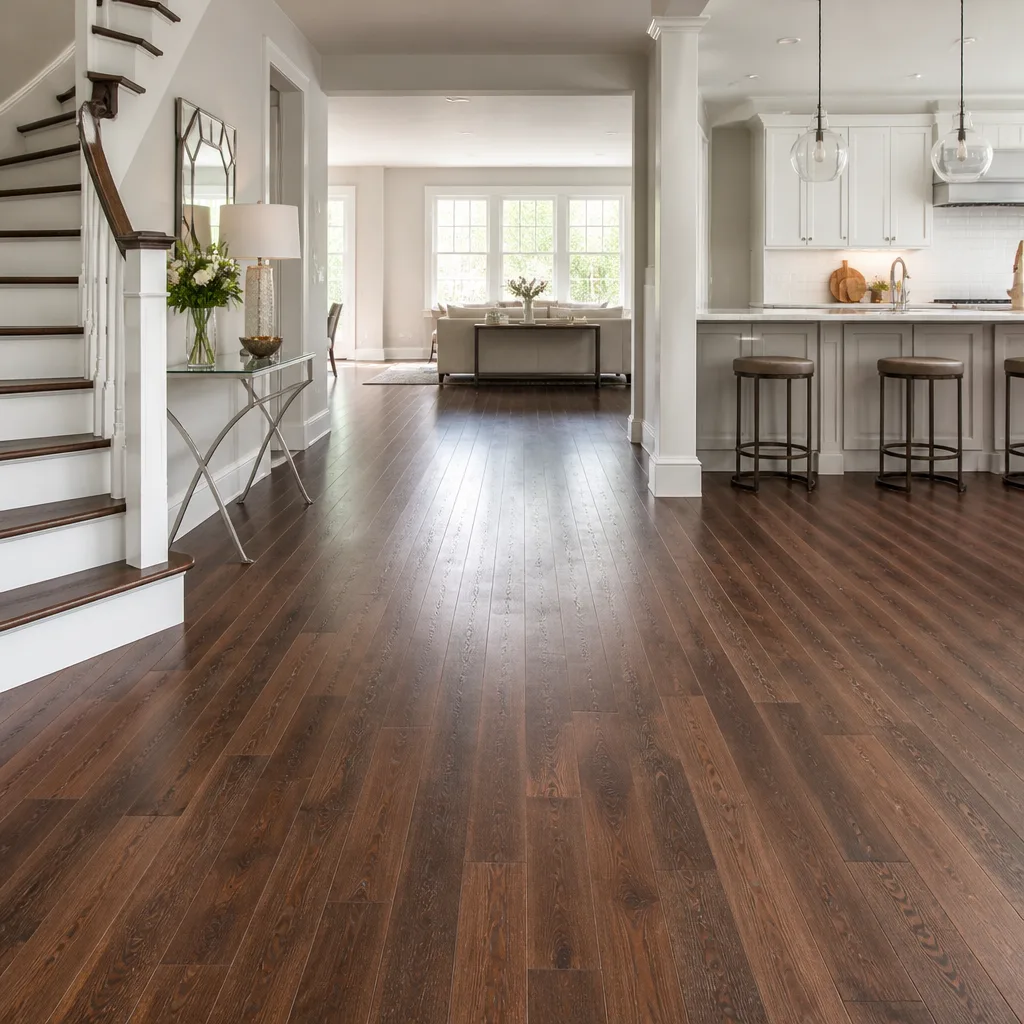 Hardwood
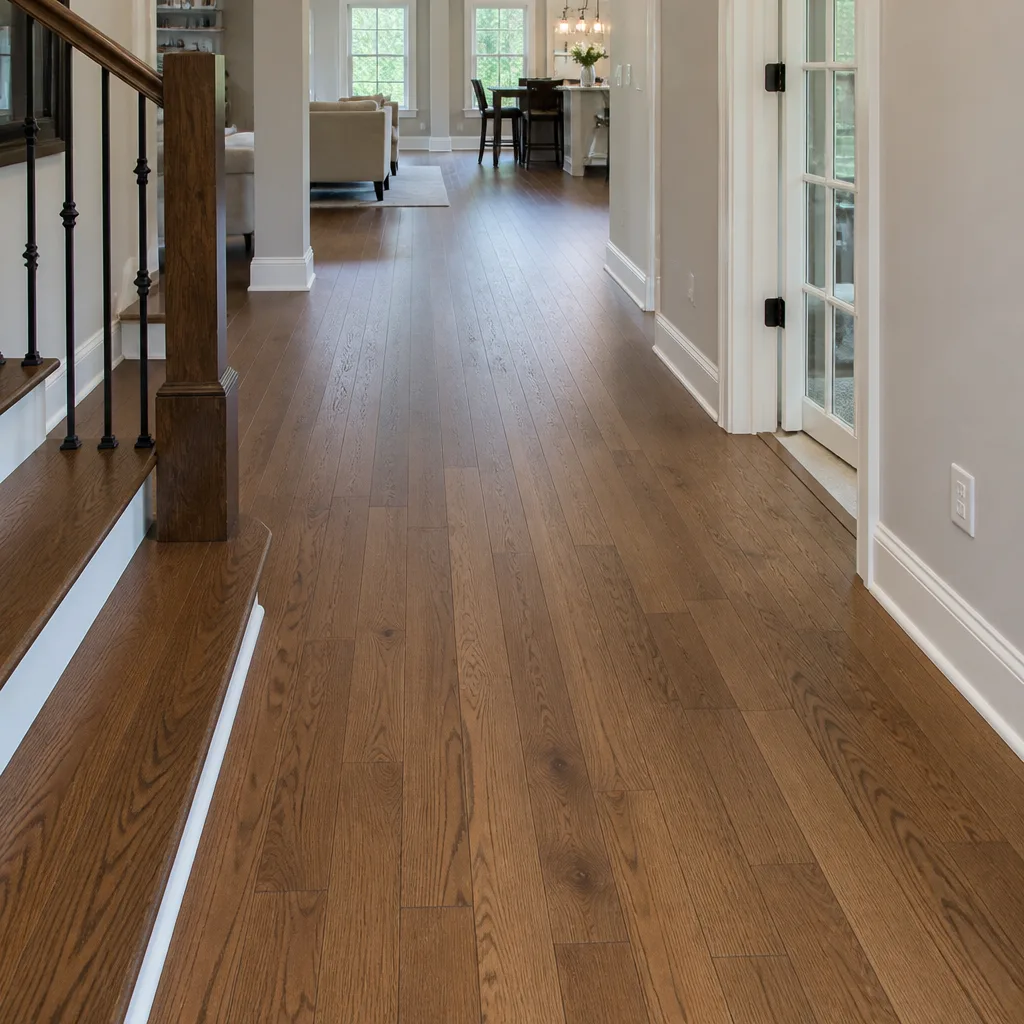 Engineered hardwood
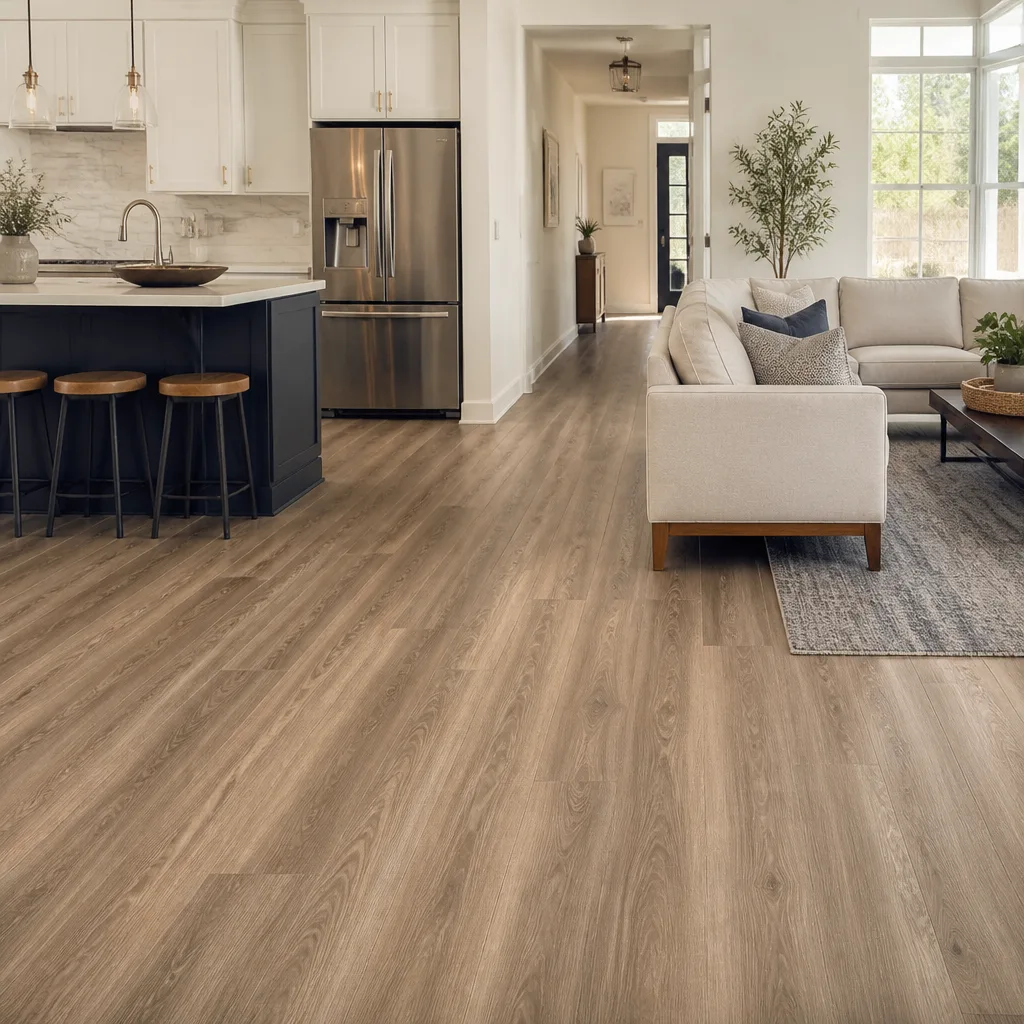 Luxury vinyl plank
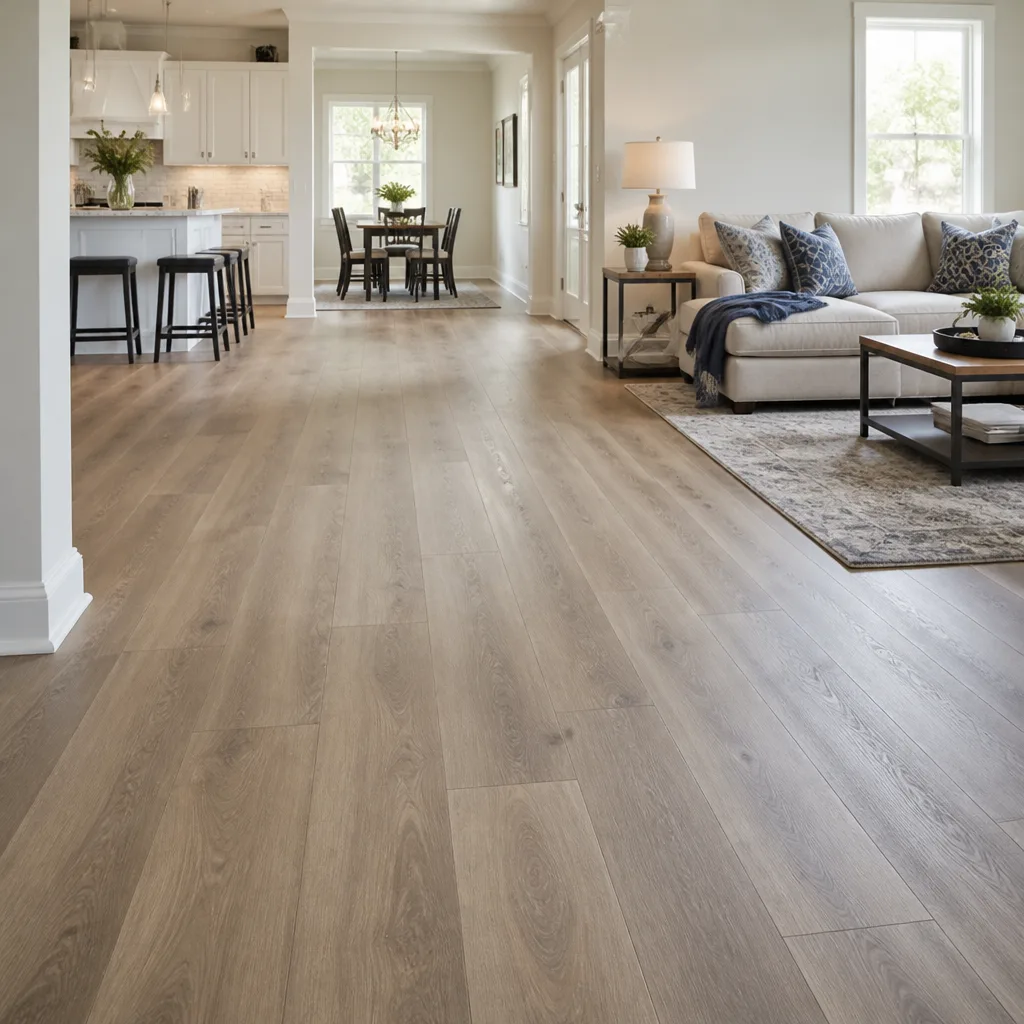 Laminate
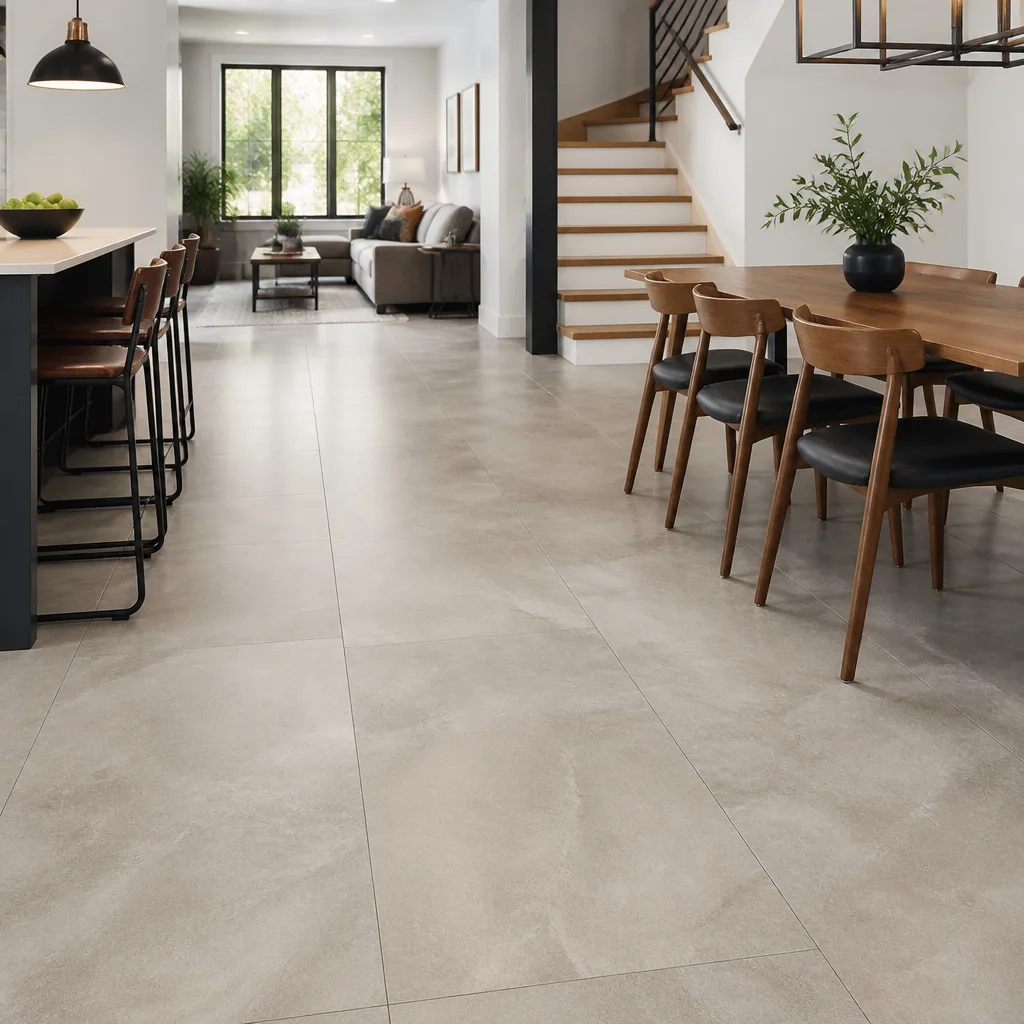 Porcelain tile
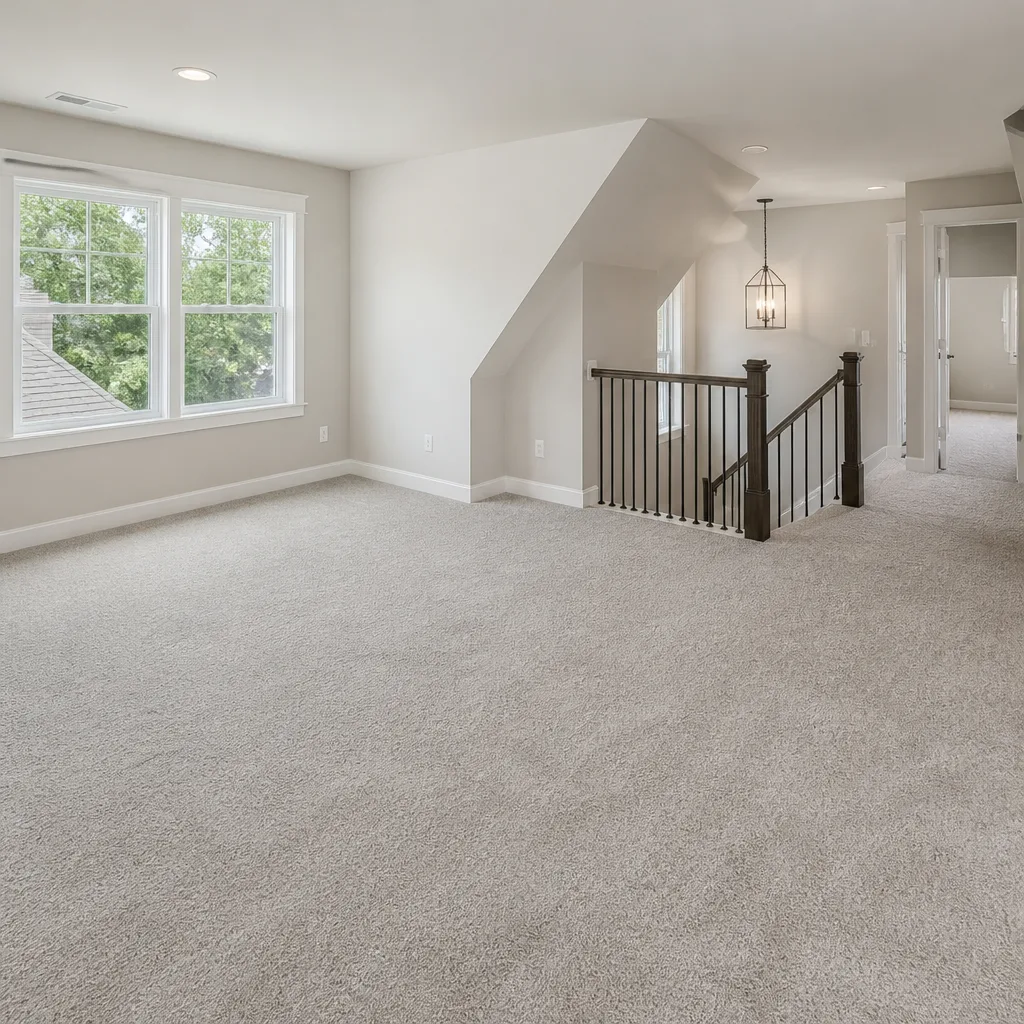 Carpet
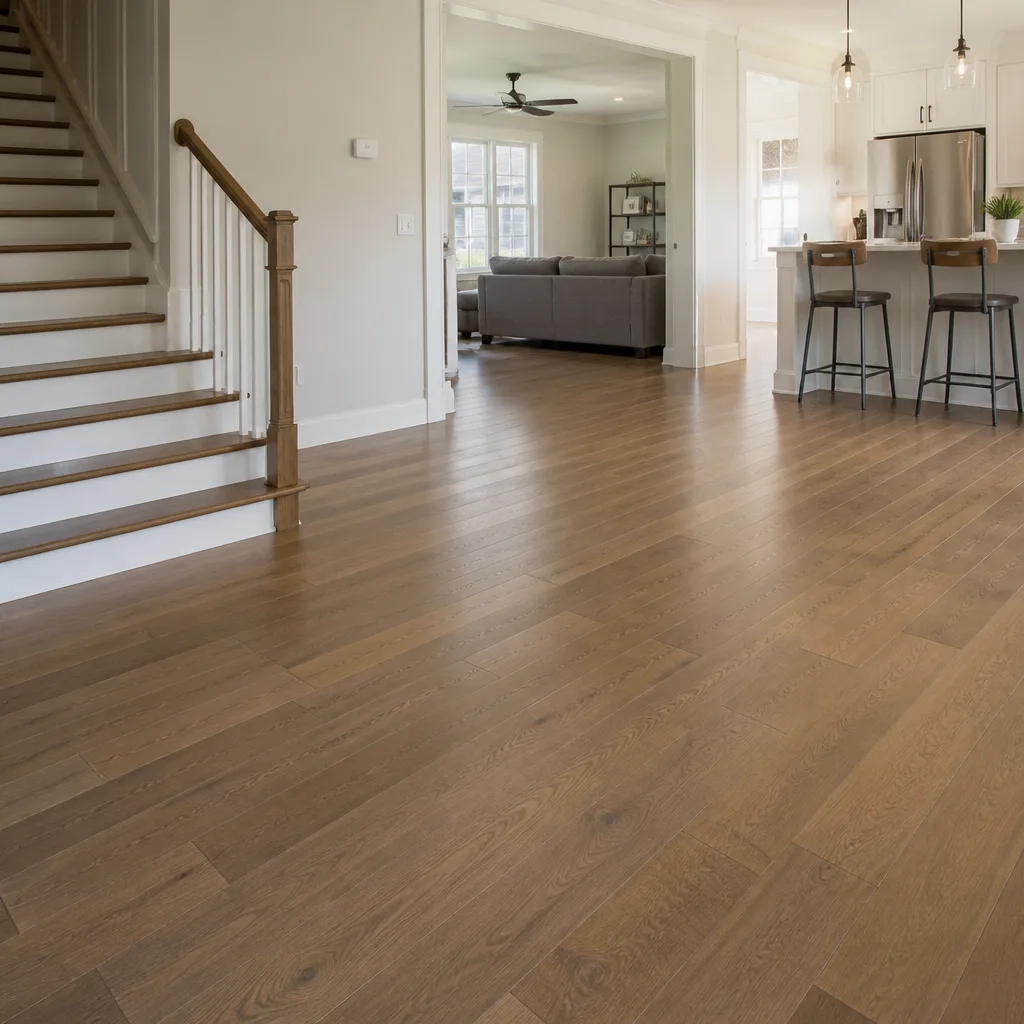 Shaw
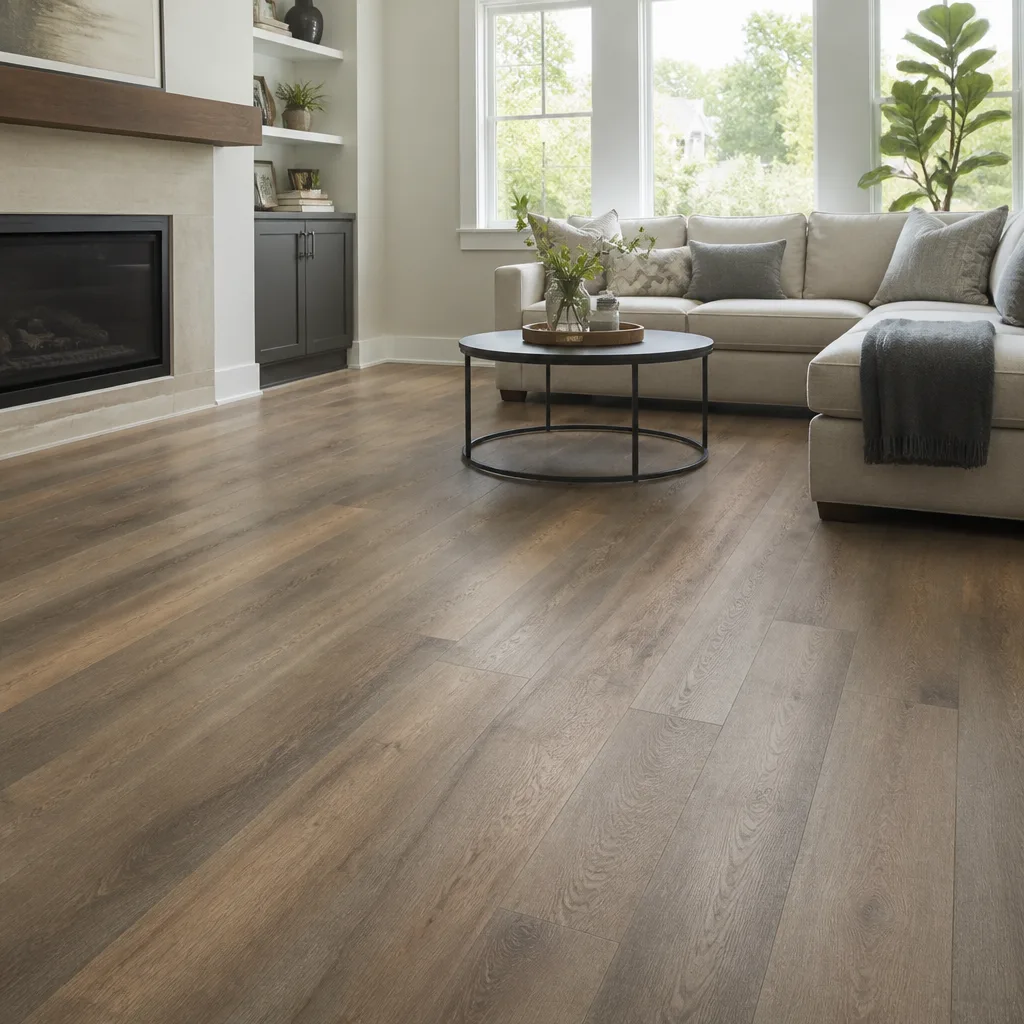 Mohawk
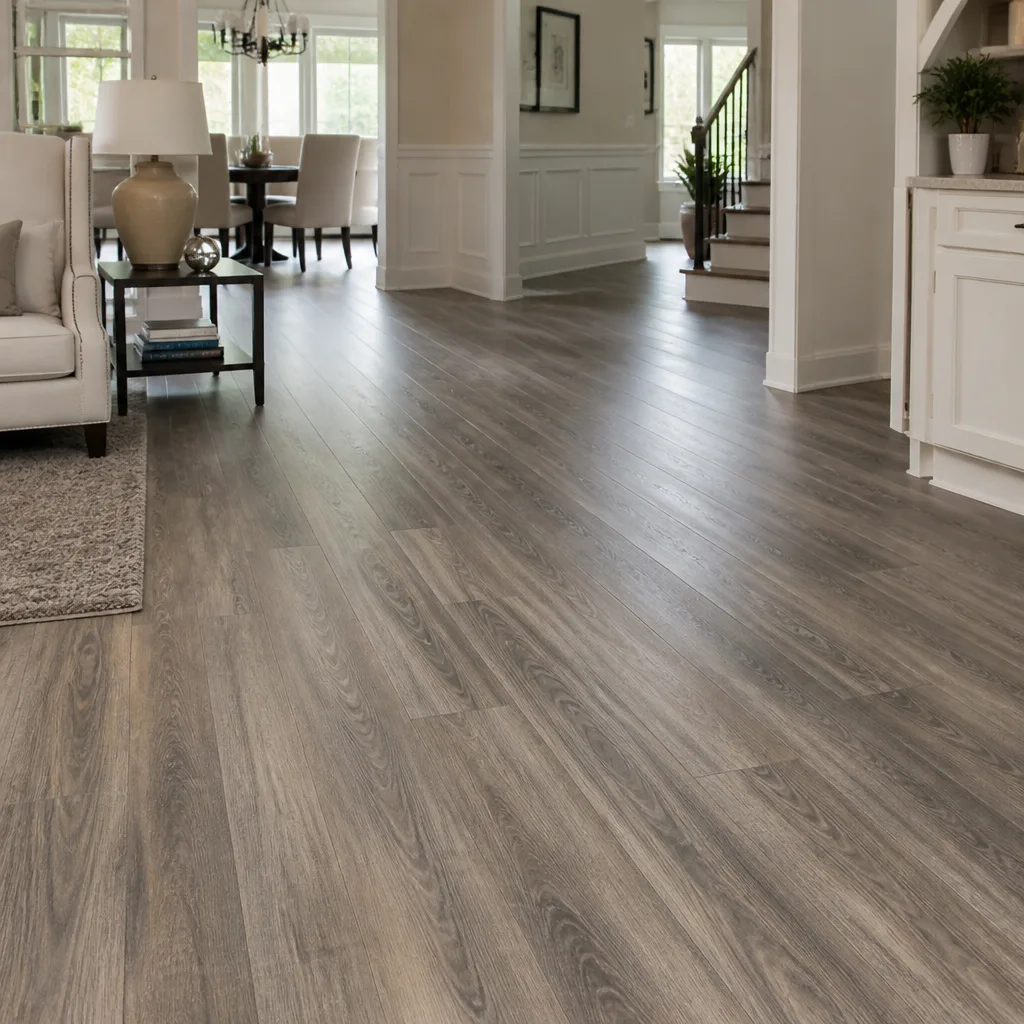 COREtec
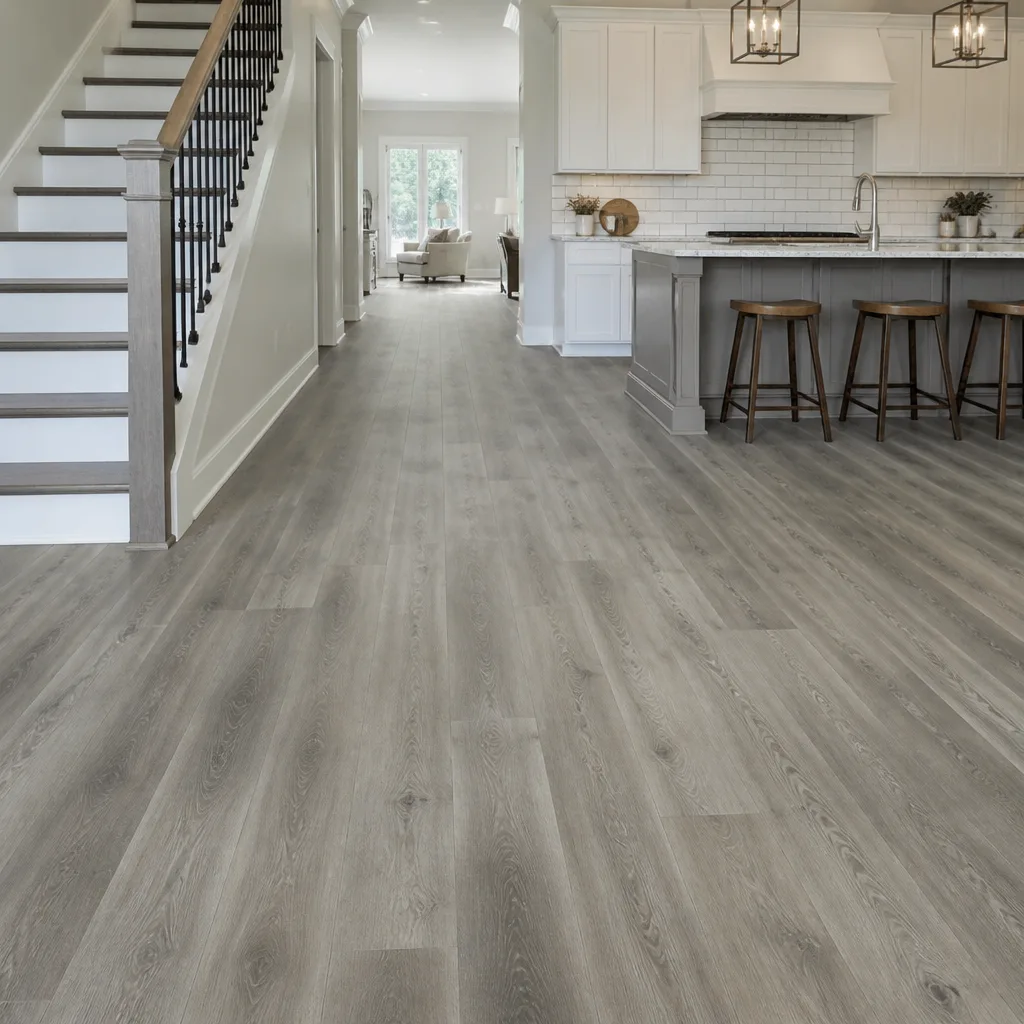 Pergo
Free in-home measure and written estimate: Shaw, Mohawk, COREtec and Pergo lines compared on your own rooms, with carpet, tile, vinyl plank, laminate and hardwood laid out side by side
Get your free estimateHow Las Vegas’s Climate Can Affect Your Flooring Choice
Las Vegas averages just 4.2 inches of rain per year, but it’s not moisture that destroys floors here. It’s the absence of it. Homeowners moving from wetter parts of the country expect to worry about water damage and mold. In the Mojave, the enemy is dry air, intense sun, and a concrete slab that heats up like a skillet in July. Solid hardwood can gap, cup, and crack in ways nobody sees coming after a standard installation, and a floor that performed beautifully in a humid climate can fail in a Las Vegas living room. This guide explains what the local climate actually does to carpet, tile, hardwood, and luxury vinyl, and how to choose a floor that survives here.
Quick Answer
The best flooring for the Las Vegas climate is engineered hardwood, luxury vinyl plank, or tile, because all three handle extreme dryness and temperature swings far better than solid hardwood. Solid wood and some natural products can gap and cup when indoor humidity drops below 20% in winter and slab surfaces heat up in summer. Carpet works well in bedrooms but needs UV protection near west-facing windows. The right choice depends on the room, the slab, and how much maintenance you want.
Styles & brands we work with
- Hardwood
- Engineered hardwood
- Luxury vinyl plank
- Laminate
- Porcelain tile
- Carpet
- Shaw
- Mohawk
- COREtec
- Pergo
Table of Contents
- Why Dry Heat Is Harder on Floors Than You Think
- What Sub-20% Winter Humidity Does to Hardwood
- The Concrete Slab Reality in Las Vegas Homes
- Surface Temperature and Adhesive Bonds on Slab Floors
- Carpet, Sun Exposure, and West-Facing Windows
- Which Brands Hold Up Under Mojave Conditions
- Room-by-Room Recommendations for Las Vegas Homes
- How Installation Changes in a Desert Climate
Why Dry Heat Is Harder on Floors Than You Think
Most flooring advice online is written for a national audience that lives somewhere humid. That advice doesn’t translate cleanly to Las Vegas. Here, indoor relative humidity can fall below 20% during winter months, and outdoor air is dry almost year-round. Wood, which is a hygroscopic material, constantly exchanges moisture with the air around it. When the air is bone dry, wood gives up moisture and shrinks. When seasonal humidity rises, it takes moisture back in and expands.
That cycle of shrinking and expanding is normal. What makes Las Vegas tough is the range. A floor installed in spring at moderate humidity may see the indoor air drop to desert-dry levels by December, then swing back up in monsoon season. Every one of those cycles puts stress on the joints, the finish, and the subfloor attachment.
What this looks like in practice:
- Gapping between solid hardwood boards as they contract in winter.
- Cupping or crowning when boards absorb moisture unevenly later.
- Finish checking – small cracks in the surface coating from repeated movement.
- Loose tile or lifted edges when adhesive loses its grip over time.
- Carpet backing degradation in rooms with intense direct sun and no humidity buffer.
None of these are caused by a bad product. They’re caused by a product installed without accounting for the climate it lives in. That’s the core difference between a floor that looks good on install day and one that still looks good five summers later in a Las Vegas home.
What Sub-20% Winter Humidity Does to Hardwood
Solid hardwood is milled from a single piece of wood. That single piece moves as one unit when humidity changes. In a humid climate, that movement is slow and small. In Las Vegas, with indoor winter humidity often below 20%, that movement is fast and significant. Boards that fit tight in October can show visible gaps by January. When spring humidity returns, some of those gaps close, but not always all the way. Over several seasons, the floor can look permanently uneven.
Engineered hardwood solves this differently. Instead of one solid piece, engineered planks are built from a core of layered plywood or high-density fiber with a real wood wear layer on top. The cross-lamination of the core resists the directional movement that solid wood experiences. That means less gapping, less cupping, and better dimensional stability in dry air. The wood surface looks and feels the same; the structure underneath is what survives the desert.
If you already have solid hardwood and want to keep it, here’s what helps:
- Run a whole-home humidifier in winter to keep indoor humidity in a moderate range.
- Avoid running the heater at maximum for long stretches without any moisture in the air.
- Keep direct sun off the floor with blinds or UV film on west-facing windows.
- Schedule a professional inspection if gaps exceed a quarter inch or boards start to cup.
- Consider Las Vegas Flooring Installation if you need to refinish or replace a floor that’s already moved.
The takeaway is simple: in Las Vegas, engineered hardwood is usually the smarter structural choice for dry indoor air. Solid wood can work, but it needs more climate management from the homeowner.
The Concrete Slab Reality in Las Vegas Homes
Most homes in Las Vegas are built slab-on-grade, meaning the concrete foundation sits directly on the ground and the finished floor goes right on top of it. This has one big advantage: no crawlspace, no subfloor framing to wick moisture up from below. In humid climates, wood subfloors are a common source of moisture problems. Here, the slab removes that concern almost entirely.
But slab-on-grade creates its own challenges. Concrete is a thermal mass. It absorbs heat during the day and releases it slowly. In a Las Vegas summer, that slab stays warm well into the evening, and any floor glued directly to it is sitting on a warm surface. That matters for:
- Glue-down installations, where adhesive has to cure and hold under sustained warmth.
- Expansion gaps, which need to be sized for the temperature range the slab actually sees.
- Tile, which expands and contracts with the slab beneath it.
- Floating floors, which rely on a vapor barrier and underlayment to buffer minor slab movement.
A good installer checks slab moisture and flatness before anything else. Not every slab in Las Vegas is perfectly flat, and not every slab is fully cured when a new build is finished. Both factors affect which installation method will hold up. If you’re planning tile flooring installation on a slab, the substrate prep matters as much as the tile itself.
One more local note: south- and west-facing rooms with large windows and no shade get the hottest slab surfaces. That’s the room to think about most carefully when picking a flooring type.
Surface Temperature and Adhesive Bonds on Slab Floors
Surface temperature is the piece most homeowners never consider. Tile and luxury vinyl plank on a slab floor exposed to Las Vegas summer sun can reach 90°F or higher at the surface during peak hours. That’s not a comfort issue alone. It’s a bonding issue.
Adhesive has a working temperature range. When the slab underneath is warm, glue-down installations cure differently than they would in a cooler climate. A product designed for a moderate installation environment can lose grip over time if the slab runs hot. Expansion gaps are similarly affected – a floor that was sized for a 70°F installation day may not have enough room when the slab under it hits 90°F in July. That’s exactly where buckled planks and lifted tile edges come from.
What to look for in warm-slab rooms:
- Adhesive rated for elevated surface temperatures. Ask your installer to confirm the product is specified for warm slabs, not just standard conditions.
- Expansion gaps sized for the real temperature range. Local installers know the swing; national guides assume a milder range.
- Floating floors where glue-down isn’t appropriate. LVP with a good underlayment often performs better than glue-down in hot-slab rooms.
- Shade or window film on rooms that take direct west sun, to reduce surface temperature spikes.
- Room-by-room decisions. A hot west-facing family room needs a different specification than a north-facing bedroom.
None of this is exotic. It’s basic flooring science, adjusted for the specific conditions in a Mojave climate. But it’s the kind of detail that separates a floor that lasts from one that starts clicking and lifting within a few summers. Our technicians have up to 15 years of experience, and the slab questions come up on almost every Las Vegas estimate.
Carpet, Sun Exposure, and West-Facing Windows
Carpet in Las Vegas behaves differently than carpet in a humid climate. In a wet climate, carpet fibers can trap moisture and support mold and dust mites. Here, the air is dry enough that moisture is rarely the issue. What carpet faces instead is UV degradation from intense sun through west- and south-facing windows.
UV light breaks down carpet fibers, fades color, and weakens the backing over time. Rooms with unfiltered afternoon sun can show visible fading within a few years. The fix isn’t complicated:
- UV-blocking window film on west-facing windows is the single most effective step.
- Drapes or blinds in sun-heavy rooms reduce direct exposure significantly.
- Solution-dyed or high-UV-resistant carpet fibers hold color better than standard-dyed fibers.
- Rotate area rugs if you use them over hard flooring to even out sun exposure.
Beyond sun, carpet in Las Vegas still gets plenty of traffic. Entryways, hallways, and family rooms see the same wear here as anywhere else. Shaw and Mohawk both make carpet lines designed for high-traffic homes, and those perform well in the dry air because they don’t need humidity to stay comfortable underfoot. If you’re weighing carpet installation, the two things to prioritize in this city are UV resistance and a high-quality pad that holds up in dry air.
One more consideration: carpet in rooms with hot west-facing windows and no shade will show wear faster than the same carpet on a shaded side of the house. If two bedrooms look identical on paper but one gets three hours of August sun, the correct product is different for each.
Which Brands Hold Up Under Mojave Conditions
This is where brand choice actually matters in Las Vegas. Not every flooring line is built with dimensional stability in mind, and some products with great reputations back east are simply less suited to desert conditions. The nine brands we install – Shaw, Mohawk, COREtec, Pergo, LifeProof, Mannington, Armstrong, Daltile, and Karndean – each bring something specific to a Mojave install.
Where it counts most for the local climate:
- COREtec is a well-known luxury vinyl line with a rigid core that handles temperature swings better than flexible vinyl. That rigidity is why it works so well on warm Las Vegas slabs.
- Shaw and Mohawk both offer carpet and engineered hardwood with stability-focused construction – useful for homeowners who want to keep their floor choice in one brand family.
- LifeProof is another rigid-core LVP line that works well in rooms with hot slabs and heavy traffic. It’s a practical choice for kitchens and family rooms in Las Vegas homes.
- Pergo is a long-standing laminate and engineered floor brand with product lines engineered for humidity variations, which helps in dry desert air.
- Daltile brings professional-grade tile sourcing to residential projects – exactly the kind of product that handles hot-slab installation without the give-and-take of a thinner product.
- Karndean is a premium, design-led LVT brand, and its installation standards are demanding enough that it’s rare to find it offered outside specialist installers.
What separates an appropriate product from a generic big-box alternative isn’t just the label. It’s the specification sheet behind it. A rigid-core LVP from COREtec or LifeProof is built to expand and contract in a controlled way; a flexible vinyl from a no-name line may not be. An engineered hardwood from Shaw built with a cross-laminated core is built for dryness; a solid plank from a generic source isn’t. If you already know you want COREtec or a specific Shaw line, that’s the right starting point – the product should drive the plan, not the other way around.
We install all nine brands and work with homeowners to source the exact line they want. If you want to compare a few brands side by side in the context of a Las Vegas slab, the free-estimate conversation is where that happens.
Room-by-Room Recommendations for Las Vegas Homes
The best flooring for a Las Vegas home depends on the room, not just the house. Here’s how we usually think through it:
- Kitchen and family room. Rigid-core LVP or tile. Both handle hot slabs, traffic, and the occasional spill. A warm-slab-rated adhesive or a floating install matters here.
- Entryways and hallways. LVP or high-traffic tile. These areas see the bulk of daily foot traffic, and both materials hold up without needing humidity control.
- Bedrooms. Carpet, ideally with UV-resistant fiber and good pad. Bedrooms are usually shaded and cooler, which softens the sun exposure concern. Shaw and Mohawk carpet lines are common choices here.
- Living room with west-facing windows. Engineered hardwood or LVP. Solid hardwood is possible but needs UV protection and humidity management. Engineered handles the swing better.
- Bathrooms and laundry. Tile, always. Even in a dry climate, these rooms see splashes and standing water; water-resistant LVP isn’t the same as water-proof, and tile is the more reliable choice for wet rooms.
- Sunrooms and patios-turned-interior rooms. Tile or LVP. These rooms take the most summer sun and the biggest temperature spike.
Neighborhood context matters, too. Homes in Summerlin, Henderson, and the older parts of central Las Vegas all sit on slabs, but the slab condition, the sun exposure, and the age of the home can vary widely. A 1970s home may have a fully cured slab but an irregular surface; a new build may have a flatter slab but one that’s still settling. The estimate visit is where those details get checked.
If you’re also weighing tile for bathrooms or a kitchen, the Las Vegas market has more tile options than most homeowners realize. Daltile’s residential lines give access to professional-grade products that hold up well under local conditions.
How Installation Changes in a Desert Climate
Installation in a Mojave climate is not the same as installation in a moderate one. The steps are similar, but the specifics change. Here’s what’s different on a Las Vegas install:
- Slab moisture and flatness testing before anything else. Even in dry climates, a new concrete slab may still be curing, and an uneven slab needs prep before any adhesive or underlayment goes down.
- Acclimation changes with dry air. Wood products need time to adjust to the room’s actual humidity before installation. In Las Vegas, “actual humidity” in winter is often below 20%, which is closer to the extreme end of wood’s comfort range. The product instructions and written estimate set the acclimation window; we don’t shortcut it.
- Expansion gaps sized for the local temperature swing. A gap that’s fine at 70°F can be too small at 90°F slab surface. Local installers account for the higher end of the range.
- Adhesive rated for warm surfaces. Standard adhesive may not perform well if the slab runs hot through summer. The product specified must match the room’s actual conditions.
- Vapor barriers on floating installs. Even in a dry climate, a slab is a slab. A proper barrier under a floating LVP or laminate install adds protection that costs little and prevents problems later.
Hardwood refinishing is a separate question. Not every wood floor can be refinished – it depends on the thickness of the wood and its condition, checked at the estimate visit. In Las Vegas, refinishing is common because the existing solid wood is often the homeowner’s preferred look, and the alternative is replacing a floor that just needs new life on the surface.
One thing we don’t do is promise a fixed install timeline. The schedule is set at the estimate, based on the product, the room, the slab, and the scope. What we can tell you up front is the free estimate is where all of that gets decided, and the written estimate sets the final price.
Common Mistakes to Avoid
- Taking a national flooring guide at face value. Most general guides assume a humid climate. They don’t account for sub-20% winter humidity, hot slabs, or the specific UV load in a Mojave summer. Filter every recommendation through Las Vegas conditions before committing.
- Choosing solid hardwood for a sun-heavy room. Solid wood moves more than engineered wood in dry air. A west-facing room with big windows is the wrong place to start with solid plank, no matter how good it looks in the sample.
- Skipping the slab check. Every Slab is different. Moisture, flatness, and surface age all matter. Assuming the slab is fine because the home is newer or older is how glue-down installs fail.
- Ignoring expansion gaps. A gap sized for a moderate climate is too small for a Las Vegas summer. Flooring installed with minimal gap can buckle or lift when the slab heats up. This is one of the most common installation errors we see in Las Vegas homes.
- Putting carpet in unfiltered afternoon sun. Carpet fibers fade and degrade under direct summer sun. If a bedroom or living room has large west-facing windows and no window treatment, carpet will wear faster than the same carpet on a shaded side of the home.
- Assuming “waterproof” LVP means every wet room is fine. Water-resistant LVP handles spills well, but standing water and moisture from below still have to be dealt with. Bathrooms and laundry rooms are better served by tile.
- Mixing brands across the house without a plan. It’s fine to use carpet in bedrooms and LVP in the kitchen, but the products should be chosen as a system. Choosing each room’s floor in isolation often leads to mismatched wear patterns and unnecessary replaced floors later.
See the difference
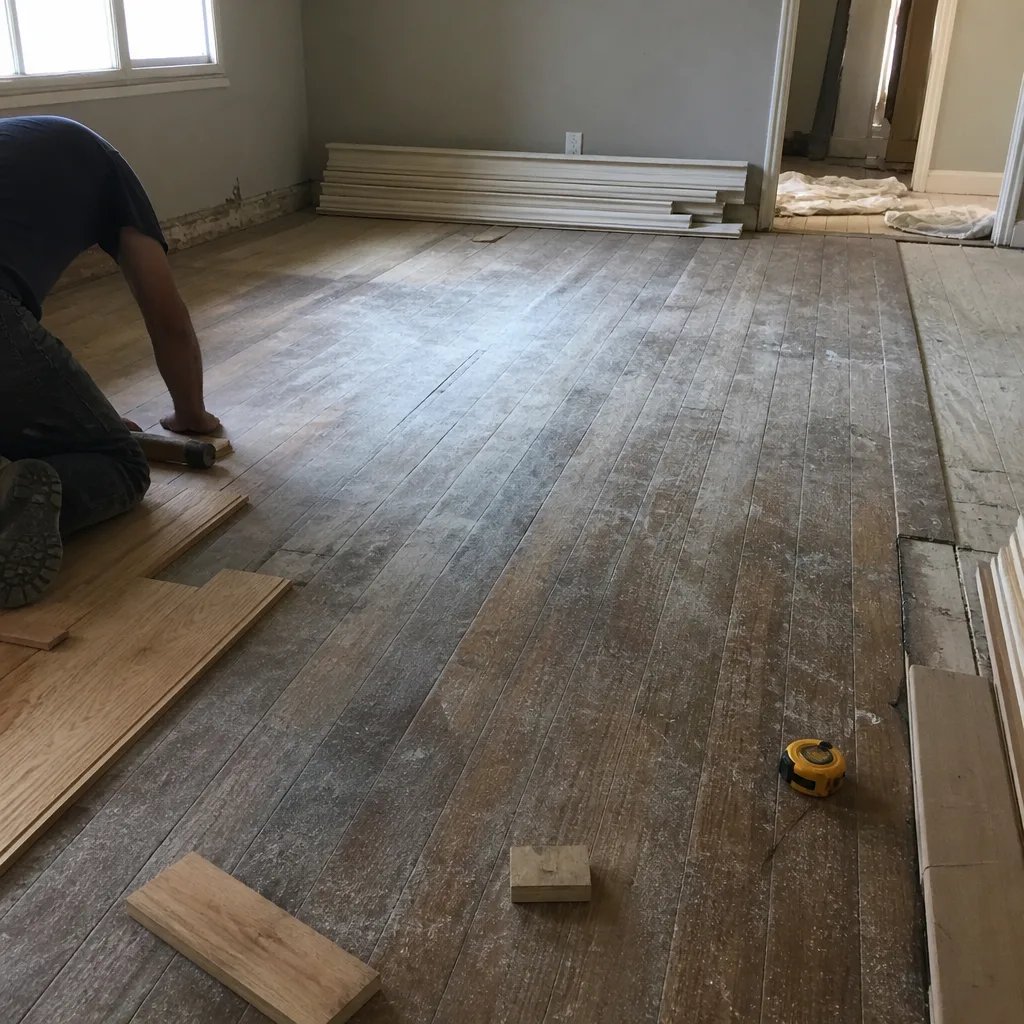 Before
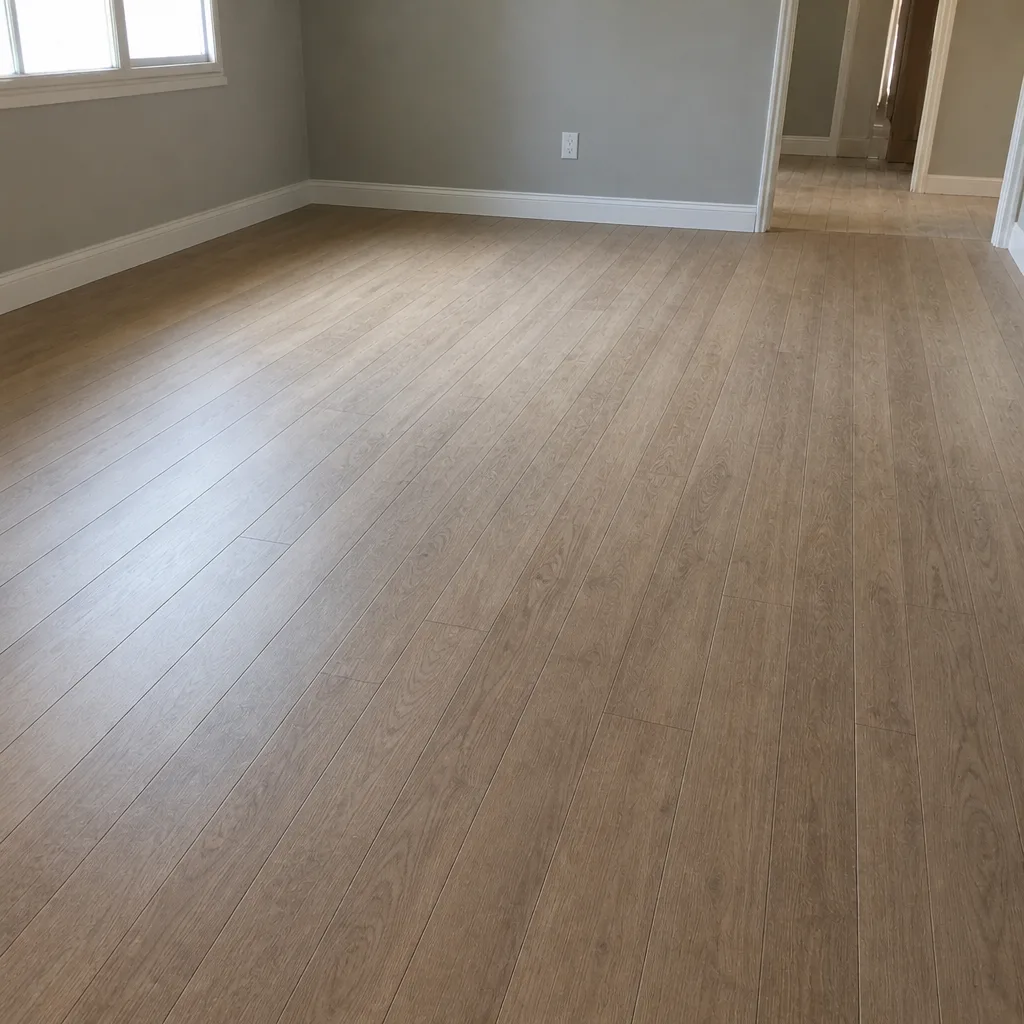 After
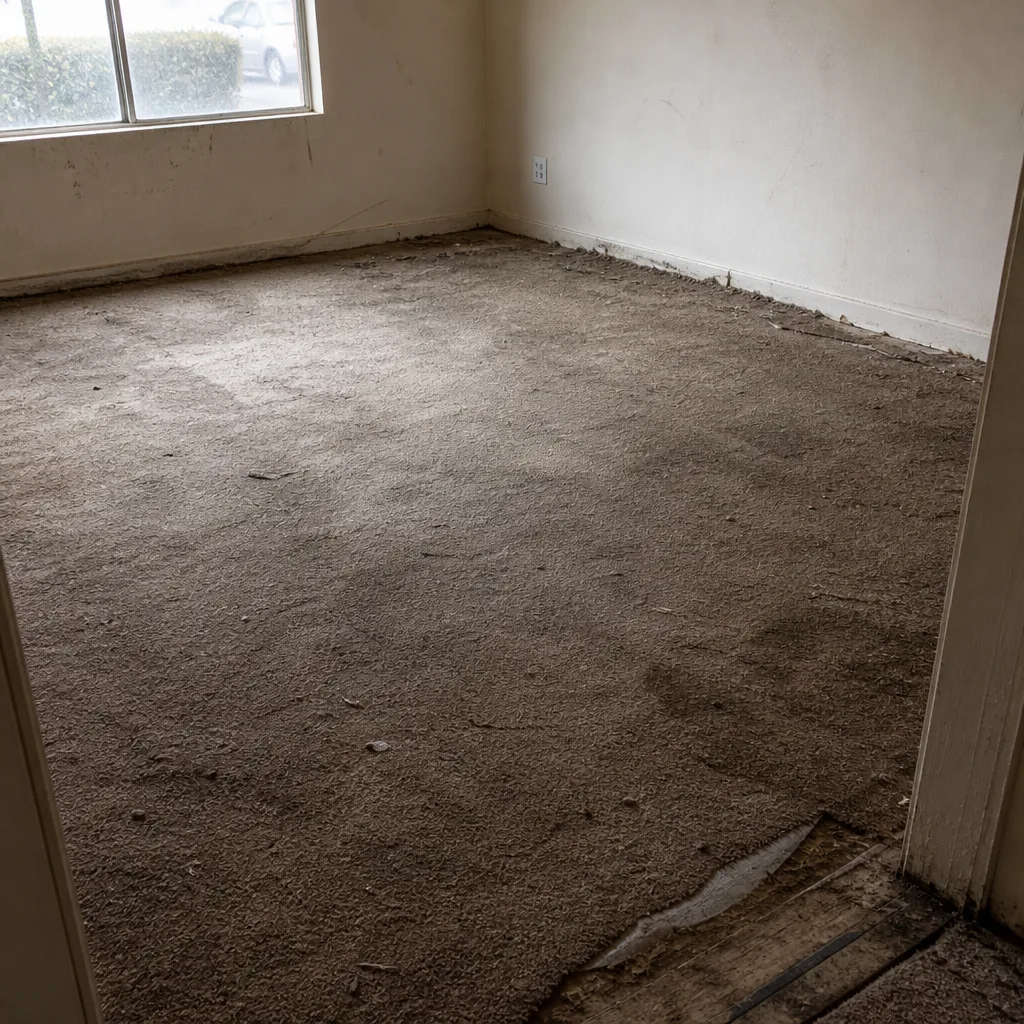 Before
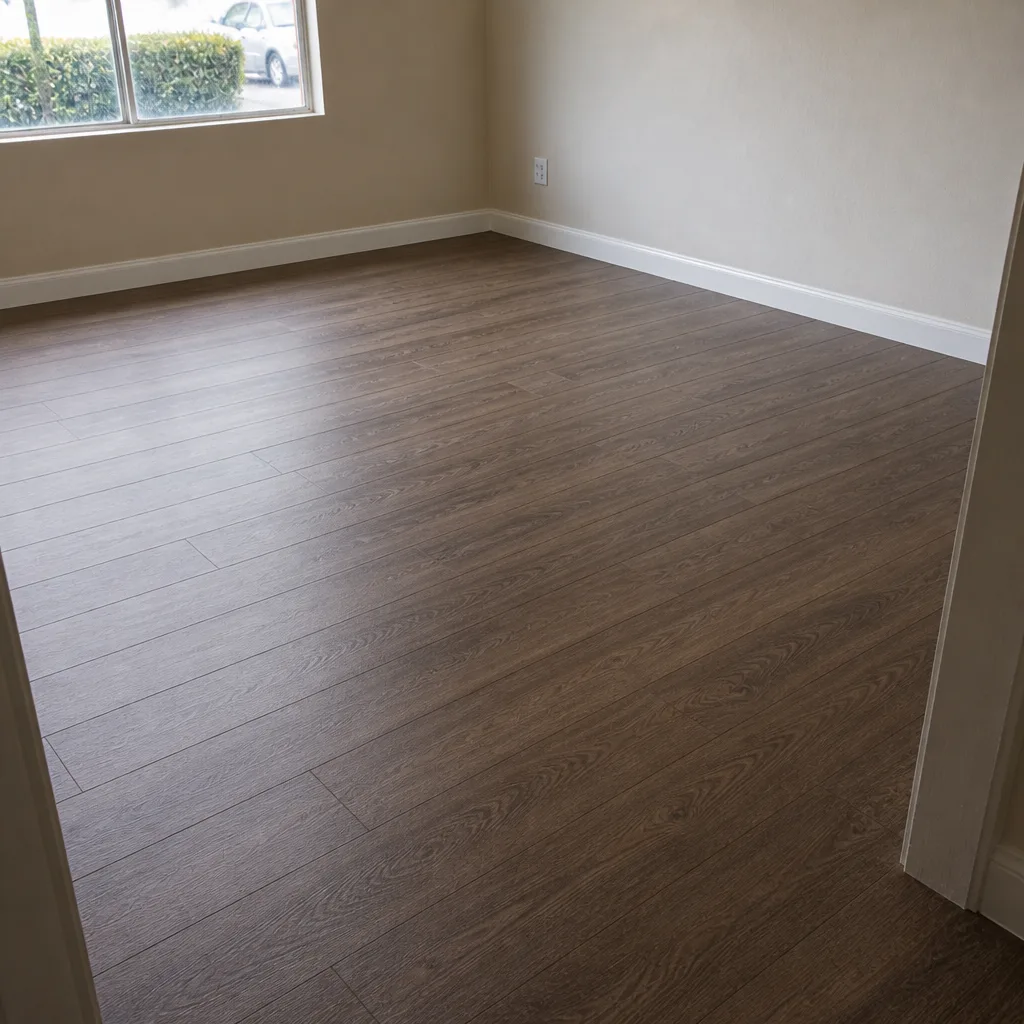 After
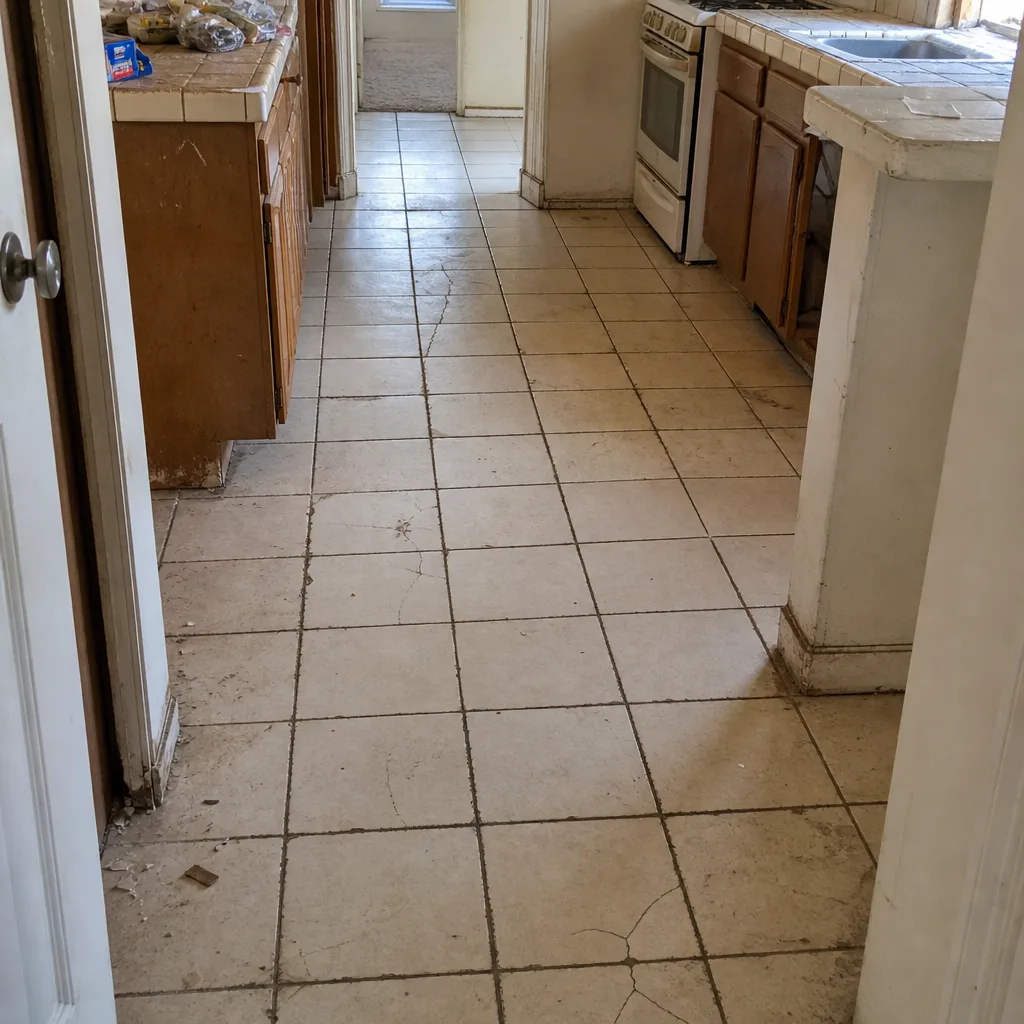 Before
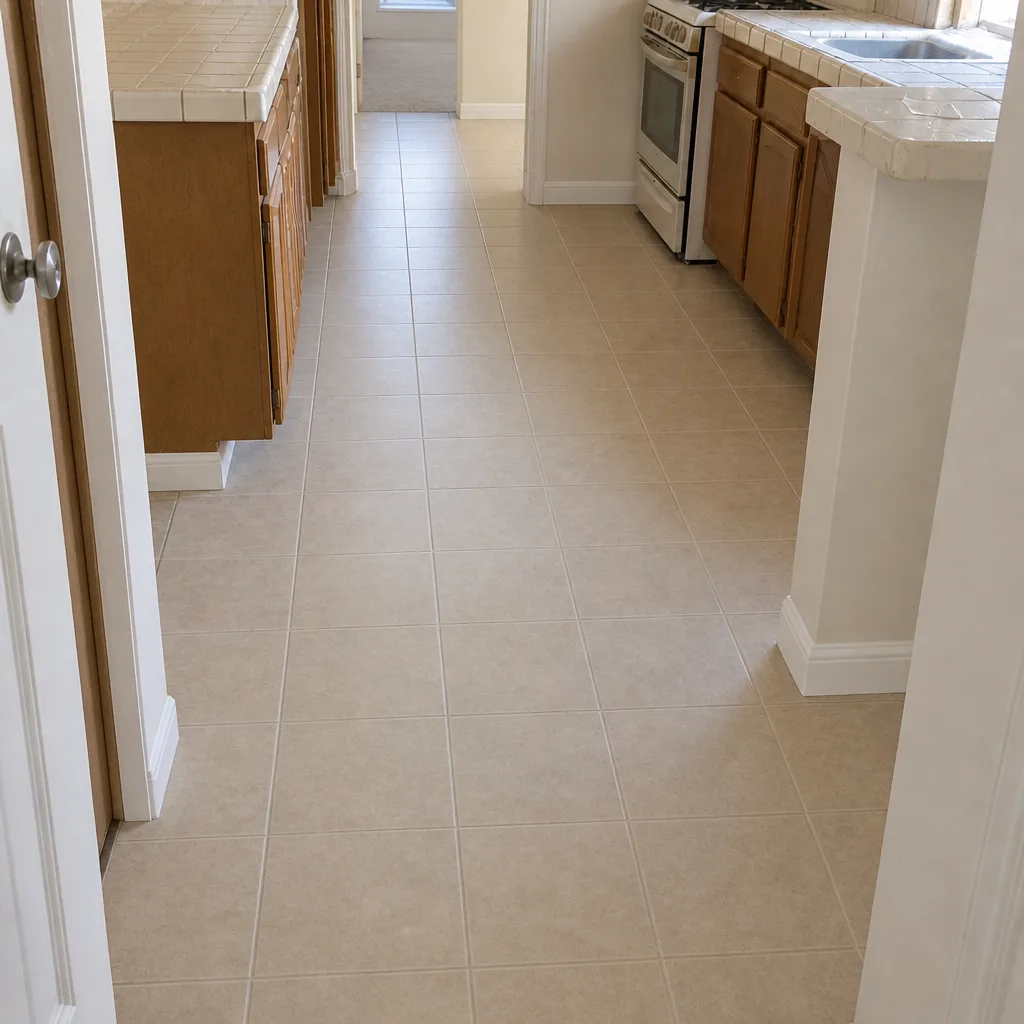 After
When to Call a Professional
Some flooring decisions are easy. Others need eyes on the actual slab, the actual room, and the actual product before anyone commits. Call a professional when:
- You already see gapping, cupping, or lifted edges and aren’t sure whether the floor can be repaired or refinished.
- Your home is on a slab and you’re considering glue-down tile or LVP in a sun-heavy room.
- You want a specific brand or line installed and need someone who actually stocks and installs it.
- You’re planning hardwood refinishing and want to know whether the wood is thick enough to sand.
- You’re choosing flooring for more than one room and want the products to work together.
Las Vegas Flooring Installation offers free estimates in Las Vegas. We install carpet, tile, and hardwood refinishing, and work with all nine brands: Shaw, Mohawk, COREtec, Pergo, LifeProof, Mannington, Armstrong, Daltile, and Karndean. Call (888) 268-1308 to schedule your free estimate. We answer 24/7. Fast dispatch from 7am to 7pm, Sunday through Friday.
Frequently Asked Questions
Engineered hardwood, luxury vinyl plank, and tile are the best choices for the Las Vegas climate because they handle dry air and warm slabs better than solid hardwood. Engineered wood and rigid-core LVP resist the gapping and cupping that solid wood shows when indoor humidity drops below 20%. Tile is the right call for bathrooms and laundry rooms. Carpet works well in shaded bedrooms with UV protection on the windows. Call (888) 268-1308 for an exact quote – estimates are free.
Solid hardwood can gap, cup, and crack in Las Vegas when indoor humidity drops low enough in winter. It doesn’t happen to every solid floor, but the risk is much higher here than in humid climates because the humidity swings are wider. Engineered hardwood solves most of the problem because its core resists the directional movement that solid wood experiences. If you already have solid wood, a whole-home humidifier in winter and UV film on west windows help. Call (888) 268-1308 to have us take a look before the gaps get worse.
Tile and LVP often fail in Las Vegas because the slab beneath them gets hot in summer, and standard adhesive doesn’t hold well at sustained high surface temperatures. Tile and LVP on a sun-exposed slab can reach 90°F or higher, which is above what many adhesives are specified for. The fix is choosing adhesive rated for warm surfaces, sizing expansion gaps for the local temperature range, or using a floating installation in hot rooms. Call (888) 268-1308 and we’ll walk the room with you.
Carpet is a fine choice in Las Vegas because the dry air actually limits the moisture problems carpet has in humid climates. The real concern is UV degradation from intense sun through west- and south-facing windows, which fades and weakens fibers over time. UV-blocking window film and drapes solve most of that, and solution-dyed fibers hold color longer. Shaw and Mohawk both make carpet lines suited to high-traffic homes. Call (888) 268-1308 for a free estimate.
Yes, engineered hardwood installs well over slab in Las Vegas when the slab is prepped properly and the installation method matches the conditions. Engineered planks have a cross-laminated core that resists the movement solid wood shows in dry air, which is why they perform better here. A floating install with a vapor barrier is common; glue-down can work if the adhesive is rated for the slab temperature range. The slab should be checked for moisture and flatness at the estimate visit. Call (888) 268-1308 to book yours.
Rigid-core LVP lines like COREtec and LifeProof hold up well under Mojave conditions because their dimensional stability handles the temperature swings better than flexible vinyl. Shaw and Mohawk engineered hardwood and carpet lines are built with stability in mind, and Daltile tile handles hot-slab installation without the give of a thinner product. Karndean, a premium design-led LVT brand, also performs well when installed to its specifications. We install all nine brands and match the product to the room. Call (888) 268-1308 for a free estimate.
The Bottom Line
Las Vegas flooring decisions are climate decisions. The dry Mojave air, the hot slab, and the intense sun change which products work and which don’t. Solid hardwood needs more climate management here than in a humid place. Engineered hardwood and rigid-core LVP handle the swings better. Tile is the right call for wet rooms. Carpet stays comfortable in shaded bedrooms with UV protection on the windows. If you know which brand or floor type you want, the next step is a free estimate where the slab, the room, and the schedule get worked out. Nine trusted brands, one installation team. Call (888) 268-1308. We answer 24/7. Fast dispatch from 7am to 7pm, Sunday through Friday.
Written by the team at Las Vegas Flooring Installation.