
Last updated November 18, 2026
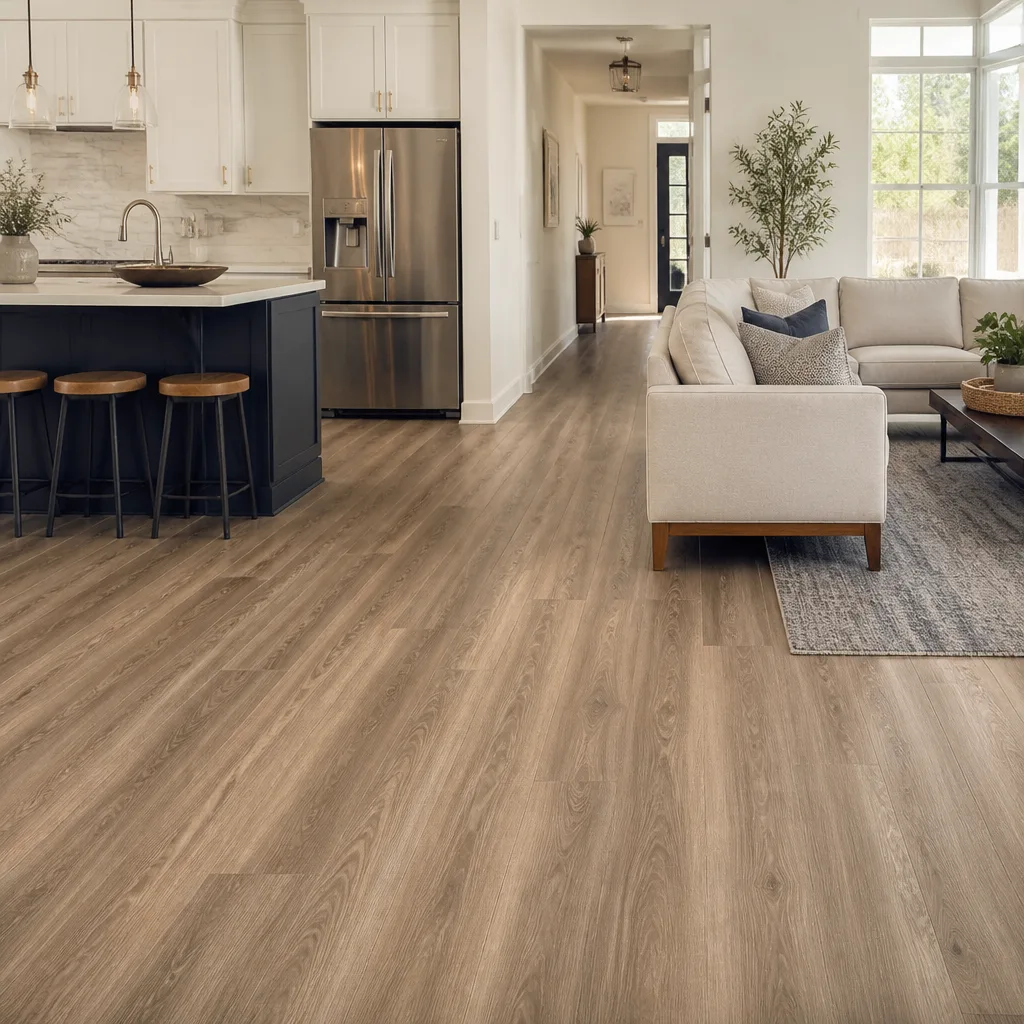 Luxury vinyl plank
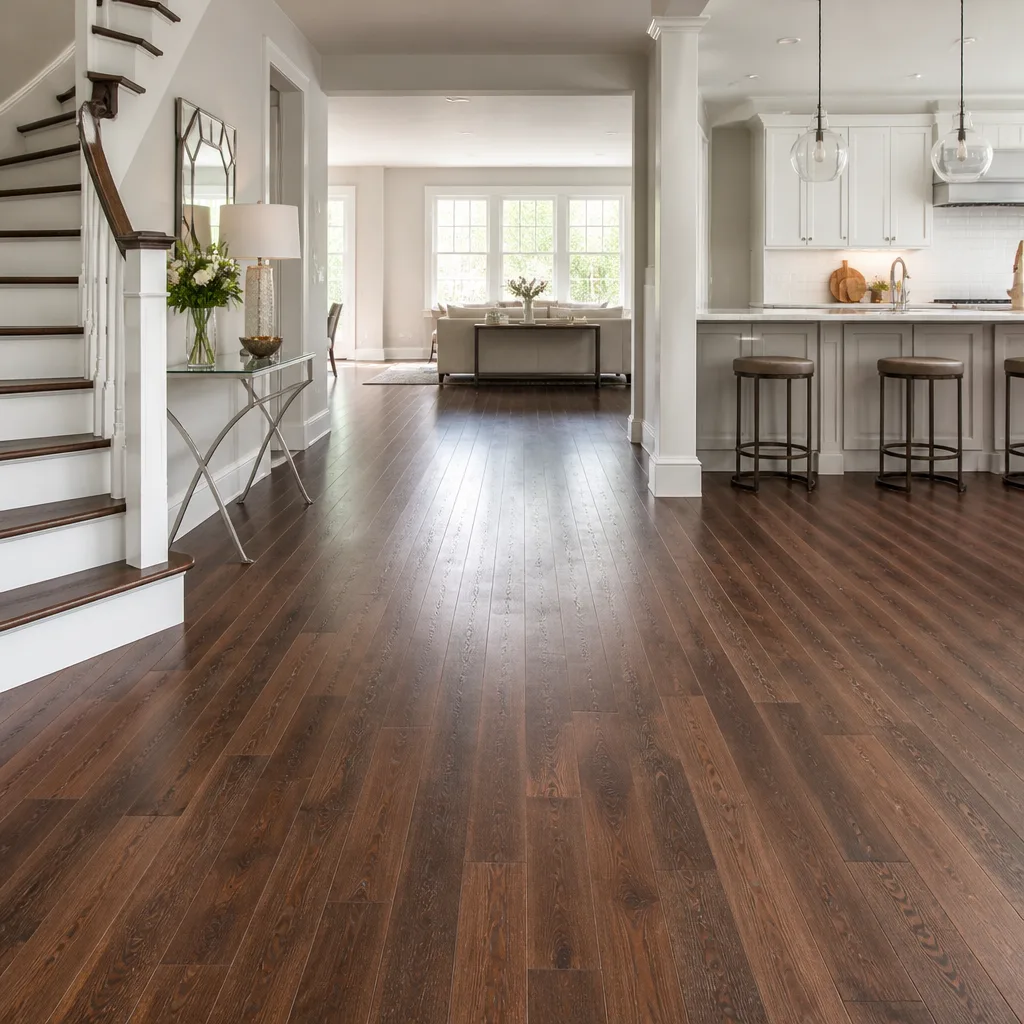 Hardwood
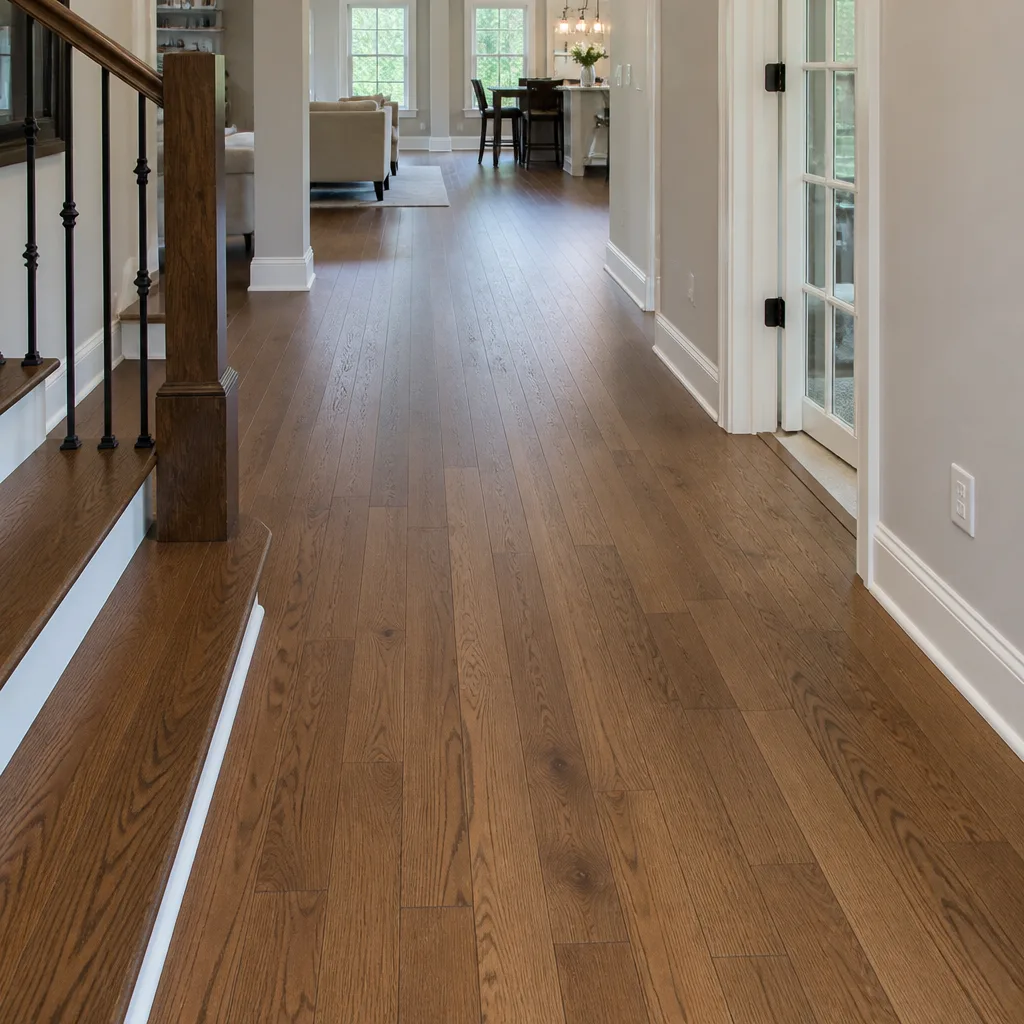 Engineered hardwood
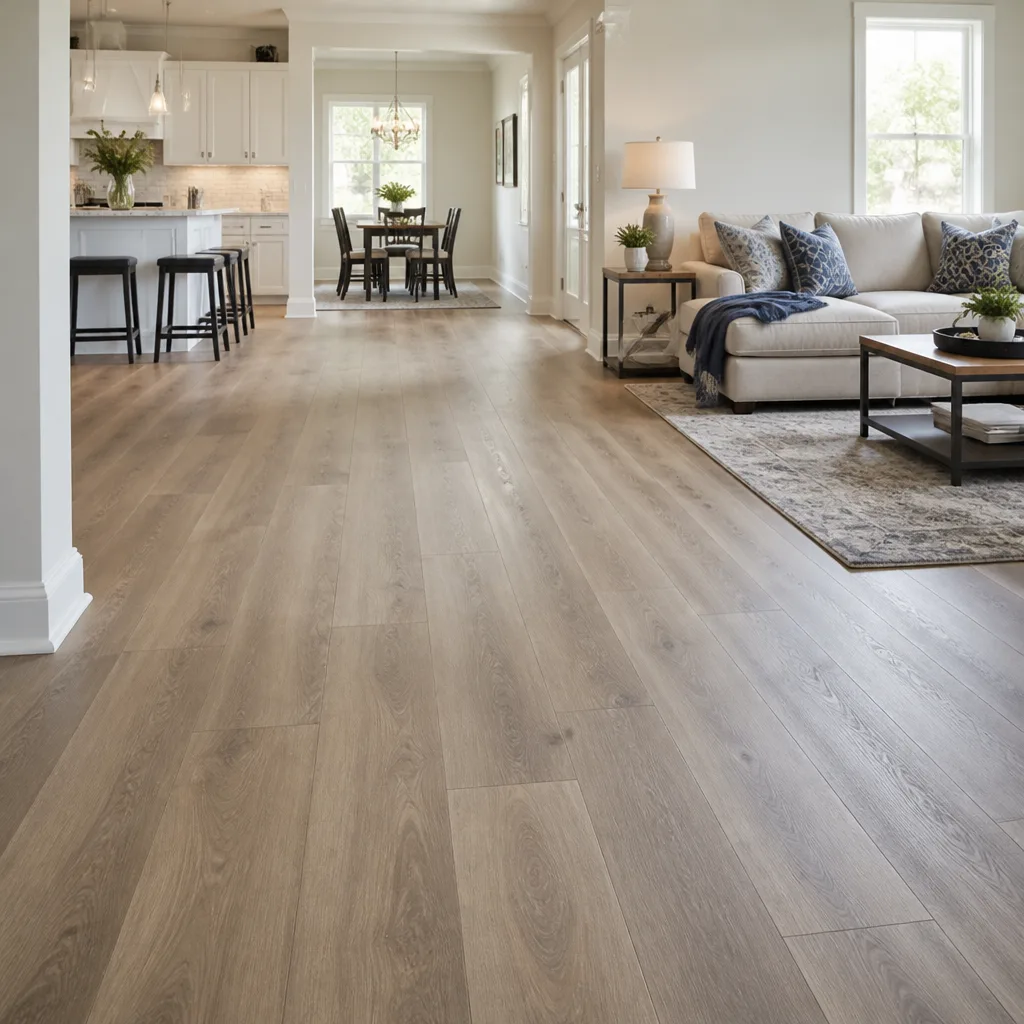 Laminate
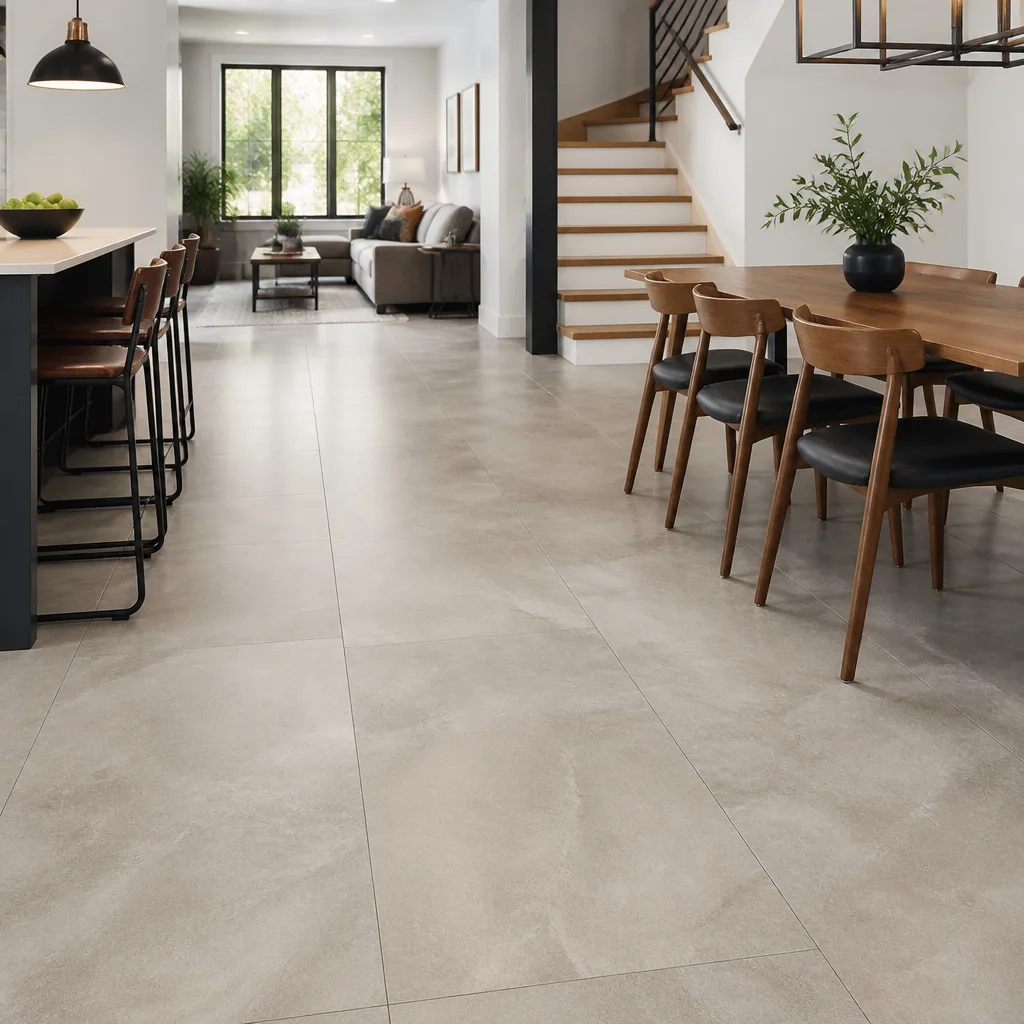 Porcelain tile
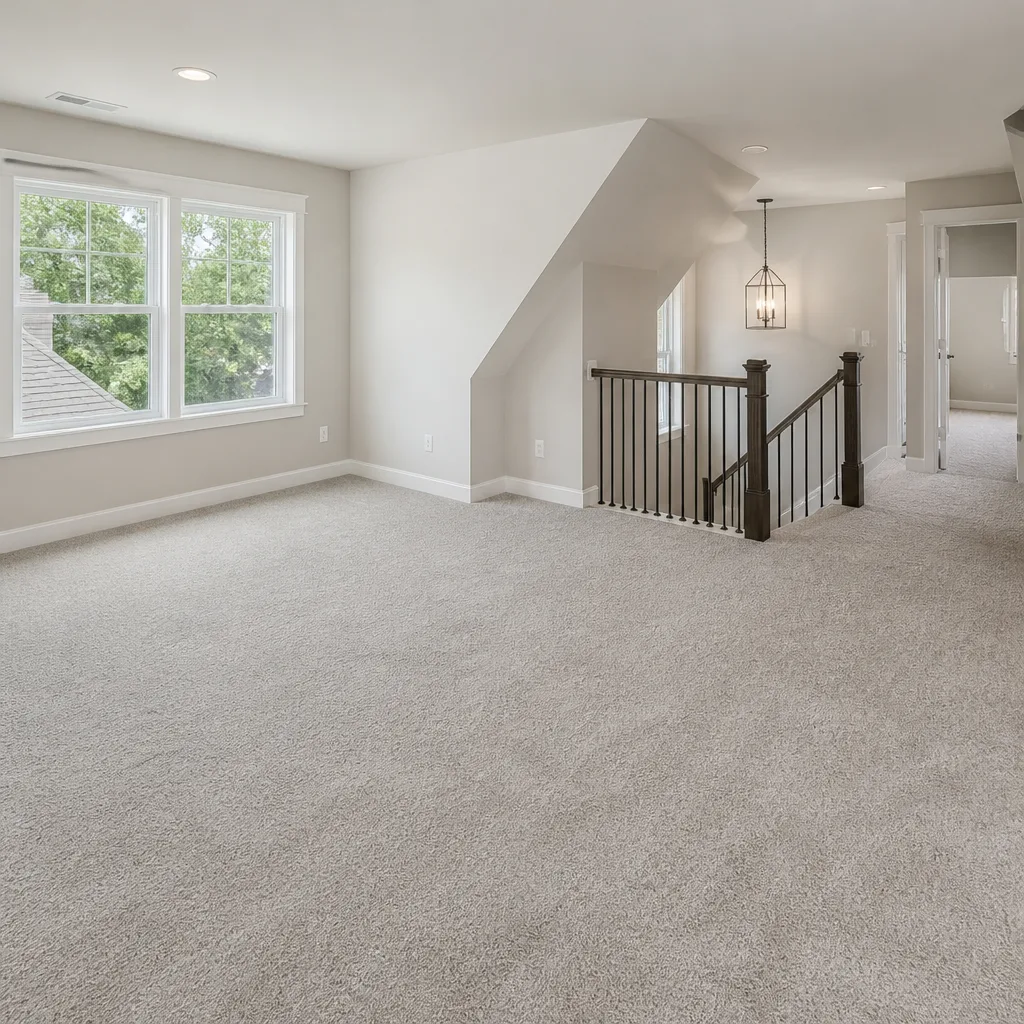 Carpet
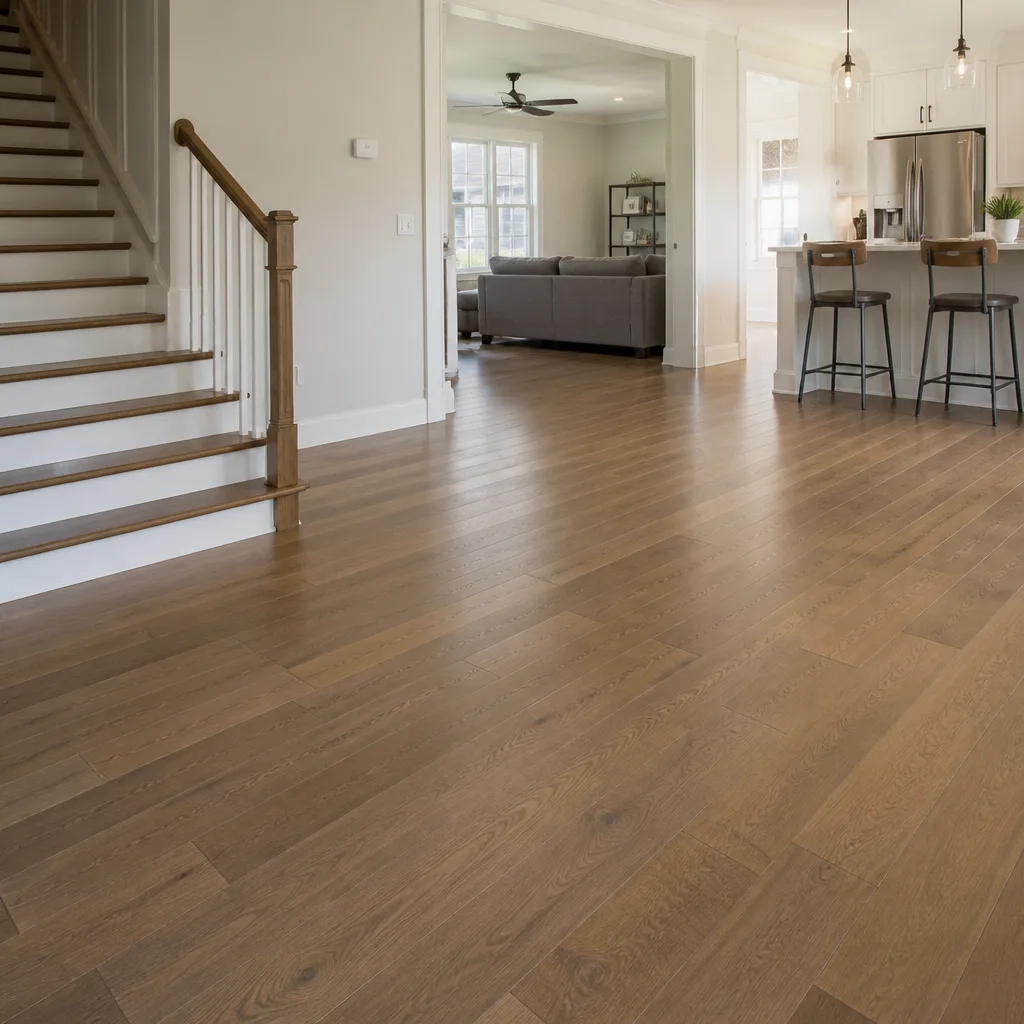 Shaw
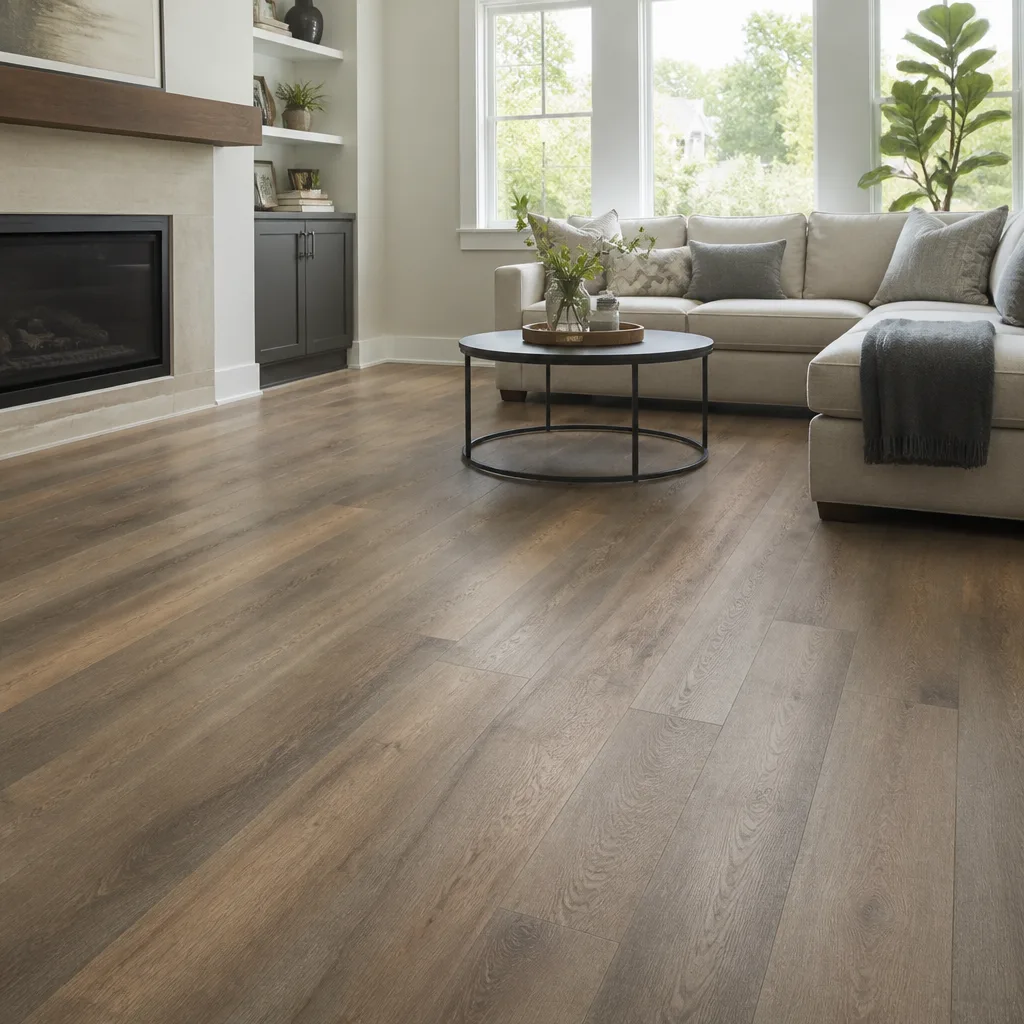 Mohawk
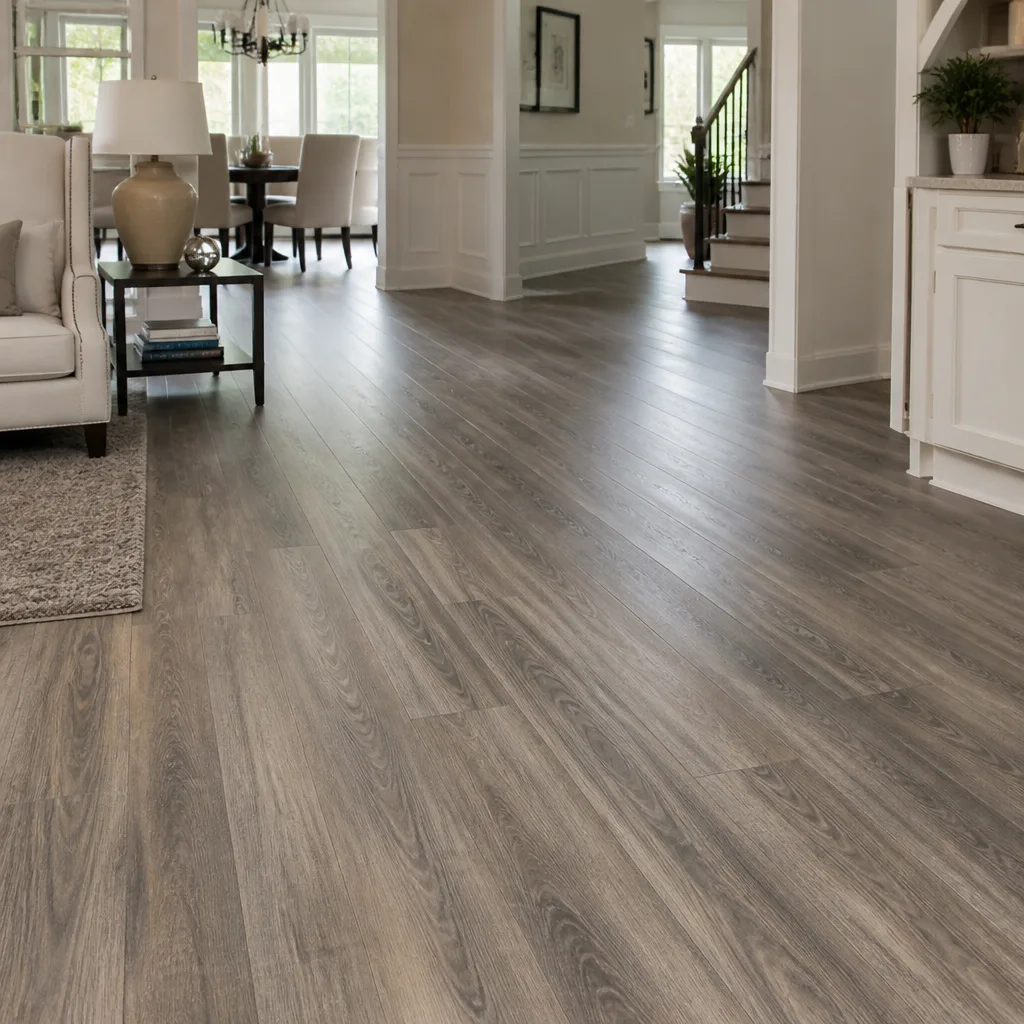 COREtec
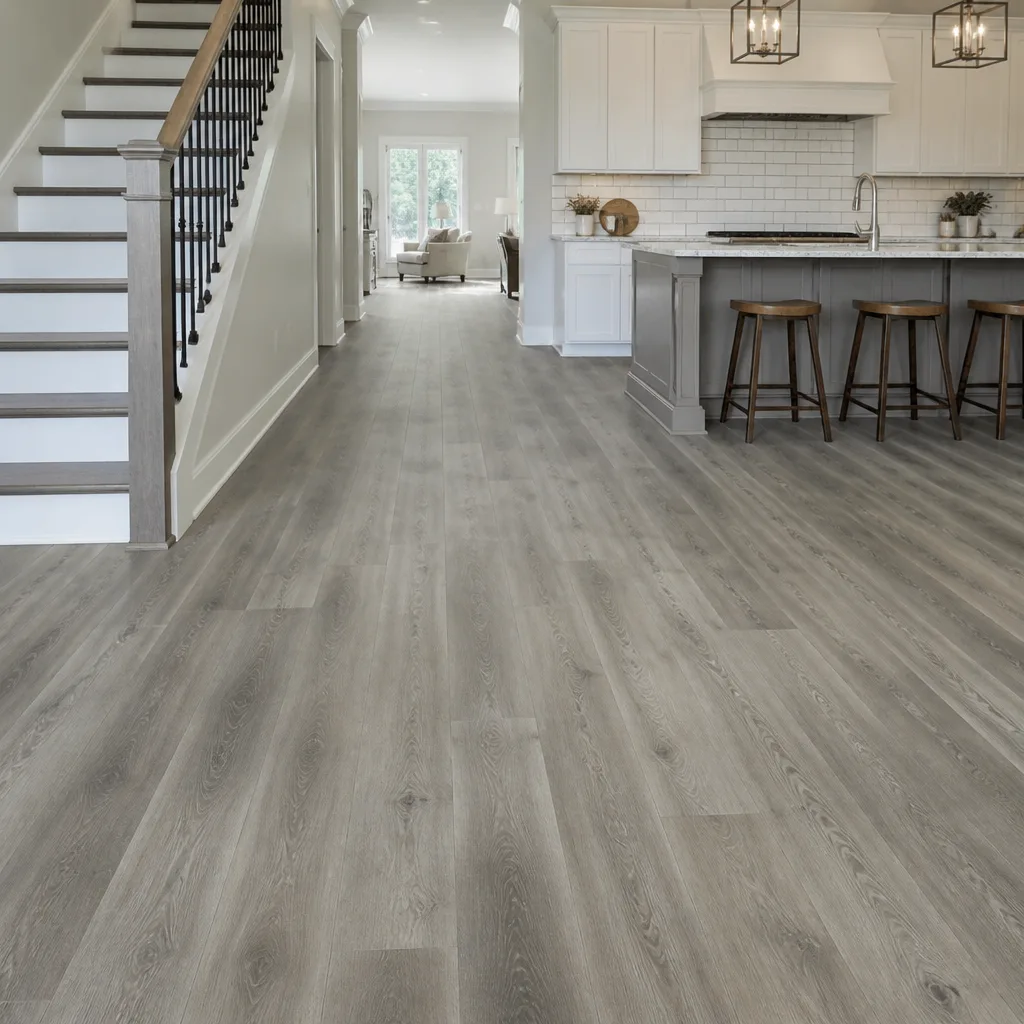 Pergo
Free in-home measure and written estimate: Shaw, Mohawk, COREtec and Pergo lines compared on your own rooms, with carpet, tile, vinyl plank, laminate and hardwood laid out side by side
Get your free estimateHardwood, Vinyl Plank, Laminate or Tile: How Las Vegas Homeowners Decide
Here’s a point that surprises a lot of people: solid hardwood isn’t automatically the wrong floor for Las Vegas. It’s wrong for a slab with no moisture barrier underneath, and it’s wrong in a room that takes direct west-facing sun all afternoon. Put it in the right spot and it still outperforms vinyl plank on resale appeal and longevity. The trouble is that most homeowners get pushed toward luxury vinyl plank as the default “safe” pick before anyone explains what each material actually does in desert conditions. This guide breaks down how hardwood, vinyl plank, laminate, and tile really perform against the three stressors that matter here: UV, dry-air movement, and a concrete slab. You’ll finish understanding the trade-offs well enough to choose for your own home, not for the average homeowner.
Quick Answer
The right floor in Las Vegas comes down to three things: how much sun the room gets, whether you’re building over a concrete slab, and how long you plan to stay. Tile handles heat, sun, and slab moisture better than anything else and belongs in kitchens, entries, and baths. Luxury vinyl plank is the most forgiving wood-look option over slab and stands up to dryness well. Solid hardwood earns the best resale response but needs the right conditions to hold up. Laminate is mostly a budget or niche answer today. Match the material to the room, not the market trend, and you’ll rarely regret it.
Styles & brands we work with
- Hardwood
- Engineered hardwood
- Luxury vinyl plank
- Laminate
- Porcelain tile
- Carpet
- Shaw
- Mohawk
- COREtec
- Pergo
Table of Contents
- How Las Vegas Conditions Stress Your Floor
- Where Hardwood Still Wins in Las Vegas
- Why Vinyl Plank Became the Default
- Laminate: Why It’s Rare Now and Where It Still Fits
- Tile as the Desert Workhorse
- What Flooring Does to Resale Value in Las Vegas
- Comparing Product Lines, Not Just Categories
- Installation Compatibility Over Slab Construction
How Las Vegas Conditions Stress Your Floor
Most flooring advice floating around online was written for humid climates with wood subfloors. Las Vegas is the opposite on both counts. Understanding the three stressors here is the whole game, because every material responds to them differently.
UV exposure. Las Vegas averages intense, direct sun most of the year. Rooms with west- or south-facing windows take hours of hard light that fades some materials faster than others. Hardwood and laminate can shift color. Vinyl plank with a protected wear layer holds color better, but no floor is entirely immune to sun over time. Window film and UV-blocking shades help more than most people realize.
Dry-air expansion and contraction. Our air is dry enough that wood products naturally swell and shrink through the year. That movement is normal, but it means any wood-based floor needs room to move at the walls and proper acclimation before it’s installed. Skip those steps and you get gaps in winter and buckling in the shoulder seasons.
Concrete slab subfloors. Most Las Vegas homes sit on slab. Slab is stable and flat by nature, which is good. But it also takes up moisture vapor from the ground and stays cool year-round, and that vapor pushes up into any floor laid directly on it. A moisture barrier and a proper underlayment matter as much as the plank or tile itself.
When we walk through a home, these three factors guide the recommendation more than the homeowner’s taste does. Taste comes second. Conditions come first.
Where Hardwood Still Wins in Las Vegas
Solid hardwood can work beautifully in Las Vegas, but only in the right conditions. It needs a moisture barrier between the wood and slab, and it needs a room that isn’t soaking in direct west-facing sun for hours each afternoon. When those boxes are checked, hardwood delivers warmth, character, and long-term appeal that no synthetic product matches.
The refinishing angle is a big reason hardwood earns its keep. Unlike vinyl plank or laminate, a hardwood floor can be sanded and refinished down the road, restoring the surface and refreshing the color. That’s true restoration, not a service add-on. In our experience, homeowners renovating toward a resale window get more mileage out of refinishing existing hardwood than replacing it with anything else.
Where hardwood struggles in Las Vegas:
- Rooms with full west or south sun and no window treatment
- Slabs without a vapor barrier, where moisture wicks up through the wood
- Bathrooms, laundry rooms, and near exterior doors where splash and humidity are routine
- Below-grade or poorly ventilated spaces where humidity swings are larger
If you’re building or remodeling, hardwood in living and dining areas paired with tile or vinyl in wet zones is a common and durable combination. Our Las Vegas Flooring Installation team treats hardwood refinishing as a restoration specialty, not a sideline. The craft matters here, and a floor that’s refinished well will look correct for years.
Why Vinyl Plank Became the Default
Luxury vinyl plank is now the most common recommendation in Las Vegas, and there’s a real reason for that: it’s engineered for exactly this environment. LVP is dimensionally stable, handles dry air without the movement wood has, and installs over slab cleanly. It doesn’t require the moisture barrier gymnastics that hardwood over slab does, and it’s much less sensitive to sun-fade than an unprotected wood finish.
Vinyl plank also has the advantage of choice. You can find it in wide planks, narrow planks, stone looks, realistic wood grain, and a range of tones, and the better product lines have a durability story worth caring about. When a homeowner already knows they want LifeProof or COREtec, or has been researching Mannington and Armstrong, our job is to source and install the specific line they’ve chosen, not to sell them on whatever happens to be easiest to stock.
Where LVP earns every dollar:
- Ground-floor rooms over concrete slab
- Family rooms, hallways, and open living areas that see heavy foot traffic
- Kitchens and mudrooms where spills are routine
- Rental units and homes being prepped for sale
One caution: LVP is often described as “waterproof,” and while the better lines are water-resistant at the surface, that doesn’t mean standing water or moisture rising from the slab can be ignored. If a pipe leaks under a vinyl floor, the water still has to be dealt with. Treat LVP as a water-resistant, high-performance surface, not a ban on plumbing problems.
If you’ve already narrowed to a vinyl product, the next question is who can install it correctly. Getting a carpet installation or hard-surface company that actually works with these brands matters more than a big showroom selection. Our team carries nine name-brand lines, including COREtec and LifeProof, so the product side is curated, not scattered.
Laminate: Why It’s Rare Now and Where It Still Fits
Laminate was the go-to wood-look floor for a generation, but it’s largely been replaced by luxury vinyl plank in the Las Vegas market. The reasons are practical. Laminate is built over a wood-based core, which means it’s more sensitive to moisture and dry-air movement than LVP. In a desert climate it’s not a disaster, but it needs more care with acclimation and vapor barriers, and if the core swells from a leak it won’t recover.
That said, laminate still has a place. If you’re working to a tighter budget and want a hard, wood-look surface in a dry, low-traffic room, a quality laminate line can be a good fit. Some homeowners also prefer laminate in spaces where the visual detail of a real wood print matters more than performance against moisture.
Where laminate still makes sense:
- Bedrooms and formal rooms with controlled humidity and low spill risk
- Budget-driven renovations where the room isn’t a wet zone
- Areas where you want a hard surface and a realistic wood look at a lower price point than hardwood
Where it doesn’t:
- Kitchens, baths, laundry rooms, and anywhere a water heater or dishwasher sits
- Rooms getting direct, all-afternoon sun without window protection
- Rental units where you want the most forgiving surface you can find
If laminate is tempting because of the wood look, it’s worth comparing a mid-grade LVP against a mid-grade laminate before you commit. In our experience most homeowners choose LVP once they see the moisture tolerance difference, but the answer isn’t automatic.
Tile as the Desert Workhorse
Tile is the most forgiving floor available in Las Vegas, especially for kitchens, entries, bathrooms, and laundry rooms. Ceramic and porcelain handle heat, don’t care about dry air, and don’t shrink through the year. Tile also has a natural thermal flywheel: it stays cool underfoot, which a lot of homeowners prefer in summer, and it holds up to sun without fading. It does crack if the slab shifts or if the installation is sloppy, and it can be hard and cold underfoot in winter.
Tile is also where our install standards show. When a homeowner works with a professional-grade source like Daltile, the range of sizes, finishes, and patterns is much wider than a big-box shelf offers, but that wider range also raises the installation bar. Large-format tile needs a flat, well-prepared slab and careful pattern planning. Small-format tile gives you design flexibility but a lot of grout line detail. Both are doable; both reward an installer who does the prep and doesn’t rush the layout.
The realistic fit for tile in a Las Vegas home:
- Entryways and laundry rooms where grit and water walk in from outside
- Kitchens, where spills and heat are routine and a wipe-down matters
- Bathrooms, where a vapor barrier and a well-set slab are the priority
- Hallways and sun-heavy rooms, where tile’s resistance to UV fade holds up
For interiors beyond wet zones, tile can work, but many homeowners pair it with a warmer surface so the whole house doesn’t feel hard. Pairing tile in wet zones with tile flooring installation elsewhere in the home is a common split, and the right ratio depends on how much barefoot time you spend in each room.
What Flooring Does to Resale Value in Las Vegas
Flooring doesn’t sell a house on its own, but it does change how it’s priced and how fast it moves. In our experience working with Las Vegas homeowners and their agents, the resale conversation usually comes down to three practical points rather than one “best” material.
Buyers read the floor. When a buyer walks into a home with hardwood, they see a floor that can’t easily be replaced. When they walk into a room with vinyl plank, they see a clean, modern surface. When they walk into carpet, they see something they may plan to change. That perception shapes how a list price gets set more than any single material’s cost per square foot.
Condition matters more than category. A refinished hardwood floor that’s been correctly restored will often read better than a new mid-grade plank floor, because the buyer sees craftsmanship. A cheap vinyl plank installed badly will hurt a sale more than a good carpet in good repair. The floor’s condition and install quality matter as much as the material name on the box.
Room-level decisions usually win. Buying decisions don’t follow a single material. Homeowners tend to pick based on the room, the light, and how the house will be shown. That’s why hardwood in living spaces, tile in wet zones, and a good carpet in bedrooms is a combination that consistently reads well to buyers, and why a single-material house is often the harder sell.
The bottom line from a resale standpoint: condition, layout, and consistency across rooms tend to move the pricing conversation more than any single material choice. If you’re prepping a house for sale, restoring hardwood and refreshing tile will usually get a better return than replacing everything with vinyl plank. Appraisal is more about the overall finish level and the home itself than the specific brand of flooring.
Comparing Product Lines, Not Just Categories
Treating “vinyl plank” or “tile” as a single thing is the most common mistake in flooring research. Within each category there are product lines built for a specific level of traffic, wear, and design intent, and those differences matter when you’re choosing a floor for a home you plan to keep. Comparing categories alone is like comparing “car” as a category without deciding whether you need a sedan or a truck.
Here’s how we help homeowners compare within each category:
- Decide the traffic load. A single-person household and a busy family of five need different performance tiers. Start with the load, not the color.
- Narrow to specific product lines. Pick two or three lines you want to compare side by side, then look at how they wear, clean, and install over slab.
- Match the plank or tile size to the room. Wider planks or larger tiles look calmer in open rooms; smaller formats suit smaller rooms and hallways.
- Check the finish and color against your sun exposure. A pale finish in a west-facing room will look different from the same finish in a shaded bedroom.
This is where brand depth actually helps. Our team installs and works with nine name-brand lines across carpet, tile, and hardwood, so you aren’t being steered to whatever happens to be available. If you’ve decided you want a specific LifeProof, Mannington, Armstrong, or Daltile product, we can source and install it. Your floor, your brand. The variety isn’t there to sell-you-up; it’s there so the choice actually matches your home.
Premium design lines are a different conversation again. Karndean, for example, is a design-led LVT line that generalist installers rarely work with because the standards are exacting. When a homeowner is choosing that level of product, the install execution matters as much as the product.
Installation Compatibility Over Slab Construction
Not every floor can be installed the same way over a Las Vegas slab, and those technical differences matter for cost and outcome. This is the part of the decision most guides skip, but it’s the one that affects both what you pay and whether the floor performs in the years that follow.
Hardwood over slab. Hardwood needs a moisture barrier and a floating or engineered approach. Solid hardwood on a slab requires a serious barrier layer, which adds material and time. Engineered hardwood is often used on slab precisely because it’s more stable.
Luxury vinyl plank over slab. LVP installs cleanly over a flat, clean slab, often with a vapor barrier and underlayment. This is one of the reasons LVP became the default. It’s the most forgiving surface for our construction style and our dry air.
Laminate over slab. Laminate needs an underlayment and vapor barrier as well, plus proper acclimation. It’s doable, but it has a narrower tolerance for slab moisture than LVP.
Tile over slab. Tile directly bonds to a well-prepared slab with the right setting material. Small irregularities in the slab need to be corrected before setting, especially on large-format tile. Prep is where the quality of the job is won.
One practical note on schedule: every floor is a booked job. A free in-home measure and estimate come first, then a written price, then an install day. There’s no rush and no surprise. The written estimate sets the final cost, and the material instructions and the estimate set the details, because the actual answer depends on your home and the product you’ve chosen.
Our technicians have up to 15 years of experience across these installations. If you already know you want a specific brand, we can match the install method to the product. That’s the core of our approach in Las Vegas: the floor you choose, installed the way the product and the slab require.
Common Mistakes to Avoid
- Choosing LVP by default without walking through the conditions. Vinyl plank is a great product, but it’s not automatically the right answer for every room. Factor in sun, slab, and traffic before you commit to it as the default.
- Skipping the moisture barrier over a Las Vegas slab. Slab moisture will push up into any floor, and skipping the barrier because a product “looks waterproof” is the single most common cause of early flooring problems. Plan the barrier into the job.
- Assuming all vinyl plank is the same. The difference between a budget plank and a well-chosen LifeProof or COREtec line shows up in how it wears over years, not on day one. Compare specific lines, not categories.
- Choosing hardwood for a room with full afternoon sun and no window protection. Solid hardwood can work in Las Vegas, but the right room and the right protection matter. A room with hard west-facing sun and no shades is the wrong spot.
- Letting the material sit un-acclimated before install. Wood-based floors need to settle in the house before they’re laid. Scheduling the install without that step is how you get gaps and buckling later.
- Buying laminate for a wet zone. Laminate’s wood-based core doesn’t fit kitchens, baths, or laundry rooms where a leak or a water heater sits. Save it for dry, low-risk rooms if you choose it at all.
- Mixing materials without a plan for how rooms will transition. A hardwood living room next to a vinyl plank hallway next to tile in the kitchen can look right, or it can look patched together. Plan transitions at the estimate stage, not after materials are ordered.
See the difference
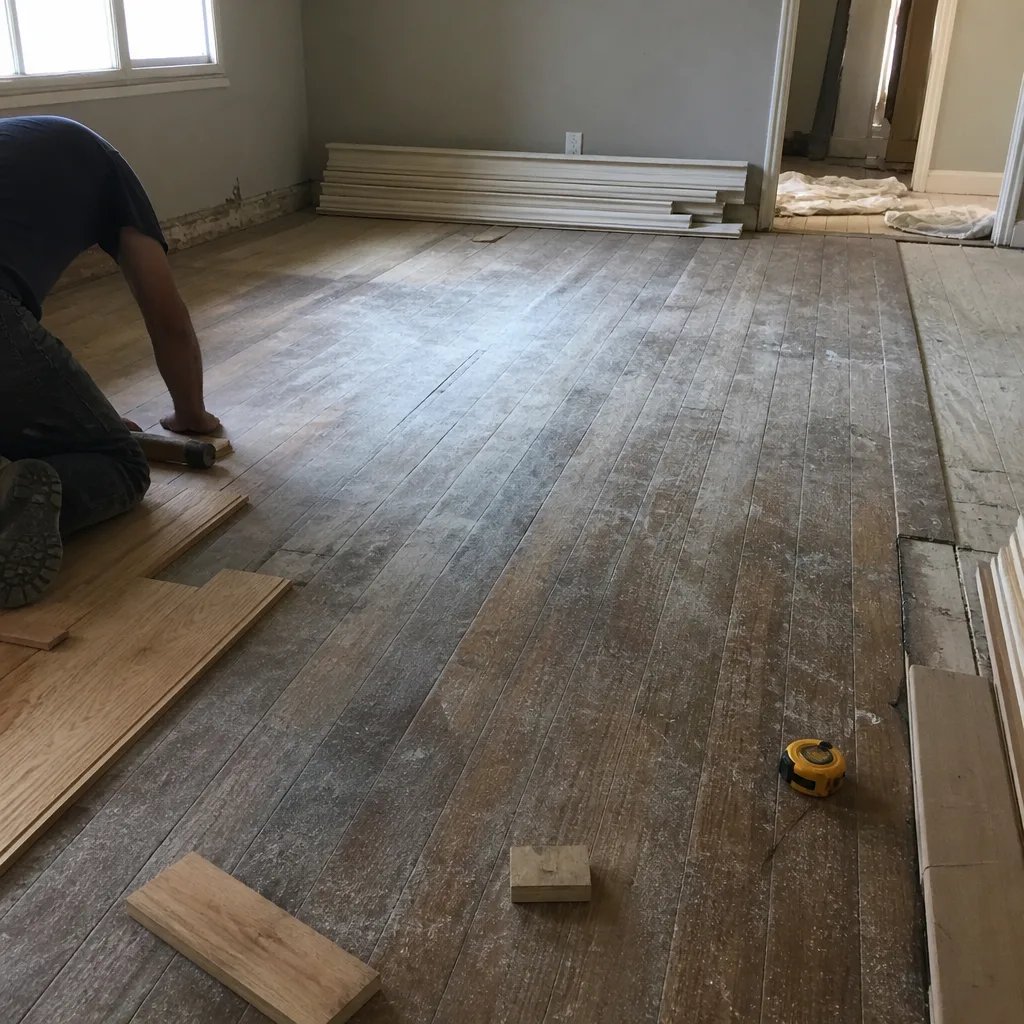 Before
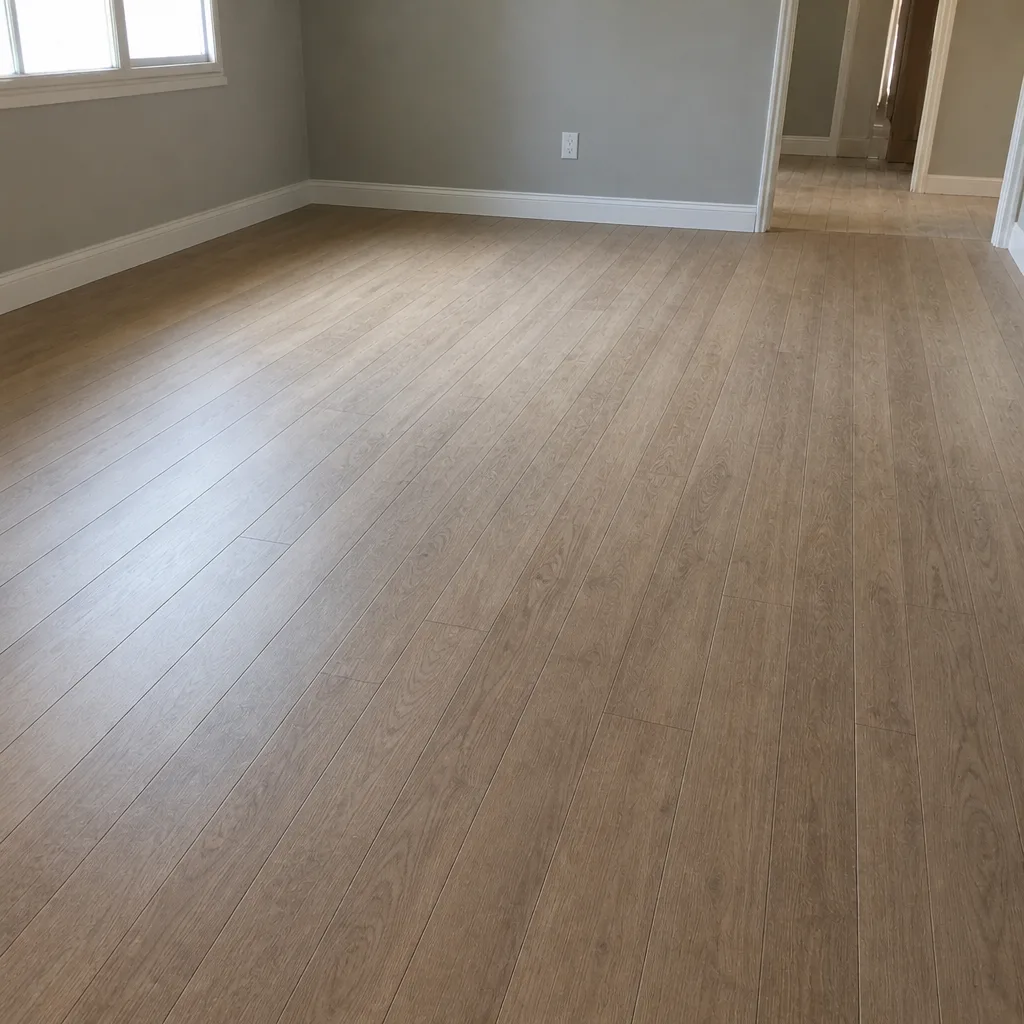 After
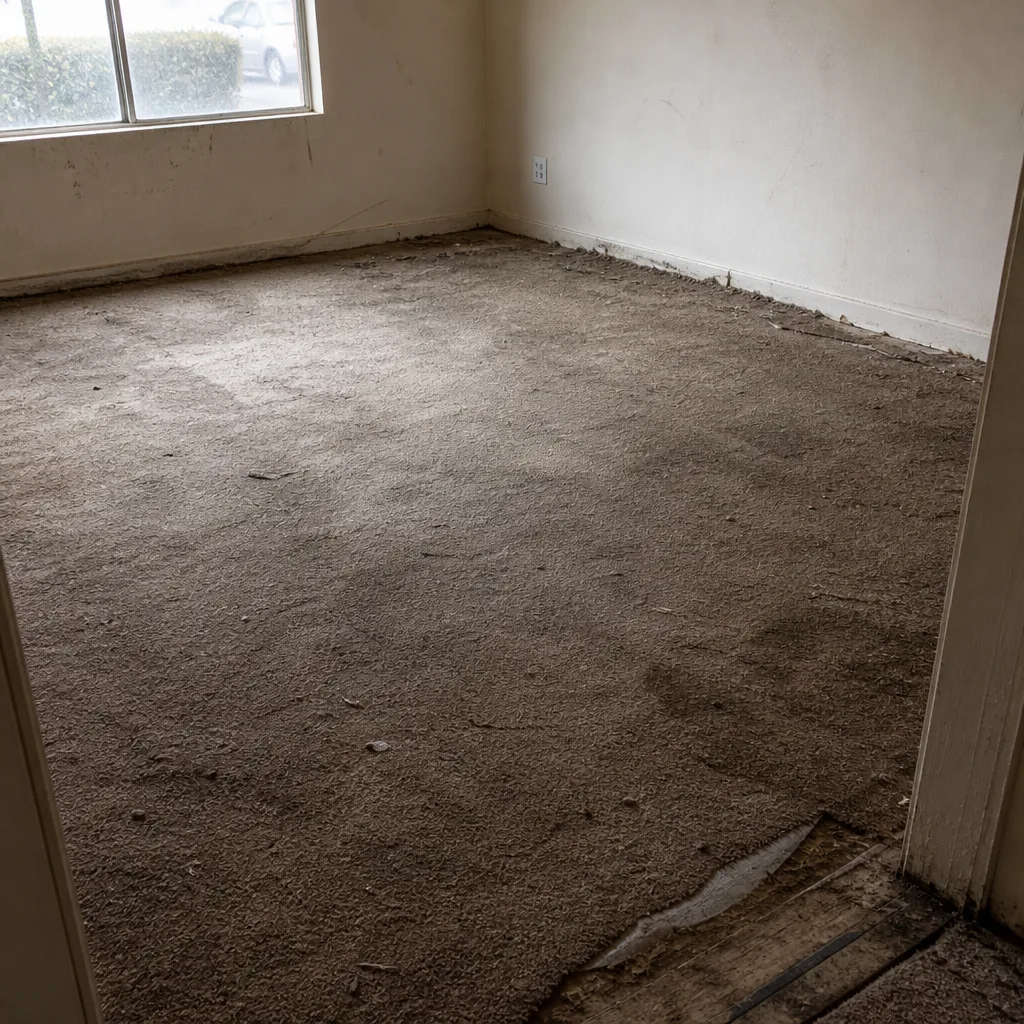 Before
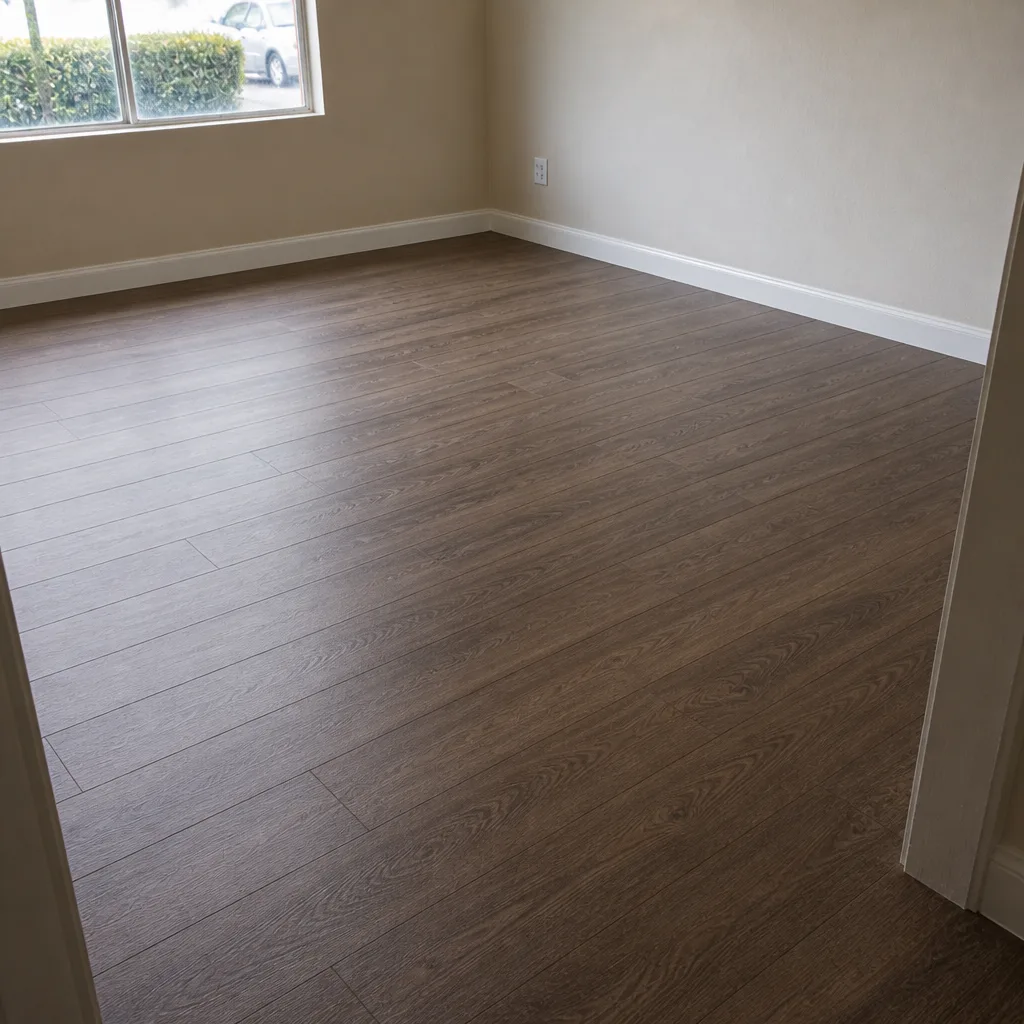 After
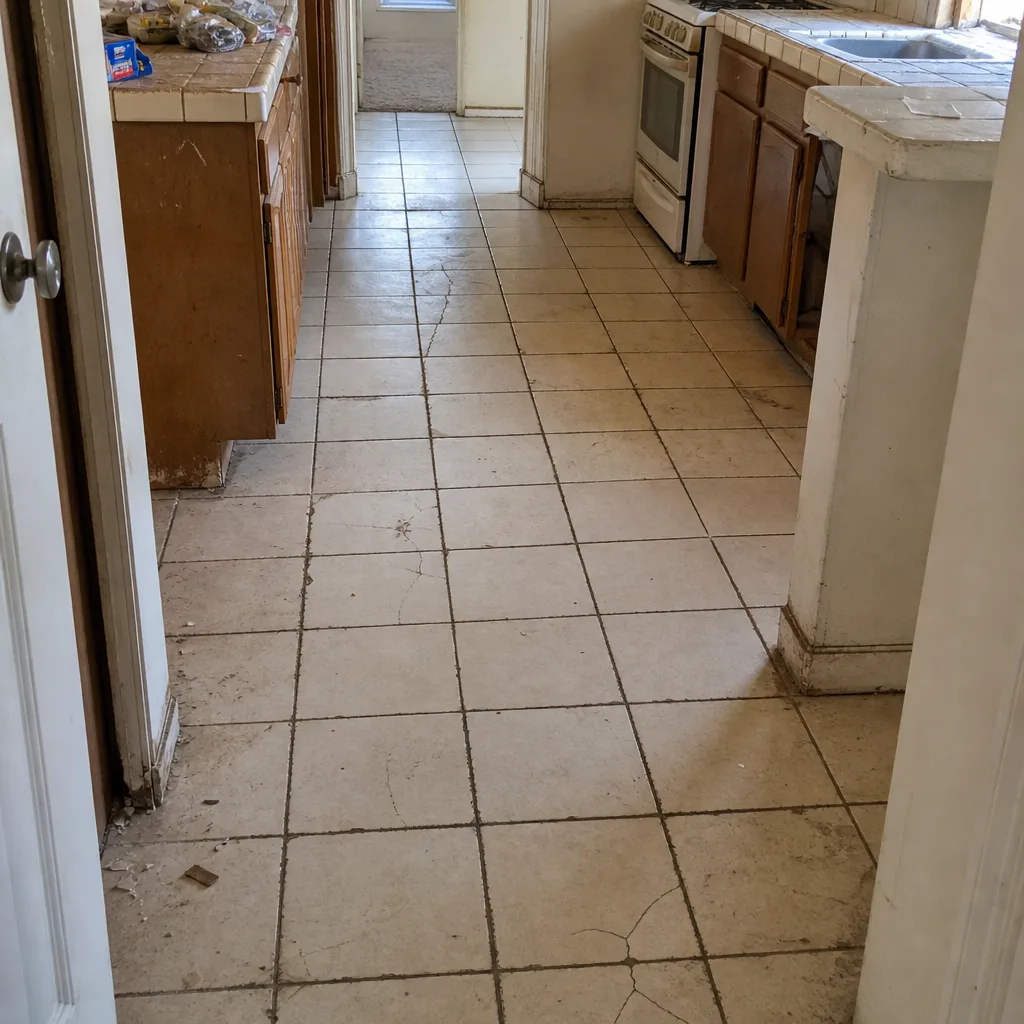 Before
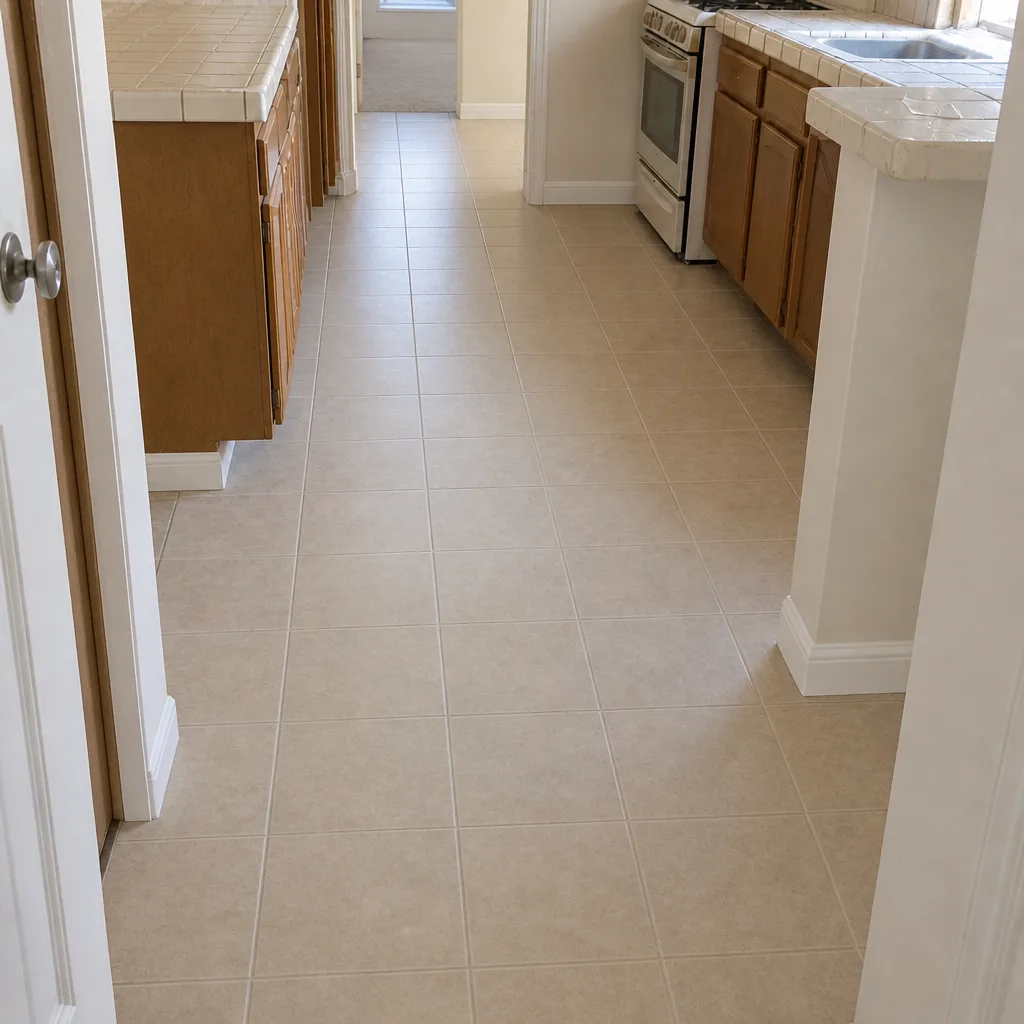 After
When to Call a Professional
Some flooring decisions are fine to start alone, but there are specific situations where a professional assessment will save you from an expensive mistake. If you’re choosing between hardwood and vinyl plank in a room with strong afternoon sun, that’s a glass-half-empty decision that a walkthrough resolves quickly. If you’re remodeling a kitchen or bathroom over slab, the prep and moisture barrier plan are the difference between a floor that lasts and one that doesn’t. If you’re refinishing existing hardwood, the thickness of the wood and its condition have to be checked before anyone promises you a result.
Las Vegas Flooring Installation offers free estimates in Las Vegas, and the written quote sets the final price. Call (888) 268-1308 to set up your in-home measure. We answer 24/7. Fast dispatch from 7am to 7pm, Sunday through Friday. We are closed Saturday.
Frequently Asked Questions
Neither is universally better. Hardwood wins on resale appeal and longevity when it’s in the right room with a moisture barrier and limited direct sun. Vinyl plank is more forgiving over slab and more resistant to dry-air movement. The right answer depends on the room, the sun exposure, and how long you plan to stay. Our technicians have up to 15 years of experience reading those conditions during an estimate. Call (888) 268-1308 to schedule a free measure.
Yes, but it requires a moisture barrier and careful planning. Slab moisture will push up into wood, so the barrier plan is non-negotiable over slab, and an engineered product is often the more practical choice. We check the slab and discuss the options at the estimate visit. Call (888) 268-1308 for a free quote.
Vinyl plank has largely replaced laminate because it handles moisture and dry-air movement better and installs more cleanly over slab. Laminate’s wood-based core is sensitive to leaks and swelling. Laminate still fits some dry, low-traffic rooms on a tighter budget, but vinyl plank is the more common recommendation. Call (888) 268-1308 to talk through your rooms.
Flooring affects resale mostly through condition, consistency, and how buyers read the finished home rather than which single material you choose. Restoring hardwood and refreshing tile often read better than replacing everything with vinyl plank. The floor’s condition and install quality matter more than the brand on the box. Call (888) 268-1308 for a free flooring estimate.
The schedule is set at the estimate, because the time depends on the product, the room size, and the prep. Every floor is a booked job: free in-home measure and estimate first, then a written price, then an install day. We don’t promise a fixed arrival time or a set number of install days in advance. Call (888) 268-1308 to book the estimate.
Yes. The estimate is free and the price is set per job by the written quote, with no service-call or trip fee. We come out, measure, and talk through the materials and conditions before you commit. Call (888) 268-1308. We answer 24/7. Fast dispatch from 7am to 7pm, Sunday through Friday.
The Bottom Line
The best floor for a Las Vegas home isn’t the trendiest one; it’s the one that matches your room’s sun, your slab, and your plans for the house. Tile is the workhorse in kitchens, baths, and entries. Vinyl plank is the most forgiving wood-look floor over slab and deserves its default status, as long as you compare specific lines rather than categories. Hardwood earns the best resale response when it’s in the right room with the right moisture barrier and reasonable sun protection. Laminate is a niche answer today. Choose for your conditions first, then for your taste. Our team works with nine name-brand lines across carpet, tile, and hardwood refinishing, so the choice stays yours. Call (888) 268-1308 for a free estimate in Las Vegas. We answer 24/7. Fast dispatch from 7am to 7pm, Sunday through Friday, closed Saturday.
Written by the team at Las Vegas Flooring Installation.